
A wealthy person can assemble a remarkable healthcare support system. They may have a primary doctor who knows their history, specialists who compare notes, rapid access to diagnostic tests and someone to coordinate referrals. What most people have is more fragmented: a test result in one portal, a hospital letter in another, imaging somewhere else and a handful of appointment slots that are difficult to align.
Richard Socher's prediction at Web Summit 2026 began with that inequality. One way to predict future products, he argued, is to look at services wealthy people already purchase and ask which ones could become widely available if intelligence became cheaper.
One of his examples was a personal AI healthcare team. In the scenario he described, agents would have read a person's reports, blood measurements and MRI scans, and could consult recent research to provide individualised advice. It was a prediction, not an announcement of a clinically validated product. That distinction matters.
The idea raises a powerful question: what would healthcare look like if a person no longer had to reconstruct their medical story from scratch at every encounter?

The real product is continuity
It is tempting to hear “AI healthcare team” and imagine a system that diagnoses everything. But the more immediate opportunity may be simpler. Many patients are forced to function as the connection between services that do not exchange information smoothly.
They remember which medication was changed in March. They carry PDF results to a consultation. They explain that a scan was ordered for a symptom that has since developed. They search for the discharge instructions they were given months earlier. None of this necessarily requires advanced clinical reasoning, yet gaps can make care slower and more frustrating.
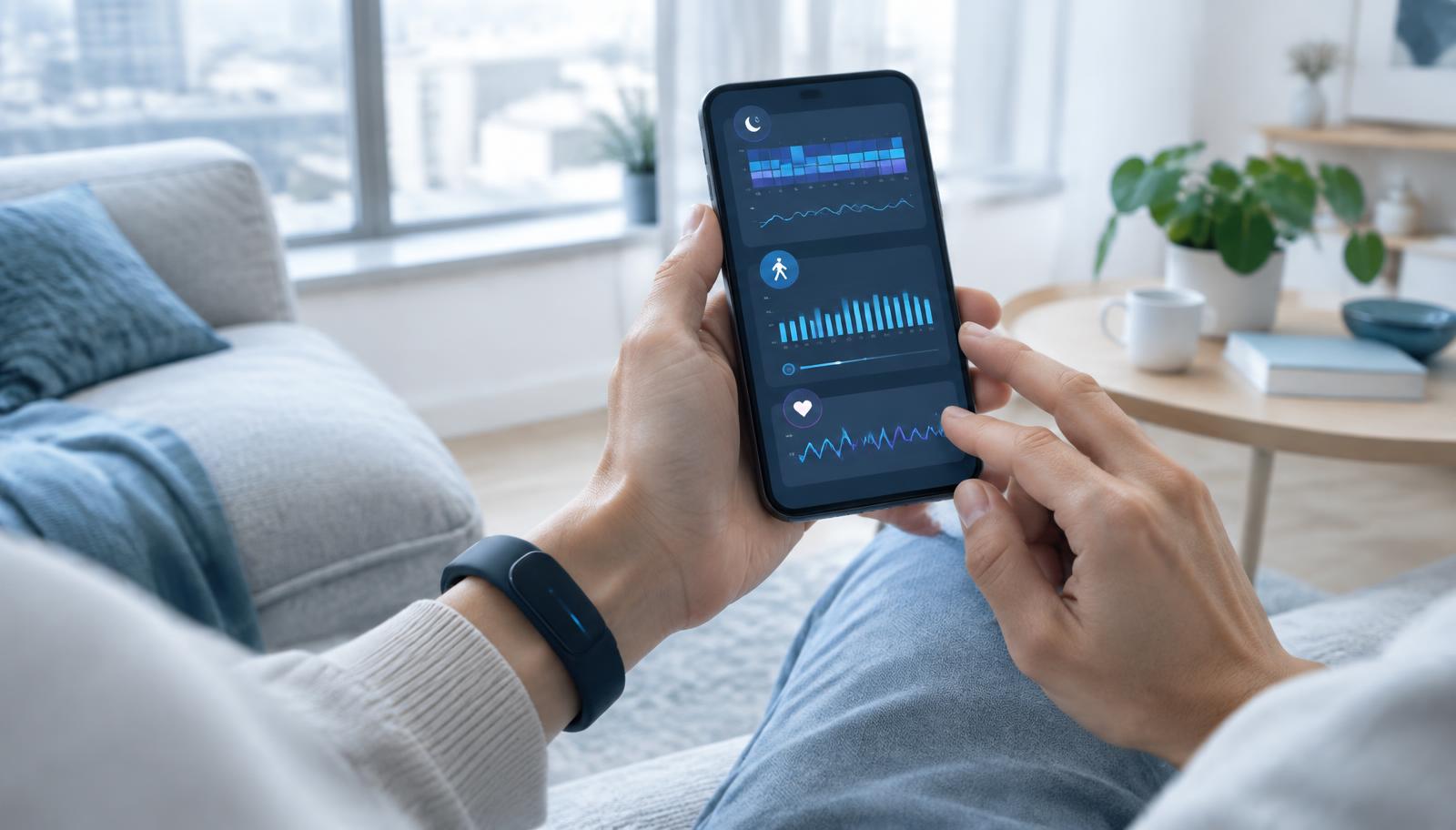
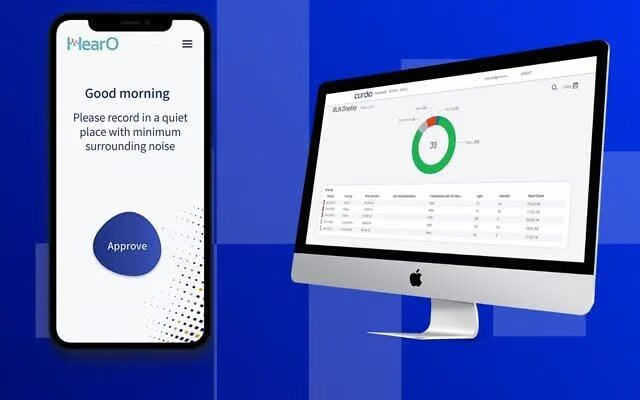
An agent operating with appropriate authorisation could help organise records, create a chronology, prepare questions for an appointment and flag that a promised follow-up has not appeared. It might compare a new laboratory result with previous measurements and ask whether a clinician should review a change. These are hypothetical uses. Each would need suitable access controls, reliable source data and careful boundaries around interpretation.
The useful distinction is between knowing the record and knowing what medical decision to make. A software system might eventually become very good at the first without being safe to perform the second autonomously.

Three different jobs hiding inside one prediction
Socher's description compresses several businesses into one sentence. The first is record aggregation: obtaining complete and accurate information from hospitals, laboratories, imaging centres and patients. The second is interpretation: turning those records into reliable summaries and insights. The third is action: helping someone do something appropriate with the information.
Each has a different risk profile. A missing allergy in a medication list is a record-quality problem with potential clinical consequences. An incorrect interpretation of a blood result is a reasoning problem. An agent that independently changes an appointment, orders a test or gives treatment instructions introduces action and accountability questions.
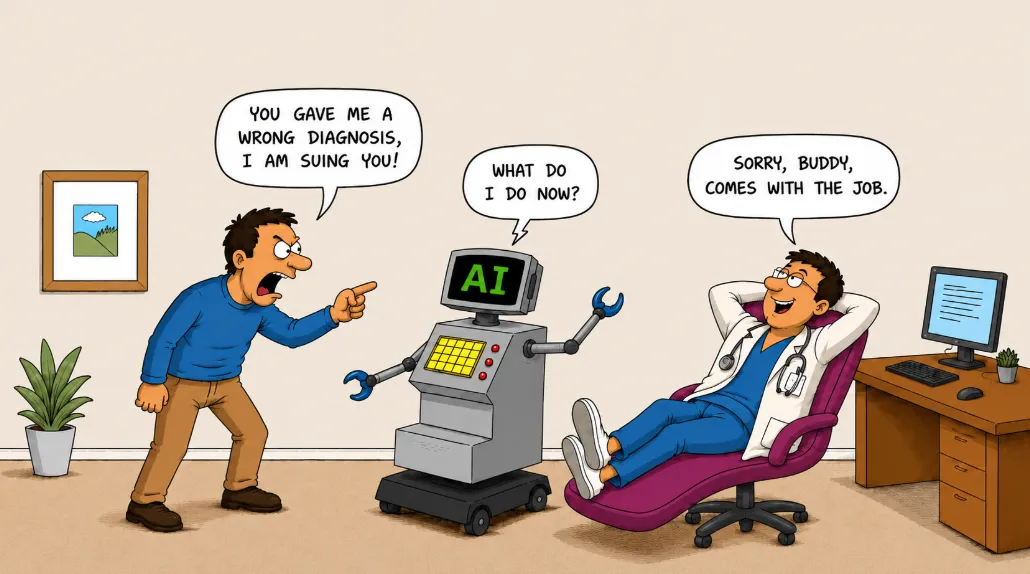
The more autonomy a system receives, the more important the safeguards become. It needs clear permissions, traceable decisions, confirmation for consequential actions and a way to involve a qualified professional when the case exceeds its remit. An assistant that writes a consultation summary is not equivalent to an autonomous clinician, even if both are described using the fashionable word “agent.”
The World Health Organization's guidance on large multimodal models identifies real opportunities in clinical care, patient-facing support, administrative work, education and research. It also warns that systems may produce inaccurate, incomplete or biased information. In healthcare, a confident answer can be especially dangerous when the user cannot independently judge it.
The data problem comes before the model problem
A personal healthcare agent is only as useful as the information it can lawfully and accurately access. Imagine a patient who has care records in two countries, repeated imaging at a private clinic and a handwritten medication adjustment from an emergency visit. A polished interface cannot fill those gaps by wishing them away.
Europe's Health Data Space is relevant here. The European Commission describes a phased effort to enable access, control and cross-border exchange of electronic health records. Under the published timeline, cross-border exchange of patient summaries and electronic prescriptions is planned for 2029, with medical images, laboratory results and discharge reports following in 2031. The regulation entered into force in March 2025, but that is not the same as immediate full implementation.
Those dates are a useful reality check. The future of personal agents depends not only on the sophistication of AI models, but also on interoperability, identity, record completeness and the practical willingness of institutions to exchange data safely.
Then there is the question of ownership and trust. Health information is especially sensitive. A patient should be able to understand which sources an agent can read, who else receives the information, what is retained and how access can be revoked. The European Data Protection Board identifies health information as a protected special category under the GDPR.
A system that offers “personalised care” but cannot explain its data practices is asking people to take on too much risk.

Would the advice actually help?
Suppose an agent notices that a person has had progressively higher blood pressure readings. Does it provide general information, suggest booking a consultation or make a medical judgement? The correct response depends on measurement quality, clinical context, symptoms and what the system is authorised and validated to do.
The same applies to imaging. Saying an agent can read an MRI scan is very different from establishing that it can safely interpret scans across body regions, scanners, clinical indications and patient populations. Claims about diagnostic performance require specific clinical evidence. A general-purpose model that can describe a radiology image in a demonstration has not thereby become a reliable radiology service.
Good evaluation also needs to measure downstream effects. Does a patient agent improve adherence to appropriate follow-up? Does it reduce repeated testing? Does it improve understanding without generating unnecessary anxiety or avoidable consultations? Does it work equally well for people with complex conditions or limited digital literacy?
If the system increases referrals and investigations without improving outcomes, it could make existing capacity problems worse, even while individual users feel that they are receiving more attention.
The commercial question is bigger than subscriptions
Personalised health agents may be sold to individuals, but the most consequential pathways could involve employers, insurers, providers or public health systems. Each buyer has a different incentive. A consumer may value convenience and peace of mind. A hospital may value better preparation before a visit. An insurer may focus on avoidable utilisation. Those interests sometimes align and sometimes conflict.
For founders, the critical decision is to choose who the product serves and which outcome it is accountable for. “An AI doctor in your pocket” sounds expansive but is clinically and commercially vague. “A secure assistant that helps patients prepare an accurate medication history for discharge follow-up” is a far narrower promise, and one that can be tested.
There is also an equity issue. Wealthy people benefit from humans who can advocate, interpret ambiguity and navigate institutions. An AI agent may automate pieces of that coordination, but it does not create specialist appointments, transport, social support or treatment capacity. Better information is valuable. It is not a substitute for accessible services.
A prediction worth taking seriously, without skipping the hard parts
What Socher offered was a useful picture of where personal computing could meet medicine. Not another chatbot dispensing generic health tips, but a system that understands a person's longitudinal context and helps them act on it.
The serious work begins after that picture. Connect the records. Check the accuracy. Define clinical boundaries. Protect the data. Evaluate patient outcomes. Give users meaningful control. Make sure clinicians can see where the information came from.
If those steps are solved, a personal healthcare agent could become a meaningful bridge across the gaps in care. If they are ignored, it risks becoming a very persuasive interface on top of fragmented, incomplete information.
The opportunity is real enough to merit investment. It is also important enough to deserve better evidence than a futuristic stage demo.
Key Signals
The personal AI healthcare team is a prediction, not a validated product, and the gap between the two is reliability: agents that read blood tests, imaging and history must be right in ways a chatbot does not have to be. The data plumbing exists in pieces, from patient portals to the European Health Data Space, but consent, purpose limitation and accountability are still unsettled. The services wealthy people buy are a good map of future products, as Socher argues, only if the safety case can be built at the same time as the feature set.