Written by Dr. Dereck Mush, MD, MBA, Editor In Chief at The HealthTech Signal. He is a doctor and works with healthtech founders and operators.
The best free healthcare datasets for machine learning in 2026 are PhysioNet (including MIMIC-IV), the UCI Machine Learning Repository, The Cancer Imaging Archive, CDC's NHANES, OpenNeuro, MedMNIST, CheXpert, the Medical Segmentation Decathlon, Kaggle's health datasets, and the NIH Data Book, with UK Biobank as the paid option for population-scale research. Most of them can be downloaded today. A few need training, an application, or a signed agreement first, and some licenses rule out commercial use altogether.
For each source you get what it holds, what it suits, how access works, the exact license, and one project you could start this week. It is written for founders, clinicians, data scientists, and students building health AI. If you are buying AI rather than building it, our clinical AI benchmarks and vendor evaluation guide will serve you better.
Get the weekly signal: health AI launches, funding, and policy moves, summarized for operators. Subscribe to The HealthTech Signal
Contents
- Comparison table: free medical datasets at a glance
- How we chose these datasets
- Kaggle
- UCI Machine Learning Repository
- NIH Data Book
- PhysioNet and MIMIC-IV
- The Cancer Imaging Archive
- CheXpert
- Medical Segmentation Decathlon
- MedMNIST
- OpenNeuro
- CDC NHANES
- UK Biobank
- The HealthTech Signal directory data
- FAQ
Comparison Table: Free Medical Datasets at a Glance
| Source | Data type | Access | License | Best for |
|---|---|---|---|---|
| Kaggle | Mixed, community uploaded | Free account | Set by each uploader (varies) | Learning with public notebooks and free GPUs |
| UCI ML Repository | Tabular | Open download | CC BY 4.0 (Heart Disease, Breast Cancer Wisconsin Diagnostic) | First classification models |
| NIH Data Book | Aggregate funding statistics | Open, Excel export | Not stated on the Data Book page; see NIH Web Policies and Notices | Funding and research trend analysis |
| PhysioNet | ECG, waveforms, clinical records | Open or credentialed, per dataset | Per dataset, e.g. CC BY 4.0 (PTB-XL), PhysioNet Credentialed Health Data License 1.5.0 (MIMIC-IV) | Signals and ICU prediction |
| The Cancer Imaging Archive | CT, MR, PET, pathology and more | Mostly open download | Mostly CC BY 3.0 or CC BY 4.0, per collection | Cancer imaging AI |
| CheXpert | Chest X-rays and reports | Registration and agreement | Stanford University Dataset Research Use Agreement | Chest X-ray classification research |
| Medical Segmentation Decathlon | 3D CT and MRI with masks | Open download | CC BY-SA 4.0 | Segmentation across organs |
| MedMNIST | Small 2D and 3D images | pip install medmnist | CC BY 4.0, except DermaMNIST (CC BY-NC 4.0) | Teaching and quick benchmarks |
| OpenNeuro | Neuroimaging in BIDS format | Open download | CC0 | Brain imaging research |
| CDC NHANES | Survey, exam, lab data | Open download | NCHS Data User Agreement (public use files) | Population health models |
| UK Biobank | Genomics, imaging, linked records | Application and fee | UK Biobank Material Transfer Agreement (MTA) | Large-scale research |
Caption: Eleven healthcare data sources compared by data type, access route, license, and best use, checked against official pages in November 2026.
How We Chose These Datasets
Each source here is run by a public body, a university, or an established platform, and each publishes its access rules on an official page. We checked the access route and license on those pages in November 2026 and link to them in every entry. Licenses change, so confirm them again before you train anything you plan to sell.
We left out sources whose terms we could not confirm. "Free" here means no fee to download. UK Biobank charges access fees and is included because many readers will meet it in the literature.
Kaggle: Health Datasets With Ready-Made Notebooks
What it is. Kaggle is a data science platform that hosts public datasets, competitions, and notebooks. It joined Google Cloud in March 2017, as announced on the Google Cloud blog. Search "health" or "medical" in Kaggle Datasets to find community uploads, many with public notebooks that already load and model the data.
What it's good for. Learning by reading other people's code. Kaggle Notebooks run in the browser, and you can add a free 
Access and license. A free account is needed to run notebooks. Each uploader picks the license when publishing, from options that include Creative Commons, GPL, and Open Data Commons licenses, according to Kaggle's dataset documentation. Some uploads are copies of data that came from elsewhere, so trace the original source and its license before you rely on it.
Project idea. Pick a well-documented health dataset, fork the most-voted notebook, reproduce its score, then add a calibration plot and performance by age group. Clinical reviewers tend to ask about calibration and subgroups before headline accuracy.
UCI Machine Learning Repository: Heart Disease and Breast Cancer Wisconsin
What it is. The UCI Machine Learning Repository is one of the oldest public collections of machine learning datasets. Two of its health datasets show up in a large share of introductory courses.
- Heart Disease. The database holds 76 attributes, but published experiments use a subset of 14, and the processed Cleveland file is the one ML researchers have used. The listing shows 303 instances and 13 features. The target ranges from 0 (no disease) to 4, and most work collapses it to presence versus absence. It has missing values.
- Breast Cancer Wisconsin (Diagnostic). 569 instances with 30 real-valued features computed from digitized images of fine needle aspirates of breast masses. Each case is labeled malignant or benign. There are no missing values.
What it's good for. First models, teaching, and testing a pipeline end to end. Both load in two lines with the ucimlrepo Python package.
Access and license. Open download, no account needed. Both datasets are licensed under Creative Commons Attribution 4.0 International (CC BY 4.0), per their UCI pages. Cite the DOI given on each page.
Project idea. On the Heart Disease data, compare logistic regression with a gradient-boosted model, report both AUC and calibration, and write one paragraph on why 303 patients can't support a deployment claim. The UCI page cites the 1989 paper by Detrano and colleagues in the American Journal of Cardiology as its introductory paper.
NIH Data Book: Funding and Research Trends
What it is. The NIH Data Book publishes summary statistics on NIH extramural grants and contract awards, grant applications, the organizations NIH supports, trainees and fellows, and the biomedical workforce. FY2025 statistics are now available for most grant reports.
What it's good for. It holds aggregate figures, so it won't train a clinical model. It is useful for funding trend analysis, market sizing, and timing grant applications. Most reports pair an interactive chart with the underlying table, and you can export tables to Excel and charts to PNG.
Access and license. Open, no account needed. The Data Book page does not state a license or reuse terms. For NIH's general rules on using material from its websites, see the NIH Web Policies and Notices. Do not assume a reuse right from the silence on the Data Book page itself.
Project idea. Pull monthly award counts and values for several fiscal years and build a simple forecast of when awards land in the year. Founders who sell to academic labs can use it to time outreach to when grant money arrives.
PhysioNet: ECG and Physiologic Signals, Plus MIMIC-IV
What it is. PhysioNet is a platform for sharing biomedical and clinical data, software, and models. It was established in 1999, is managed by the MIT Laboratory for Computational Physiology, and is funded by the US National Institutes of Health. It began as a repository of physiological waveforms, and the MIT-BIH Arrhythmia Database from the late 1970s is part of its origin.
What it's good for. ECG, other physiologic signals, and critical care records. Two datasets to know:
- PTB-XL holds 21,799 clinical 12-lead ECGs, each 10 seconds long, from 18,869 patients. Up to two cardiologists annotated each record, using 71 different ECG statements. It is open access under the Creative Commons Attribution 4.0 International Public License.
- MIT-BIH Arrhythmia Database is open access under the Open Data Commons Attribution License v1.0.
MIMIC-IV and credentialed access. MIMIC-IV (version 3.1, published October 11, 2024) is a de-identified dataset of patients admitted to the emergency department or an intensive care unit at Beth Israel Deaconess Medical Center in Boston. It covers over 65,000 ICU patients and over 200,000 emergency department patients. To get the files you must:
- Be a credentialed PhysioNet user.
- Complete the CITI "Data or Specimens Only Research" training. PhysioNet's CITI course instructions explain how to register through the "Massachusetts Institute of Technology Affiliates" route.
- Sign the data use agreement for the project.
MIMIC-IV is released under the PhysioNet Credentialed Health Data License 1.5.0. It is also available on Google BigQuery, with access requested through PhysioNet.
Project idea. Train a 1D convolutional network on PTB-XL to flag atrial fibrillation, then test it on a different PhysioNet ECG set to see how much performance drops across hospitals and devices.
Building with clinical data? We cover health AI deployments and the data behind them every week. Subscribe to The HealthTech Signal
The Cancer Imaging Archive: De-identified Cancer Scans
What it is. The Cancer Imaging Archive (TCIA) de-identifies and publishes cancer-related medical images for public use. The Cancer Imaging Program at the National Cancer Institute funds it, the Frederick National Laboratory for Cancer Research manages it, and the University of Arkansas for Medical Sciences carries out most of the curation. Data is published as "collections," each typically defined by a shared characteristic such as disease type.
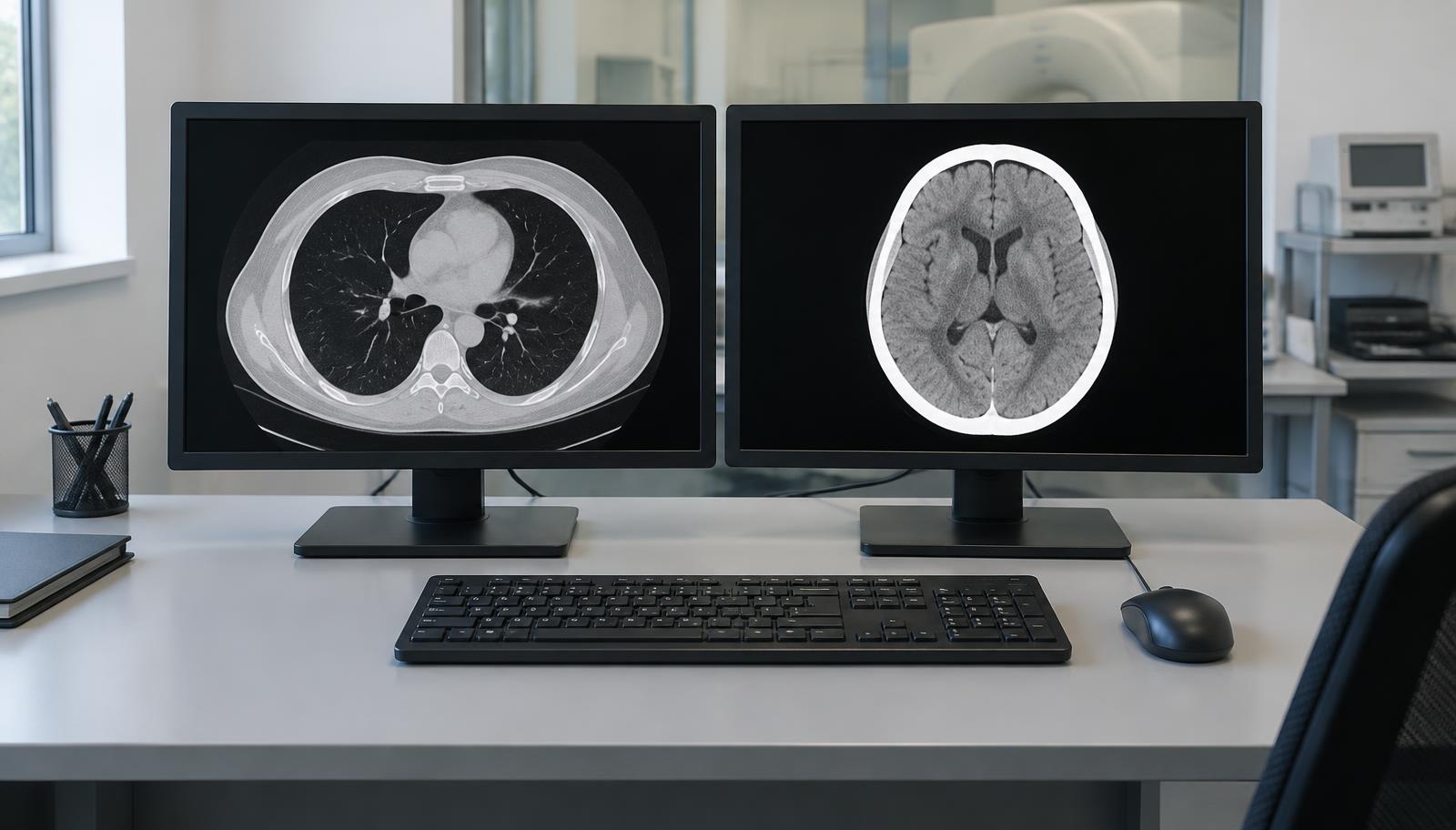
What it's good for. Detection, segmentation, and radiomics work in oncology. A good starting point is LIDC-IDRI: 1,018 cases of diagnostic and lung cancer screening thoracic CT, each with an XML file recording lesion annotations from four experienced thoracic radiologists. It is licensed CC BY 3.0.
Access and license. Most TCIA data is free to browse, download, and use for commercial, scientific, and educational purposes under the Creative Commons Attribution 3.0 Unported License or the Creative Commons Attribution 4.0 International License. A small number of collections carry non-commercial terms. Since NIH controlled data access policy changes in April 2025, datasets that require a data use agreement are hosted by the NCI Cancer Research Data Commons, with access requests managed through dbGaP. Check the license on each collection page.
Project idea. Build a lung nodule detector on LIDC-IDRI and measure how often it agrees with each of the four radiologists, as well as with their consensus.
CheXpert: Chest X-rays From Stanford
What it is. CheXpert is a dataset of 224,316 chest radiographs from 65,240 patients, collected at Stanford Health Care between October 2002 and July 2017, with their radiology reports. Its labels include uncertainty, and the test set has 500 studies from 500 unseen patients, each annotated by eight board-certified radiologists.
What it's good for. Multi-label chest X-ray classification, handling uncertain labels, and comparing models against radiologist reads.
Access and license. Download through the Stanford AIMI shared datasets page after registering and agreeing to the Stanford University Dataset Research Use Agreement. Stanford AIMI's shared datasets FAQ states that use is limited to non-commercial research and education, and that the agreement prohibits distribution outside its existing access process. Commercial use requires a separate Stanford license.
Project idea. Train a classifier with two strategies for uncertain labels, treating them as positive or ignoring them, and compare results on the radiologist-labeled test set.
Medical Segmentation Decathlon: Ten Segmentation Tasks
What it is. The Medical Segmentation Decathlon (MSD) is a challenge and dataset that tests whether one segmentation method works across 10 different tasks: liver tumors, brain tumors, hippocampus, lung tumors, prostate, cardiac (left atrium), pancreas tumors, colon cancer, hepatic vessels, and spleen. Data came from contributors including King's College London, Radboud University Medical Center, Vanderbilt University, the NIH, and Memorial Sloan Kettering Cancer Center, which donated the pancreas, colon cancer, hepatic vessel, and spleen data (official site).
What it's good for. 3D segmentation with small datasets, unbalanced labels, and multimodal MRI. All data was labeled and verified by an expert human rater.
Access and license. Open download. The data is released under a permissive copyright license, CC BY-SA 4.0. Cite the paper linked on the MSD site.
Project idea. Train one pipeline on the small cardiac task (30 volumes) and the larger hepatic vessels task (443 volumes) with the same settings, and report Dice scores for both to see how far a single configuration stretches.
MedMNIST: Lightweight Medical Image Benchmarks
What it is. MedMNIST is a collection of 12 2D and 6 3D biomedical image datasets, pre-processed into small, standard sizes with standard train, validation, and test splits. It totals about 708,000 2D images and 10,000 3D images across modalities including X-ray, OCT, ultrasound, CT, and electron microscopy. The default size is 28 by 28 pixels (2D) or 28 by 28 by 28 (3D), and MedMNIST+ adds larger sizes up to 224 by 224 for 2D.
What it's good for. Teaching, quick experiments, and AutoML benchmarking on a laptop. The creators state it is not intended for clinical use.
Access and license. Install with pip install medmnist. The dataset is licensed under CC BY 4.0, except DermaMNIST, which is under CC BY-NC 4.0, per the MedMNIST GitHub repository. Cite the source papers for any subset you use.
Project idea. Train the same small CNN on PathMNIST at 28 and at 224 pixels and record how much resolution changes accuracy and training time.
OpenNeuro: Open Neuroimaging Data
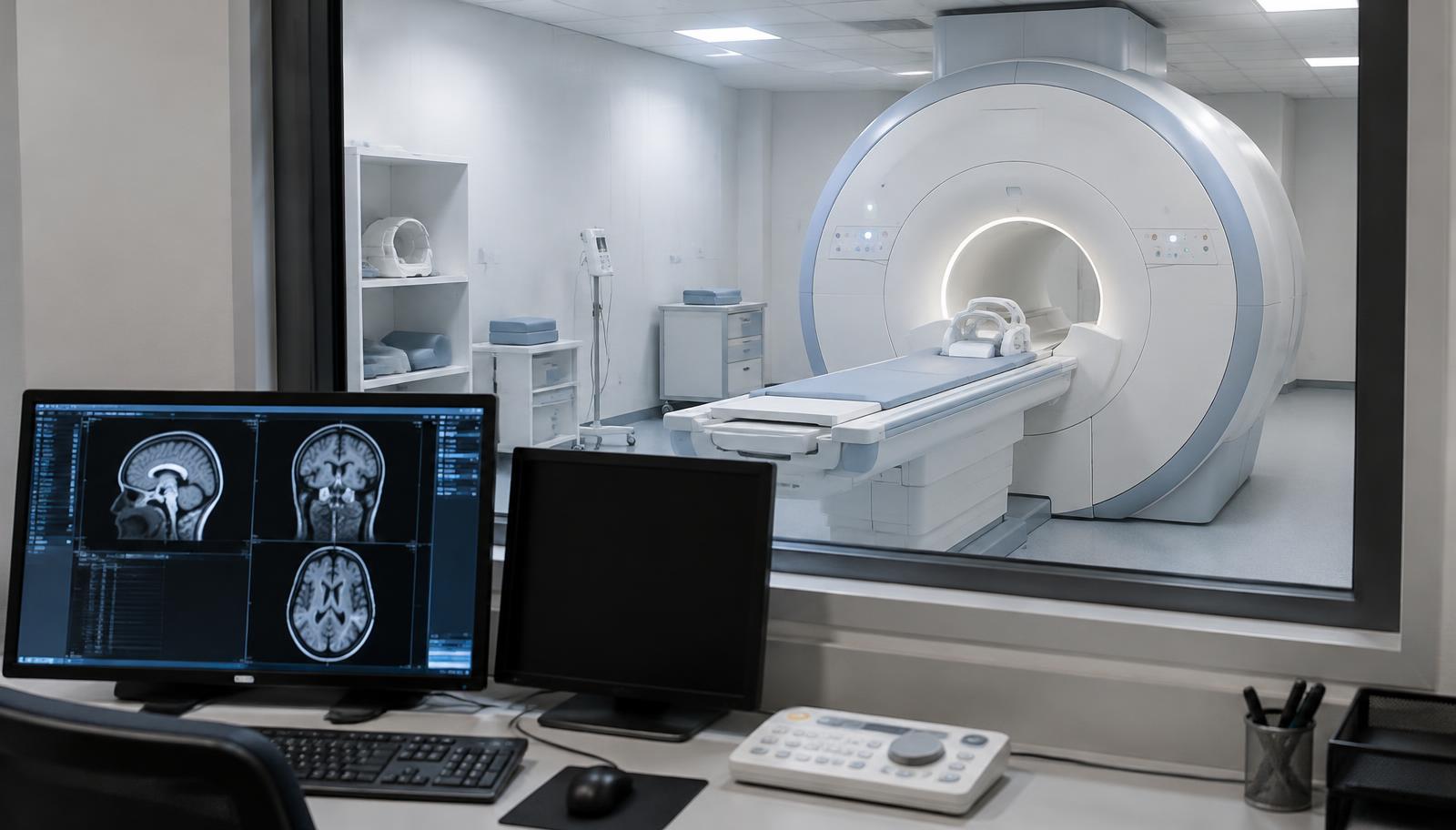
What it is. OpenNeuro is a free and open platform for sharing and analyzing neuroimaging data, organized around the Brain Imaging Data Structure (BIDS) standard.
What it's good for. Brain imaging research and reproducible pipelines. Because every dataset follows BIDS, the same code can read many studies.
Access and license. Open download. Newly published datasets are released under CC0, a public domain dedication. Uploaders can keep a dataset private for a 36-month grace period before it becomes public. OpenNeuro hosts only datasets that do not require restricted access, and its terms require uploaders to remove identifiable health information and to deface structural scans or hold consent to share them. Each dataset version has a DOI for citation.
Project idea. Pick two OpenNeuro studies that use the same scan type, run one preprocessing pipeline on both, and check whether a simple age prediction model trained on one study holds up on the other.
CDC NHANES: National Health and Nutrition Data
What it is. The National Health and Nutrition Examination Survey (NHANES) is run by CDC's National Center for Health Statistics. It combines interviews, physical exams, lab tests, and dietary interviews for adults and children. About 5,000 people across the US take part each year, and the survey has run continuously since 1999.
What it's good for. Population health models, prevalence estimates, and risk factor analysis. Files and documentation for each cycle are on the NHANES data page.
Access and license. Public use files are free to download. All potentially identifiable information has been removed. Users must follow the NCHS Data User Agreement: use the data for statistical reporting and analysis only, make no attempt to identify anyone, do not link it with individually identifiable data, and do not research re-identification methods. Restricted files are available through the NCHS Research Data Center for a fee.
Project idea. Build a model that estimates the probability of elevated blood pressure from interview and exam variables, and apply the NHANES survey weights so your prevalence figures represent the US population.
UK Biobank: Half a Million Participants, Approved Access
What it is. UK Biobank holds biological, health, and lifestyle data from half a million participants.
What it's good for. Large-scale research that needs genetics, imaging, and linked health records in one cohort.
Access and license. UK Biobank does not offer an open download. Eligible researchers from academic, charity, government, and commercial organizations worldwide can apply for health-related research in the public interest. Once an application is approved, the research organization must sign a Material Transfer Agreement (MTA) before any data can be accessed. As of 14 November 2026, UK Biobank's apply-for-access page says applications are paused while changes are made to the Research Analysis Platform, and that it intends to accept new applications in late 2026. Access fees for the first three years are £3,000 (Tier 1), £6,000 (Tier 2), or £9,000 (Tier 3), excluding VAT, with £500 for researchers in lower income countries and students. Data is accessed only through the UK Biobank Research Analysis Platform, and compute, storage, and data egress cost extra.
Project idea. Once you have access, test whether a risk model built on Tier 1 data (questionnaires, physical measures, and linked health outcomes) gains anything from Tier 2 genotype data, before paying for the higher tier.
The HealthTech Signal's Own Directory Data
The HealthTech Signal also maintains public directories of healthtech companies, investors, and health systems. Disclosure: this is our data. You can browse them on the site now:
- Startups: company profiles in our startup directory.
- Investors: firms that back healthtech companies, in our investor directory.
- Health systems: hospital and health system profiles in our health systems directory.
They suit market maps, investor targeting, and research on who builds and buys health technology. Downloadable versions of these directories are planned; until those are published, use the live pages above.
Frequently Asked Questions
Where can I find free healthcare datasets for machine learning?
PhysioNet, the UCI Machine Learning Repository, The Cancer Imaging Archive, CDC NHANES, OpenNeuro, MedMNIST, the Medical Segmentation Decathlon, and Kaggle all offer free downloads. CheXpert is free after registering and accepting the Stanford University Dataset Research Use Agreement. MIMIC-IV on PhysioNet is free but needs credentialing, CITI training, and a signed data use agreement.
How do I get access to MIMIC-IV?
You need to be a credentialed PhysioNet user, complete the CITI "Data or Specimens Only Research" course, and sign the data use agreement. MIMIC-IV is released under the PhysioNet Credentialed Health Data License 1.5.0.
Which medical datasets can I use in a commercial product?
Datasets under CC BY 4.0, CC BY 3.0, CC BY-SA 4.0, or CC0 allow commercial use with their conditions, such as attribution or share-alike. Examples in this guide include PTB-XL, most TCIA collections, the Medical Segmentation Decathlon, most of MedMNIST, and OpenNeuro. CheXpert and DermaMNIST do not allow commercial use. Check each dataset's license page and get legal advice before shipping.
Is UK Biobank data free?
No. UK Biobank charges access fees starting at £3,000 for three years for Tier 1, excluding VAT, plus compute and storage costs on its Research Analysis Platform. Reduced fees apply for students and researchers in lower income countries.
Final Thoughts
If you are new to health AI, start with UCI or MedMNIST to get a pipeline working, then move to PTB-XL, LIDC-IDRI, or the Medical Segmentation Decathlon for data that looks more like clinical practice. If you plan a product, read the license first. If MIMIC-IV is on your roadmap, start the PhysioNet credentialing now.
Follow Health AI Every Week
The HealthTech Signal covers health AI launches, funding, regulation, and hospital deployments in a short weekly read for founders, clinicians, and operators. Subscribe to The HealthTech Signal Or browse our startup directory.
About the Editorial Team
Dr. Dereck Mush, MD, MBA is a doctor and the Editor In Chief at The HealthTech Signal. He also runs Teknon Labs, a healthtech marketing firm, and Known Doctors.
Related Articles
- Best AI in Healthcare Courses: structured learning to go with the datasets above.
- Clinical AI Benchmarks and Vendor Evaluation Frameworks: how buyers test the models these datasets train.
- Best Health AI Research Labs to Watch: the groups behind many public medical datasets.