Over the past eighteen months, the narrative around healthcare artificial intelligence was almost entirely dominated by large language models and ambient voice scribes in doctor exam rooms. Companies like Abridge and Microsoft Nuance captured hospital attention by automating physician notes. But inside skilled nursing facilities, memory care centers, and assisted living communities, the primary operational bottleneck is not physician dialogue: it is bedside physical labor.
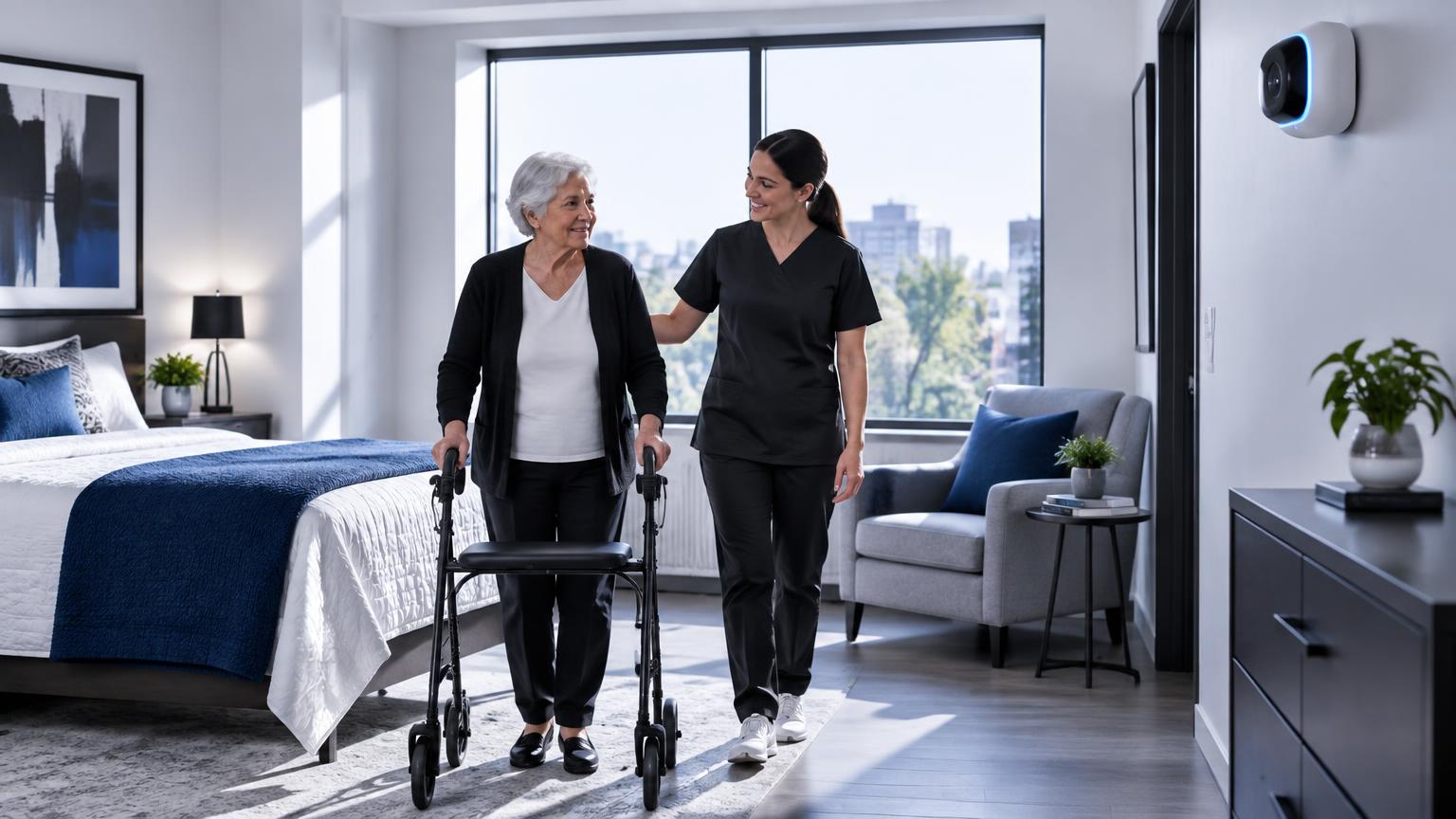
That distinction explains why Inspiren’s latest capital raise stands out. The company announced a $70 million Series C led by NewView Capital, elevating its valuation past $500 million and bringing its total funding to $225 million. Instead of relying on wearable emergency pendants that dementia residents frequently discard, Inspiren embeds edge-processed optical computer vision, thermal sensors, and acoustics directly into wall fixtures to monitor mobility, prevent falls, and automate nursing documentation.
In this deep dive, we are going to look at:
- Why this matters now
- What actually happened in the funding round
- The obvious read versus the deeper signal
- The post-acute market map: Ambient voice vs. physical AI vs. wearable sensors
- The unit economics: Why senior living operators are buying
- Facility cash flow transformation before and after ambient AI
- Competitive landscape: Post-acute ambient intelligence matrix
- The HealthTech Investor's Signal: Capital allocation, valuation logic, and M&A moats
- Real-world roadblocks that could constrain facility adoption
- Four concrete regulatory and commercial triggers to watch
- The bottom line for post-acute operators and health system executives