In consumer health technology, the central barrier to continuous clinical-grade data collection has never been the cost of photoplethysmography sensors or accelerometers. The actual failure point is charging cadence. When a health wearable requires a daily trip to a nightstand charging puck, nighttime compliance drops, severing the unbroken sleep and autonomic baseline that early disease detection and remote patient monitoring depend on.
The consumer wearables market has responded by splintering into two extremes: complex multi-app smartwatches demanding daily charging, and screenless rings or bands that optimize for wearability at the expense of glanceable real-time feedback. Google's rollout of the Fitbit Edge at $179.99 is a deliberate architectural intervention into that gap. By combining an ultra-slim chassis, an AMOLED display and a 7-day battery with native Google Health AI Coach integration, Google is establishing a defended middle tier designed to capture mass-market continuous telemetry for its clinical AI models.
In This Deep Dive:
- Why this matters now: overcoming wearable charging friction to preserve continuous biometric data integrity.
- What actually happened: specifications, pricing and hardware architecture of the Fitbit Edge.
- The obvious read versus the deeper signal: beyond tracker sales to multimodal AI training pipelines.
- Hardware architecture and battery physics, plus a competitive benchmark against Oura, Whoop, Apple and Ultrahuman.
- The Evidence Ladder: from raw PPG signals to FDA-cleared biomarkers.
- Health-system ROI and remote patient monitoring economics.
- The HealthTech Investor's Signal, counter-thesis and four indicators to watch.
Why this matters now
Remote patient monitoring (RPM) and decentralized clinical trials depend on a foundational assumption: that patients will wear a biosensor continuously without active clinical supervision. Yet across commercial RPM deployments, 30-day device attrition frequently surpasses 40%, driven by battery anxiety, bulky industrial design and notification fatigue from wrist-worn general computing devices.
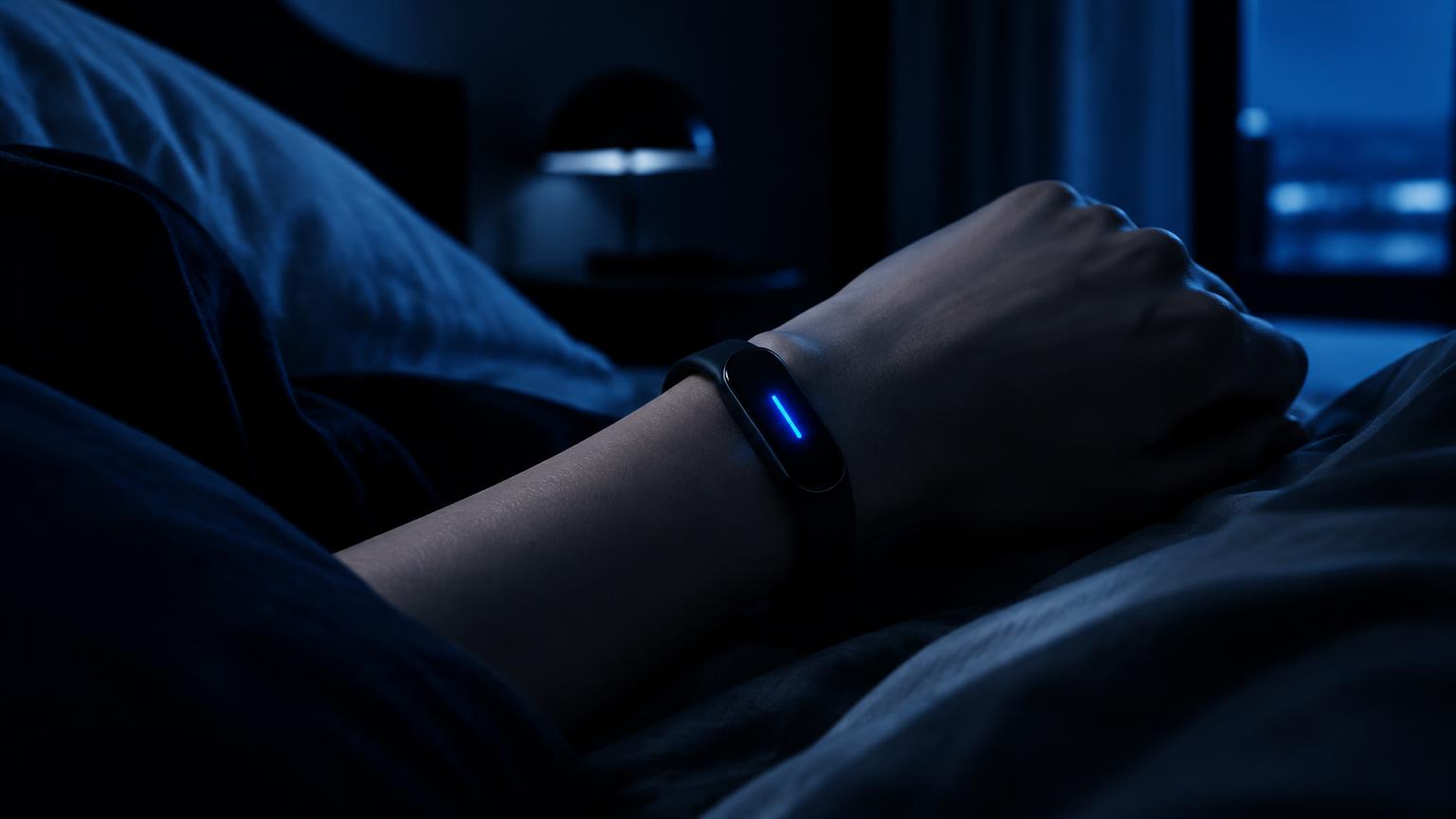
At the same time, Big Tech hardware divisions are competing to train agentic health models. AI health coaches require multi-week continuous streams of resting heart rate, heart rate variability, peripheral oxygen saturation, electrodermal activity and skin temperature to establish individualized physiological baselines. A tracker removed every night at 9 PM produces broken datasets that degrade predictive clinical utility. A week of continuous monitoring with glanceable visual confirmation in an 11.5 mm form factor directly addresses that compliance bottleneck.
What actually happened
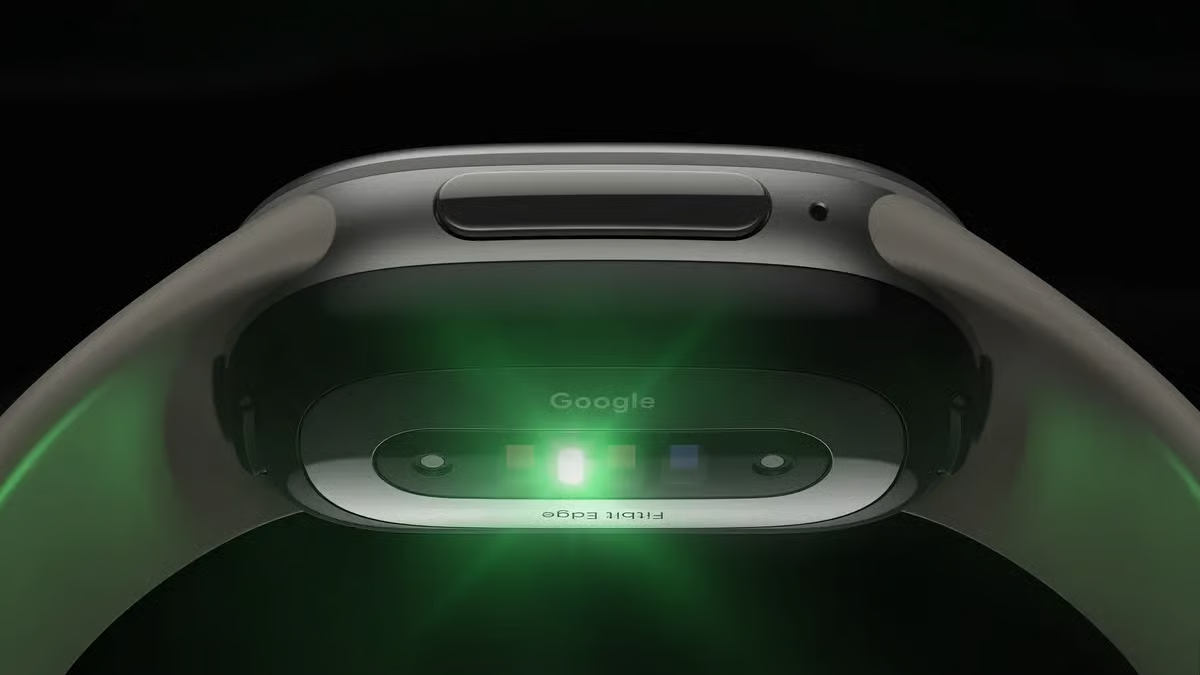
On October 12, 2026, Google officially introduced the Fitbit Edge, pricing the device at $179.99 with pre-orders beginning immediately and retail availability scheduled for October 27, 2026. The device features a 1.34-inch AMOLED display, built-in GPS, multi-wavelength optical PPG sensors and an ultra-low-power co-processor that extends battery endurance to seven full days under standard continuous sensing. Google says the case is 45% lighter than the Apple Watch Series 12.
The hardware is tightly bundled with the Google Health AI Coach, an agentic wellness intelligence system powered by Gemini models. The software delivers contextual analysis of sleep debt, circadian rhythm alignment and autonomic recovery, offering three complimentary months of Google Health Premium before converting to a $9.99 monthly or $99.99 annual subscription. Google has positioned the device explicitly between its $99.99 screenless Fitbit Air tracker and its flagship $399.99 Pixel Watch 5 smartwatch.
The obvious read versus the deeper signal
The consumer electronics market views the Fitbit Edge as a straightforward hardware refresh, updating the traditional fitness band category to compete with low-cost imports and midrange sports trackers. The deeper strategic signal centers on Google's data infrastructure play for foundational healthcare AI.
Google's enterprise healthcare strategy relies on training multimodal clinical models on vast, real-world physiological datasets. Smartwatches provide high compute capacity, but their power consumption creates severe gaps in nocturnal telemetry. Dedicated screenless wearables capture nocturnal data but lack mass consumer distribution because of mandatory $200-plus annual subscriptions. By pricing a glanceable, 7-day wearable at $179.99 with an optional premium tier, Google creates a high-volume distribution funnel that captures unbroken longitudinal human telemetry at a fraction of the hardware subsidy cost of a full smartwatch.