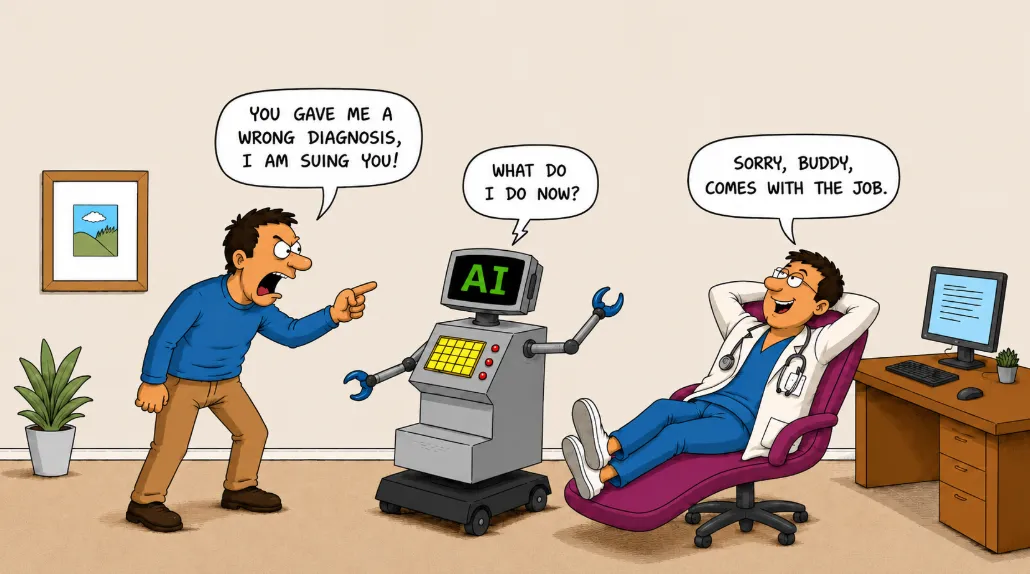
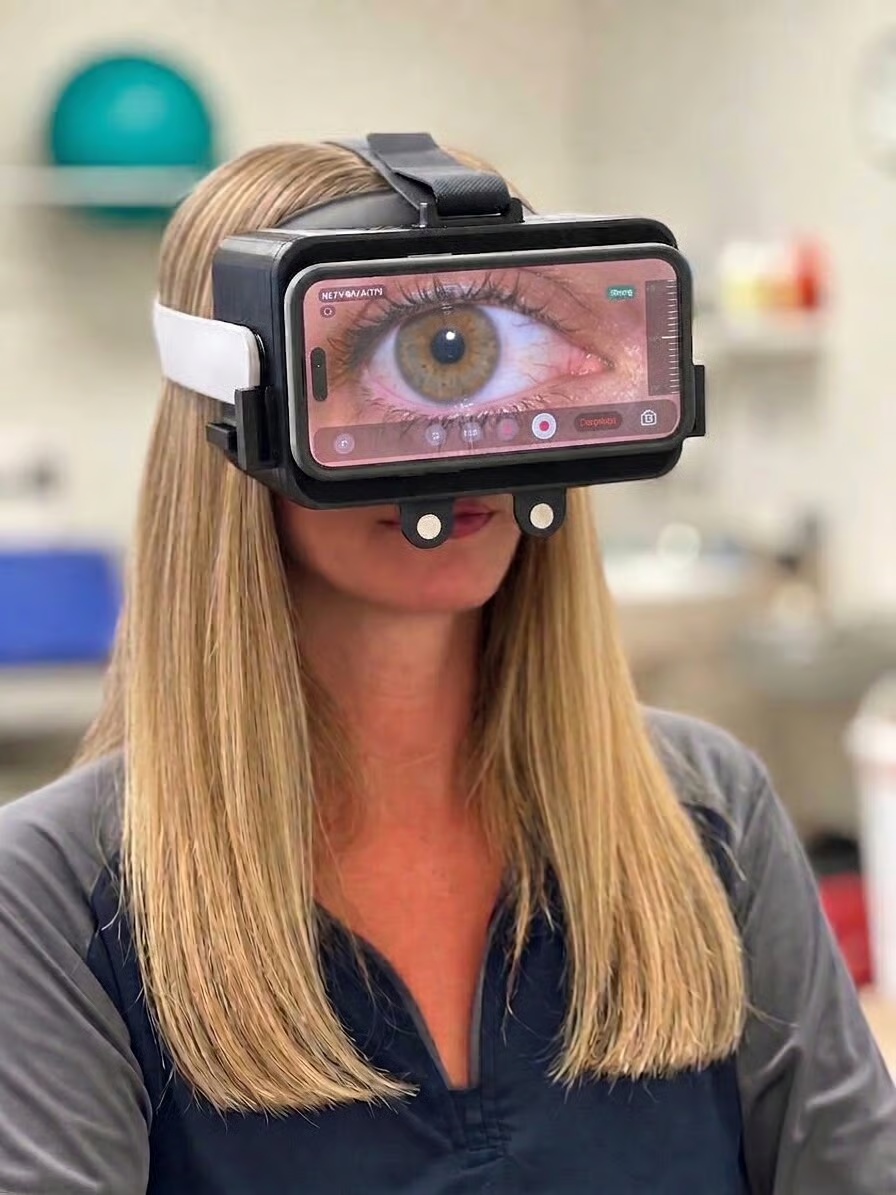
Acute dizziness and vertigo account for more than 4 million emergency department visits annually in the United States, consuming roughly $4 billion in direct diagnostic expenditures. Yet more than 85% of these presentations represent benign peripheral vestibular disorders, predominantly Benign Paroxysmal Positional Vertigo (BPPV) or vestibular neuritis. Because emergency physicians fear missing a posterior circulation cerebellar stroke, defensive medicine takes over: non-contrast head CT scans and urgent brain MRI orders have skyrocketed, despite yielding diagnostic pathology in fewer than 4% of isolated vertigo presentations.
The root problem has always been the physical difficulty of capturing and interpreting nystagmus without specialized equipment. The FDA 510(k) clearance granted to VertigoDx for the SmartVertigo Vestibular Assessment System directly targets this clinical blind spot. By pairing commercial smartphone optics with a proprietary light-occluding headset and custom eye-tracking algorithms, the platform brings objective videonystagmography directly into emergency triage rooms.
In this deep dive
- Why this matters now: the economic burden of defensive neuroimaging
- What actually happened: VertigoDx's 510(k) clearance (K260566)
- The obvious read versus the deeper signal
- Vestibular diagnostic taxonomy: mobile headsets vs dedicated suites
- Health system ROI: avoided neuroimaging and ED boarding reduction
- The counter-thesis and four milestones to watch
Why this matters now: the economic burden of defensive neuroimaging
A non-contrast head CT scan in the emergency department has a sensitivity of less than 20% for detecting acute posterior fossa ischemic strokes within the first 24 hours of symptom onset. Despite this well-established clinical reality, emergency departments order CT scans on over 50% of dizzy patients out of medicolegal fear. Conversely, the HINTS physical examination (Head Impulse, Nystagmus, Test of Skew), when performed by trained neuro-otologists, exceeds the sensitivity of early MRI. However, general emergency clinicians rarely possess the specialized training required to reliably evaluate torsional nystagmus with the naked eye.
What actually happened: VertigoDx's 510(k) clearance (K260566)
VertigoDx (led by co-founder and CEO Dr. Paul Louis and co-founder Trevor Meyerowitz) achieved FDA clearance under 21 CFR 882.1460 (Nystagmograph, Class II, Product Code GWN). The SmartVertigo platform consists of:
- Light-Occluding Headset: Eliminates visual fixation, a physiological reflex that suppresses peripheral vestibular nystagmus when a patient focuses on a room landmark.
- Smartphone Optical Capture: Leverages high-frame-rate commercial cameras to record high-definition infrared/visible spectrum pupil and iris movement.
- Positional Protocol Integration: Standardizes guidance during the Dix-Hallpike maneuver and Supine Roll Test, recording horizontal, vertical, and torsional components for objective documentation.