
In this deep dive
- The operational cost of diagnostic turnaround delays in the emergency department
- What the 13-target Xpert respiratory panel clearance includes
- The deeper signal: margin migration from central labs to near-patient testing
- Hospital economics: isolation costs, antimicrobial stewardship, and throughput
- The counter-thesis and four operational metrics for health system executives
Why this matters now
Every winter, hospital emergency departments face an operational choke point driven by diagnostic latency. When patients arrive with acute fever, dyspnea, and cough, clinicians must rapidly differentiate viral pathogens such as influenza, RSV, and SARS-CoV-2 from bacterial infections such as Mycoplasma pneumoniae. Rapid lateral-flow antigen tests are fast but lack sensitivity and breadth, while comprehensive central laboratory syndromic panels take 24 to 48 hours, long after admission and antibiotic decisions have been locked in.
Hospital operating margins are tightly linked to emergency throughput and bed turnover. When a respiratory patient is admitted without definitive microbiological identification, protocols frequently mandate empirical broad-spectrum antibiotics and costly isolation room occupancy. If central laboratory PCR takes 36 hours to confirm a simple rhinovirus or influenza, the system incurs unrecoverable isolation costs while exposing the patient to unnecessary medication side effects.
What actually happened
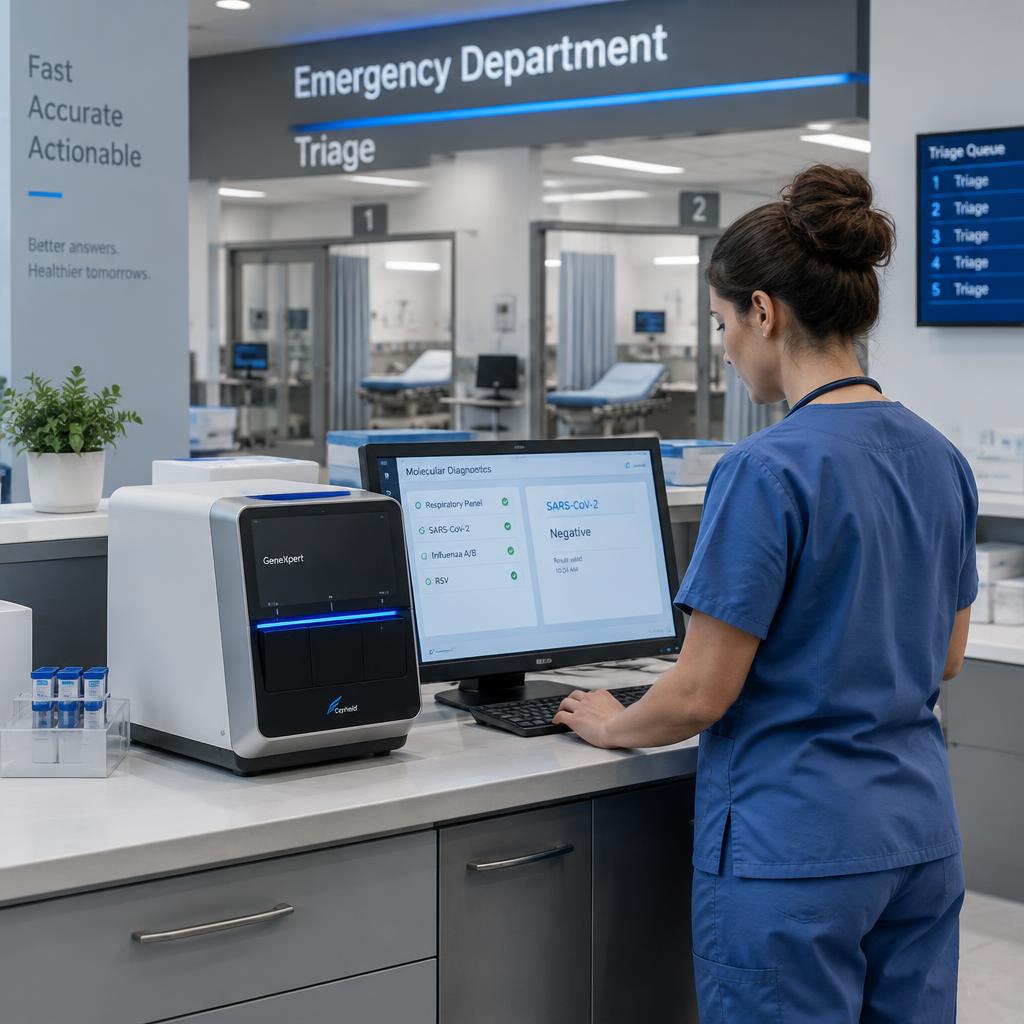
The FDA granted 510(k) clearance to Cepheid, a Danaher operating company, for its Xpert Respiratory Panel. Designed for nasopharyngeal swabs, the automated multiplex PCR test detects 13 respiratory targets, including Influenza A, Influenza B, SARS-CoV-2, RSV, Parainfluenza viruses 1 through 4, Human Metapneumovirus, Rhinovirus/Enterovirus, Adenovirus, and Mycoplasma pneumoniae.
The panel runs on Cepheid's GeneXpert Infinity and GeneXpert systems, requires less than two minutes of hands-on preparation, and returns results in approximately 45 to 60 minutes. The launch expands Cepheid's menu from targeted 4-in-1 combo tests into comprehensive syndromic diagnostics without requiring health systems to invest in separate high-complexity instrument platforms.
The obvious read versus the deeper signal
The standard narrative treats this clearance as an incremental menu expansion ahead of the 2026-2027 respiratory season. Commercially timely, but it misses the structural shift.
The deeper signal is the continuing decentralized migration of molecular testing. For a decade, comprehensive syndromic testing belonged almost exclusively to centralized laboratories running large batch instruments such as BioMérieux's BioFire FilmArray or Roche's Cobas. By packing high-plex PCR into its ubiquitous modular GeneXpert instruments, Danaher is moving high-value syndromic revenue out of central reference labs and into near-patient satellite labs and emergency rooms.