
Most fitness trackers tell you what you did. umo health wants to learn more about what your muscles are doing while you do it. The idea earned the company a place in the Web Summit PITCH semi-final, but not a place in the final.
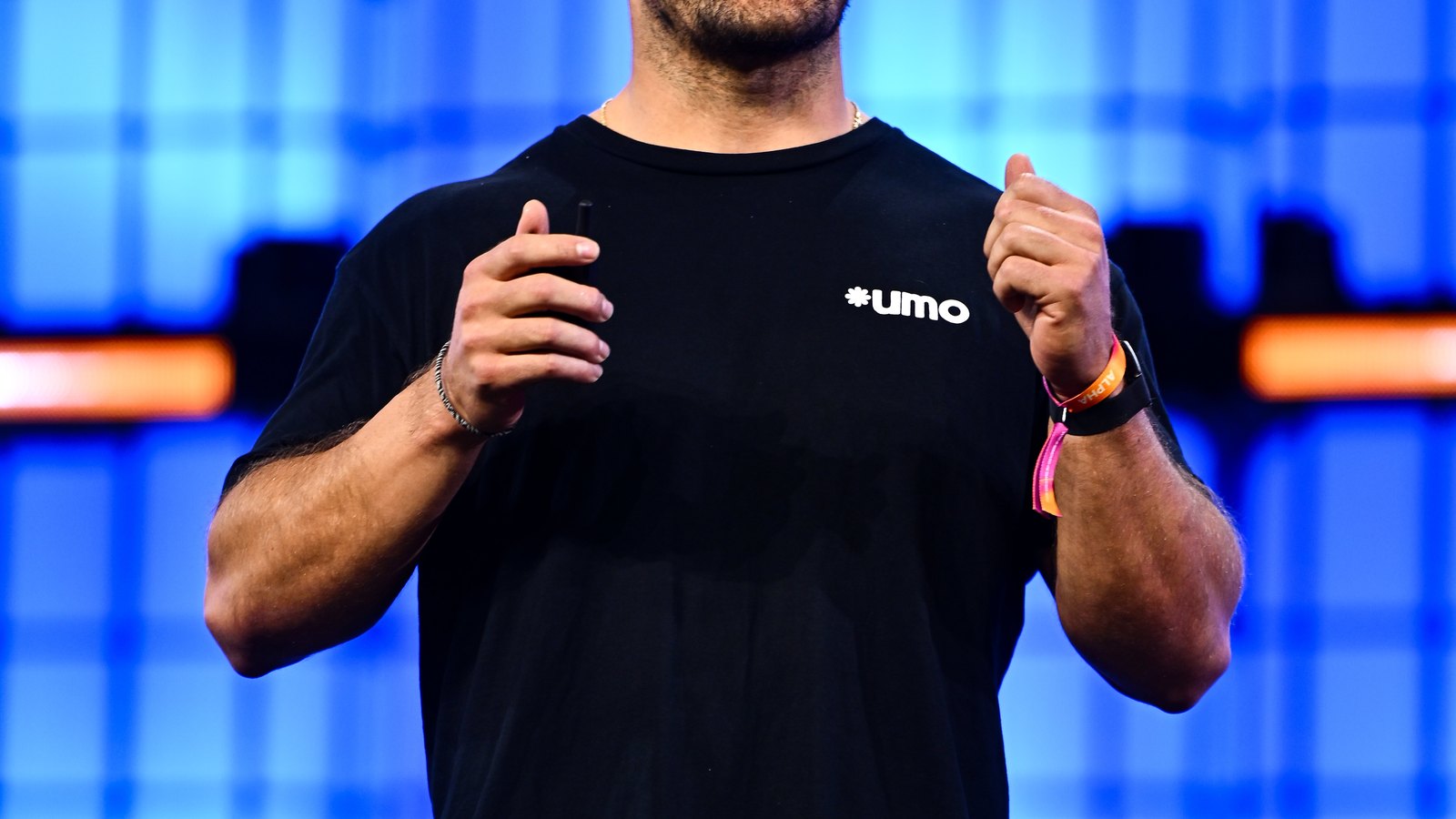
On November 12, 2026, Scott Mongold, co-founder and chief scientific officer of umo health, pitched a wearable concept built around 32-channel electromyography, or EMG, on Lisbon's Centre Stage. The company says its software app is already live, while the hardware pod remains in development.
How far did umo health go?
Mongold appeared in the PITCH semi-final. Moola, Zoyk and Carevision advanced to the final, with Carevision winning the competition.
That distinction doesn't make the technical proposition less interesting. It simply keeps the competition result separate from the product's claims.
What is a 32-channel EMG wearable?
Electromyography measures electrical activity associated with muscle activation. A multi-channel wearable could, in principle, collect richer information across different muscle groups or areas than simpler movement trackers.
EMG, however, does not directly tell a user whether an exercise was beneficial, whether an injury will occur or whether a medical condition is present. Converting muscle signals into reliable coaching or health insights requires signal processing, interpretation and validation against meaningful outcomes.
Mongold described a hardware device still being built and a software application already available. That distinction matters commercially: a live app does not establish that the complete planned hardware-and-software system is shipping.
Understanding software and hardware traction
Reported reach needs to distinguish app users from people testing the developing hardware. Registrations, research participation and active use describe different kinds of traction.
A company may count registrations, people who tried a prototype, research participants or active users differently. Each describes a different stage of traction. The same caution applies to the word “validated,” particularly if it refers to a small technical test rather than a prospective clinical or performance study.
What is NeuroScore?
The company identifies NeuroScore as an app offering. The public record supports distinguishing the app from the developing EMG pod, not presenting the proposed sensor system as an already finished consumer product.
For a buyer or sports-science partner, the next questions should concern repeatability, performance across users, whether sensor placement changes results and what independent comparison has been conducted against accepted methods.
A clever new sensor is only the beginning. Meaningful interpretation, reliable use and evidence of better decisions are the much longer part of the journey.

What a 32-channel EMG system is trying to capture
Muscle activity is complicated. When muscles are activated, their electrical activity can be measured using electromyography, or EMG. A system with multiple measurement channels can collect signals from several locations or muscle groups, potentially offering a more detailed account of activity than a single sensor.
That does not mean a wearable can automatically translate every signal into a reliable judgement about training quality, injury risk or recovery. The meaning of an EMG pattern depends on sensor placement, movement, the person using the device and the analysis applied to the signal.
Scott Mongold presented umo health's proposed 32-channel EMG wearable on Centre Stage in the PITCH semi-final. The company did not advance to the final.
The company distinguishes a software app that it says is live from a hardware pod that is still being developed. That difference is important. A downloadable software service does not establish that the more ambitious hardware platform is already available to consumers.
What wearable muscle data could be useful for
In principle, muscle-activity information could help people and professionals investigate movement patterns, exercise technique or changes during training. Researchers and clinicians have long used EMG in particular settings. Translating those measurements into a convenient wearable experience could make some information easier to collect, though ease of use does not itself validate the interpretation.
The first practical challenge is repeatability. Sensors placed slightly differently may record different signals. Movement, skin contact and noise can affect measurements. A device intended for unsupervised use has to contend with these variations, not assume laboratory conditions.
The second challenge is understanding what an output means. A display showing more activity in one muscle is not automatically evidence that a workout is better or safer. Stronger electrical activity and greater physical performance are not interchangeable concepts. The interpretation may depend on the exercise and the individual's circumstances.
If the company wants to offer personalised training insights, it should define exactly which conclusions the algorithm supports. A system might help users compare their own sessions or explore patterns over time without needing to claim that it diagnoses dysfunction or prevents injuries.
App adoption and hardware testing
App use and hardware testing are separate indicators of progress. A useful account of traction distinguishes the product used and the date and definition of each measure.
For early hardware businesses, usage claims can be especially ambiguous. Someone who uses a mobile app is not necessarily a customer of an unreleased wearable pod. A pilot participant is not necessarily a paying subscriber. The distinction matters to prospective buyers and investors trying to assess commercial readiness.
Clear definitions help distinguish software adoption, hardware testing and paying customers. Each provides a different view of readiness as umo develops the proposed wearable alongside its app.
What about NeuroScore?
Public reporting identifies NeuroScore as a company-related concept that merits its own explanation. A score derived from biological signals can be appealing because it condenses complex information into one understandable figure. But the underlying method must be evaluated separately from the visual simplicity of the result.
What variables are included? How are they weighted? Is the score meant to compare one person's activity over time or compare different people? What outcome was it evaluated against? These are the questions that determine whether a number is informative or merely decorative.
A useful score should also express uncertainty where appropriate. If changing sensor placement materially changes the result, users need to know. If the score is not intended to diagnose a condition, it should not be presented in language that suggests a clinical conclusion.
The same applies to thresholds and alerts. A colour-coded score might encourage someone to change a workout or seek professional advice. The company should explain how the thresholds were set and what evidence supports any recommended action.
Hardware turns a promising concept into an operating challenge
Building a wearable involves more than making the sensors work in a prototype. The final product has to be comfortable, durable and practical to charge, maintain and use. Manufacturing introduces another layer of costs and quality assurance. Software updates must continue to support the device after it ships.
These constraints affect the business model. A company may begin with an app because it allows the team to learn about customers while developing the more expensive hardware. That can be a sensible approach, while software adoption and hardware readiness remain separate milestones.
There is also a question of who will buy the system. An athlete, a coach and a clinical rehabilitation service may want very different information. Their willingness to pay and tolerance for uncertainty will differ. A clearly defined customer can be more useful to a startup than a broad claim that its device is relevant to everyone who moves.
The next milestone for umo health
The company earned a semi-final appearance and an opportunity to present its concept to an international audience. The more important milestones now concern the product itself.
A hardware demonstration with a clearly defined measurement protocol would help explain what the pod can do today. A report comparing its readings with an appropriate reference would help readers assess technical accuracy. A description of the target user and the decision supported by the output would make the value proposition easier to judge.
If the company eventually makes claims about medical outcomes, those would require their own evidence. For now, the interesting story is an attempt to bring richer muscle-activity information into a wearable format. The challenge is turning signals and scores into information users can interpret reliably.
What the next independent evaluation should establish
A strong evaluation of the proposed wearable would compare its signals with an appropriate reference under defined conditions, then test how those results change in ordinary use. It would distinguish raw sensor performance from any software-generated interpretation. Buyers would need to know whether different users can place the device consistently, whether individual sessions can be compared meaningfully, and what happens when the recording is incomplete. If the company intends NeuroScore for coaching rather than clinical decision-making, the evaluation should examine whether athletes and trainers understand the score and use it as intended. If medical claims are introduced later, those claims would need their own validation. A technology should be judged against the purpose it actually serves, not its most exciting possible future application.