A medical technology becomes valuable when someone can use it, trust it and justify paying for it. The journey between an impressive demonstration and that moment is where the most consequential work happens.
That is the useful lens for DTD 2026 in Munich. The European Conference on Digital Transformation & Data in Medical Technologies runs on October 26 and 27, 2026, with a programme that connects clinical evidence, AI governance, regulatory assessment, organisational change and commercial adoption.
Unlike a broad technology gathering, this meeting is organised around the operating questions inside MedTech: how a claim becomes evidence, how documentation becomes assessable, how a workflow changes and how a product reaches routine use. For teams preparing an AI-enabled device, diagnostic or software deployment, those questions belong in the same conversation.
The strongest reason to go to Munich is to connect the evidence plan, the regulatory pathway and the adoption decision before they become three separate projects.
This is The HealthTech Signal's field guide to making those two days count. Programme details below come from the organiser's published pages, checked on October 3; the priorities and attendance playbook are our editorial analysis, not promises of conference outcomes.
The essential briefing
| Field | What operators need to know |
|---|---|
| Full name | European Conference on Digital Transformation & Data in Medical Technologies |
| Dates | Monday, October 26 and Tuesday, October 27, 2026 |
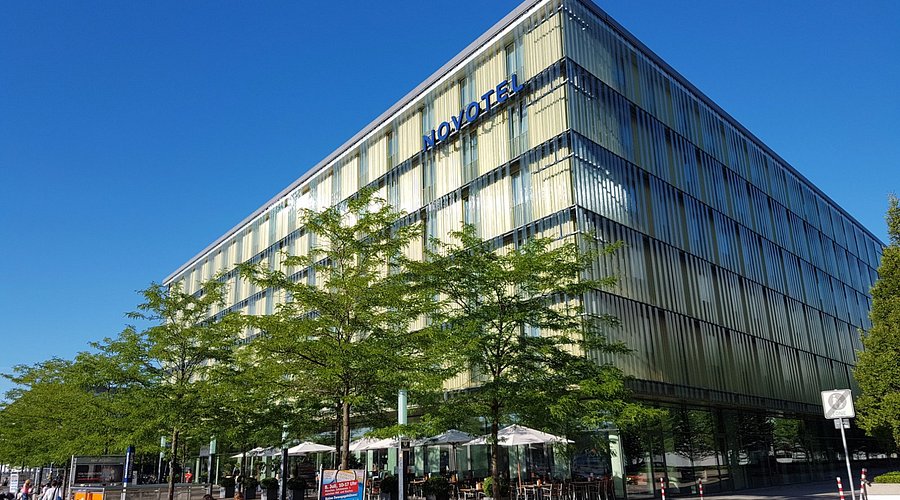
| Venue | Novotel Munich Messe, Willy-Brandt-Platz 1, 81829 Munich, Germany |
| Language | English |
| Conference chair | Clara Pessy |
| Programme format | Presentations, panels, a workshop and an industry symposium |
| Core audience | MedTech manufacturers, software and AI teams, regulatory and quality professionals, notified bodies, clinical experts and healthcare organisations |
The official programme opens with registration at 08:00 on Monday and an 08:50 welcome. Tuesday registration begins at 08:30. Session times and speaker participation can change, so check the current schedule before booking individual meetings.
Our DTD 2026 event page carries the event listing, while the HealthTech calendar puts Munich alongside the other sector meetings. Registration prices and availability should be checked directly through the official conference website; we do not assume an attendance figure or quote an unverified pass price.
Why this meeting belongs on the MedTech calendar
In our Web Summit Lisbon field guide, the strategic attraction is adjacency: capital, distribution, technology platforms and media in one place. DTD offers a different kind of proximity. Its published agenda puts clinical, quality, regulatory and implementation questions beside one another.
That matters because a product decision rarely stays inside a single department. An expanded clinical claim can change the evidence required. A new data source can change validation and governance. A deployment model can alter who trains users, monitors performance and pays for integration.
Munich is therefore particularly relevant for a team with a concrete decision to make: defining intended use, planning evidence generation, preparing technical documentation, translating a research model or building an adoption case. It is a specialist working agenda, not a substitute for formal regulatory advice or a guarantee of access to buyers.

Monday: follow the product from data to deployment
1. Digital transformation starts with the information architecture
The opening session, Digitalisation & Data-Driven Transformation in MedTech, includes Sarah Panten of Medical Device Knowledge Unit on Europe's digital regulatory ecosystem, Sarah Haake-Schäfer of Carl Zeiss Vision on the future of regulatory and quality functions, and Hanna Kim of Servizions on human-centred design.
The operator's question is not simply which software to buy. It is which information must be structured, traceable and reusable across development, assessment and operations. A digital document repository becomes more valuable when a team can connect the product claim to its supporting evidence, risk control and current version.
What to listen for: concrete examples of structured documentation, process ownership and design decisions made around actual users. Ask where the proposed approach changes an existing task and how the team knows it has improved that task.
2. Clinical AI evidence should shape the product early
The late-morning AI in Clinical Practice: From Evidence to Measurable Impact session includes Helene Quie of Qmed Consulting on clinical evidence by design, Philippe Dedrie of SunWaves on longitudinal health data, and independent consultant Martin King on AI in a first-in-class device submission.
These are distinct presentations, not one shared clinical claim. The published summary for Dedrie's talk explicitly describes understanding health trajectories rather than predicting acute events. King's summary distinguishes using AI in development and submission work from the regulatory classification of the device itself.
For product leaders, those distinctions are valuable. Ask what output the system produces, who interprets it, which action follows and what evidence supports that specific use. Then ask whether the proposed validation population resembles the people and settings where the product will operate.
3. Assessment is a lifecycle conversation
Monday afternoon's AI Governance, Digital Medical Devices & Regulatory Expectations for SaMD session includes Osman El-Koubani of Scarlet Notified Body. The later transformation session features Lukas Vogler of Medical Device Knowledge Unit and Julia Lundbeck and Franziska Soeltl of Brainlab.
The useful connection is between external assessment and internal execution. A model version needs an evidence trail; a transformation project needs a responsible owner. Both become easier to explain when the underlying decisions, handovers and monitoring arrangements are explicit.
Our FDA and CE-MDR dual-track playbook explores how a shared evidence and quality backbone can support different jurisdictions. At DTD, use that framework to sharpen product-specific questions, not to assume one dossier or one authority's decision automatically satisfies another regime.
Tuesday: connect organisational readiness to market access
4. Workforce readiness is part of the deployment plan
Tuesday begins with Leadership & Workforce for Scalable Digital Transformation, including Marcus Druen of Challenger House. For healthcare technology teams, the relevant issue is how new tools change documented work, responsibilities and decision-making.
An implementation plan should name who owns the process after launch, what training is needed, how exceptions are handled and how the organisation checks whether the new workflow is doing the intended job. These are practical questions to carry into the leadership sessions.
5. Research translation and adoption belong in the same room
The AI-Enabled MedTech: From Definition to Real-World Adoption session includes Karolina Punovuori of MultivisionDx on translating research-grade AI into routine medical devices and Dr. Dereck Mush of Teknon Labs on the gap between regulatory readiness and adoption. Mush's talk is scheduled for 11:40 to 12:00 on Tuesday, followed by a panel with King and Punovuori.
The editorial lesson is straightforward: evidence that supports a device's intended use and evidence that supports a buying decision answer related but different questions. A clinical team may want confidence in performance. A procurement team may need implementation costs, responsibilities and a clear contracting route. A budget holder may need to know where measurable value accrues.
Bring a stakeholder map. Name the user, buyer, approver, payer and beneficiary separately, even when some roles sit in the same organisation. That makes the adoption conversation more precise than describing all of them as “the hospital.”
6. Keep the regulatory pathways distinct
Tuesday also includes a workshop on CE and in-house routes, sessions with Marta Carnielli of TÜV SÜD Product Service on IVDR conformity assessment and technical documentation, and Andjela Dominkovic of Roche Diagnostics on MDR, IVDR and the AI Act.
Read these as opportunities to understand scope and expectations, not shortcuts to certification. MDR and IVDR govern different product categories; an in-house route is not interchangeable with a commercial CE-marking strategy. AI Act applicability also needs a product-specific assessment against current law and guidance.
The best question is concrete: for this intended purpose, this evidence and this deployment model, what needs to be resolved next, and by whom?
Who should attend, and what they should bring
| Role | Strongest use of the meeting | Bring this |
|---|---|---|
| Founder or product leader | Connect product definition, evidence and adoption | One-page intended-use statement and a stakeholder map |
| Regulatory or quality lead | Refine assessment questions and documentation planning | Evidence matrix, version history and specific scope questions |
| Clinical or research lead | Connect validation to the intended population and workflow | Endpoints, reference standards and deployment assumptions |
| Hospital or laboratory leader | Examine implementation and governance requirements | Workflow baseline, integration constraints and budget ownership |
| Investor or strategic partner | Understand the next execution milestone | A thesis tied to evidence, assessment and adoption readiness |
The organiser explicitly welcomes manufacturers, SaMD and IVD companies, notified bodies, regulatory and quality professionals, clinical evidence experts, hospital laboratories and healthcare-system representatives. These are the stated audience categories, not a verified delegate roster or a guarantee that any particular organisation will attend.
The two-day operator's playbook
Before Munich: choose one decision
Write the decision the trip should advance in a single sentence. For example: “Resolve our clinical evidence priorities before the next protocol review,” or “Identify the implementation requirements for a first laboratory deployment.”
Build a short meeting list around that decision. Prepare a concise product description, the current evidence position and the next unanswered question. Share only material you are authorised to disclose; a conference conversation is not a confidential diligence process by default.
On site: turn each conversation into an action
| Question | Why it matters |
|---|---|
| What intended use are we discussing? | Keeps evidence and pathway questions attached to the same product |
| Which setting and population does the evidence cover? | Tests relevance to the proposed deployment |
| Who owns implementation and monitoring? | Connects the product to operational accountability |
| What would justify a purchase or partnership? | Separates interest from a defined commercial next step |
| What information should we exchange next? | Gives the follow-up a purpose and an owner |
Use the scheduled coffee and lunch breaks for focused conversations. Leave space between commitments and avoid treating every session as equally relevant to your immediate objective.
After Munich: close the loop
Follow up within 48 hours with the exact material discussed and one proposed next action. Distinguish a useful introduction from an assessment question, a technical review and a commercial discovery meeting. They require different follow-ups.
Within two weeks, review whether the trip changed a protocol, clarified a documentation requirement, advanced an implementation plan or produced a qualified partnership discussion. That is a more informative scorecard than counting contacts.
Getting there and staying
The organiser identifies Novotel Munich Messe as the conference venue and publishes its full address. Check your journey against that address rather than assuming the conference takes place inside the adjacent exhibition grounds.
The official venue page advises delegates to book accommodation directly with the hotel or through a legitimate accommodation service. It says the conference organiser is not represented by a housing-management service. Delegates who need visa support can request an invitation letter after registering and paying, subject to the organiser's process; the letter is not financial assistance or a visa guarantee.
The bottom line
DTD 2026 is worth considering when the next step in your MedTech business depends on joining up clinical evidence, regulatory understanding and adoption planning. Its published agenda gives those disciplines two days of shared attention.
Go with a defined product question. Carry evidence that makes the question answerable. Leave with a clearer decision, a responsible owner and a date. That is how a specialist conference becomes an operating asset.
Primary references
- DTD 2026: official conference overview and audience
- DTD 2026: published conference programme
- DTD 2026: who should attend
- DTD 2026: general information
- DTD 2026: congress venue and accommodation guidance
Conference information checked October 3, 2026. The organiser may update the programme before the event.