
Diabetic ketoacidosis is one of the few emergencies in medicine where the clinical deterioration is almost entirely predictable and the monitoring layer still misses it. A person with type 1 diabetes can sit at a glucose reading that looks unremarkable and be hours into a metabolic crisis. The reason is simple physiology: DKA is not a sugar problem, it is an insulin problem, and the marker that tracks it is ketones, not glucose.
That is the gap continuous ketone monitoring is built for. After a decade in which continuous glucose monitoring became the default sensing layer in diabetes care, the next sensor in the stack measures the thing that actually predicts the hospital admission.

Why glucose alone was never enough
When insulin availability drops, cells cannot take up glucose, so the liver switches to fat. That switch produces beta hydroxybutyrate, the dominant circulating ketone. Acid accumulates, the blood pH falls, and the patient decompensates. Glucose usually rises alongside it, which is why the classic picture is a very high reading and a very sick person.
Usually is doing a lot of work in that sentence. Euglycemic DKA, where the glucose reading stays near normal while ketones climb, is the case that catches teams out. It shows up in people on SGLT2 inhibitors, in pregnancy, during illness or fasting, and in anyone whose insulin delivery quietly failed while their intake dropped. A pump occlusion at two in the morning produces no glucose alarm worth acting on until the metabolic damage is already underway.
Every automated insulin delivery system on the market today closes its loop on a single input. Glucose in, insulin out. It is a control system flying with one instrument, and the instrument it lacks is the one that reads the failure mode with the highest acuity.
What the devices actually measure
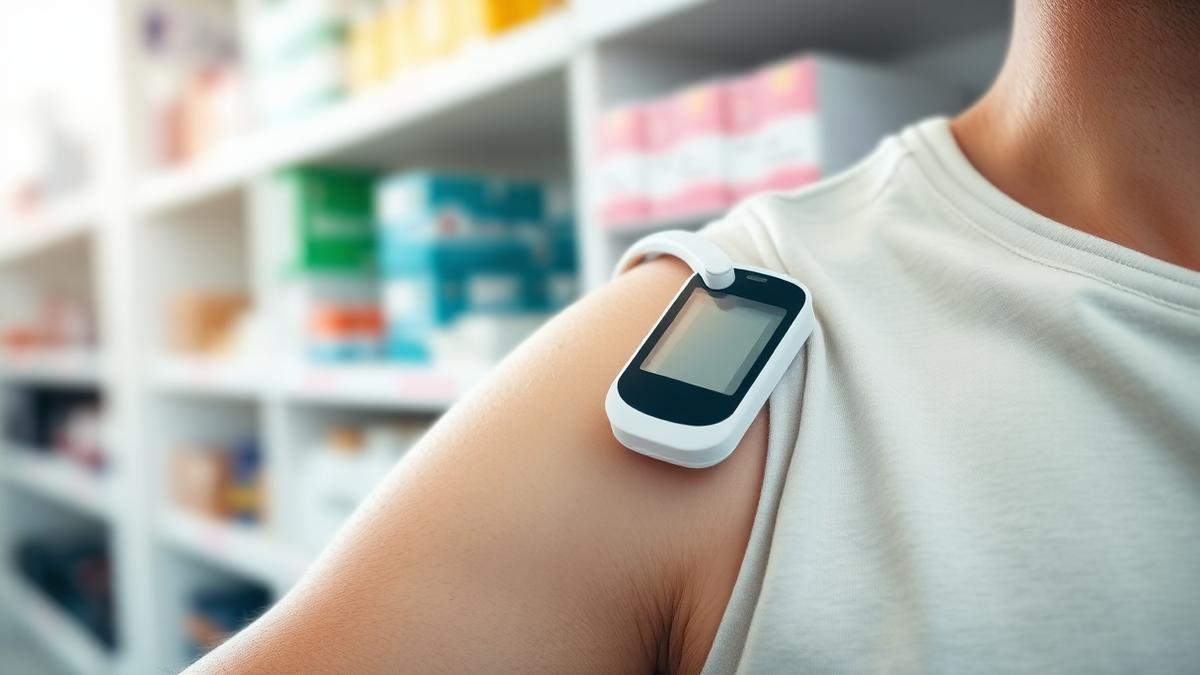
Continuous ketone sensors use the same architecture as glucose sensors: a subcutaneous filament sitting in interstitial fluid, an enzyme layer that reacts with beta hydroxybutyrate, and a transmitter that reports a value every few minutes. The engineering problem is that circulating ketone concentrations are roughly a hundredfold lower than glucose concentrations. The sensor has to resolve a small signal reliably, across a range where the difference between 0.6 and 1.5 millimoles per litre changes the clinical decision.
Two design directions are in play. The first is a dedicated ketone sensor worn alongside a glucose sensor. The second, and the one with the clearer commercial logic, is a dual analyte sensor that reports glucose and ketones from a single wearable on a single insertion. Abbott and Dexcom have both described dual analyte development programmes, and Abbott has published feasibility data on a combined glucose and ketone sensor. Medtronic has run its own ketone sensing work aimed explicitly at closed loop safety.
The reason the dual analyte form factor matters is behavioural. Adherence in diabetes technology is a function of how many things a person has to wear, charge, calibrate and pay for. A second patch is a second reason to stop.

The three use cases that carry real value
Automated insulin delivery safety. This is the one that changes outcomes rather than dashboards. A closed loop system that sees rising ketones can distinguish a benign glucose excursion from an insulin delivery failure and escalate accordingly: prompt for a pump site change, recommend an injection, alert a carer. Fully closed loop systems, the ones without meal announcement, are widely considered to need this second signal before they can be trusted without supervision.
SGLT2 inhibitor use in type 1 diabetes. These drugs have real cardiorenal benefit and a euglycemic DKA risk profile that has kept them largely off label in type 1 populations. Continuous ketone visibility is the monitoring answer that could make that risk manageable rather than theoretical. If that unlocks, the addressable population is not a niche.
Sick day management at home. Most DKA admissions begin with an ordinary infection and a set of instructions the patient could not follow precisely while feeling unwell. Continuous data replaces a fingerstick protocol that people skip with a trend line that escalates on its own.
What the evidence does not yet show
Feasibility and accuracy work is genuinely encouraging. Outcome data is not there yet, and buyers should be honest about that.
No published randomised trial has shown that continuous ketone monitoring reduces DKA admissions. The endpoint is hard to power for, because DKA is serious but not frequent enough at the individual level to make a short trial easy. Expect the first credible evidence to come from closed loop safety studies where ketone sensing is one arm of the algorithm, and from registry data in high risk cohorts.
There is also a threshold problem. The clinical action points used in ketone care come from capillary fingerstick chemistry. Interstitial values lag and behave differently, and nobody has yet agreed on what an interstitial ketone value of 1.0 should trigger, in whom, and how quickly. Alarm design without that agreement produces the same fatigue problem that damaged early glucose alerting.
The commercial read
Reimbursement is the decisive variable, and it will not follow the device. It will follow the claim. A sensor that markets convenience gets paid like an accessory. A sensor embedded in an automated insulin delivery system with a safety indication gets paid as part of that system, which is the only pricing structure that supports a dual analyte cost base at scale.
For health systems the calculation is unusually clean. A DKA admission is expensive, largely avoidable, and disproportionately concentrated in a small, identifiable, high utilisation group. Any organisation carrying risk on a type 1 population already knows exactly which patients account for repeat admissions. That is a targeted deployment, not a population rollout, and it is the fastest path to a defensible business case.
Key signals
Continuous ketone monitoring is not a better glucose sensor. It is the missing input for a control system that has been running on one instrument since it was invented. The near term winners will be the automated insulin delivery platforms that fold ketone data into their safety logic, not the standalone sensors that sell a second number to a person who already has too many. Watch for the first regulatory submission that pairs a dual analyte sensor with a closed loop safety claim, because that filing sets the reimbursement template for everything behind it. And treat the alarm thresholds as the unsolved part of the problem, since a sensor that cries wolf at 0.8 millimoles per litre will be switched off long before it prevents an admission.