
Good morning, HealthTech insiders. A daily insulin injection can add up to more than 300 extra needle sticks a year. Now adults with type 2 diabetes have another option: the FDA has approved Eli Lilly’s Onswik, a basal insulin taken once a week. Lilly announced the decision yesterday, bringing a second weekly insulin into the US market after Novo Nordisk’s Awiqli. The immediate promise is a lighter dosing schedule; whether it improves day-to-day adherence or outcomes beyond glucose control still needs to be shown in practice.
TriSalus has also received clearance for a catheter designed to reach smaller vessels during embolization, while Elucid’s earlier September financing backs AI plaque analysis in coronary CT. Different technologies, but the same question follows each one: can a clinical advance make care easier to deliver and prove its value in practice?
In today's Signal:
Lilly’s once-weekly Onswik: FDA approval for adults with type 2 diabetes reduces basal insulin dosing from once a day to once a week. Four QWINT studies found noninferior A1C reduction versus the daily insulins studied; fewer injections alone do not establish better adherence or fewer hospitalizations.
TriSalus’s TriNav Advance: FDA 510(k) clearance adds a device that can pair with a compatible microcatheter to access smaller, distal vessels, or be used alone for higher-flow infusion. Its limited release is planned over the coming weeks.
Elucid’s cardiovascular AI investment: A $55 million Series D announced September 2 backs commercial expansion of FDA-cleared Plaque-IQ and development of FFR-CT, which remains under FDA review. A new billing code creates a pathway, subject to coverage and medical necessity rules.
What we’re watching next: Weekly insulin coverage, evidence for pressure-enabled delivery, and payer requirements for coronary CT plaque analysis.
You Use AI Every Day. Why don't you own any of it?
You probably opened something powered by AI before your first coffee this morning. Millions of people do. Almost none of them own a piece of it.
That's been the catch with the AI boom, the biggest gains went to insiders and venture funds, while the companies actually building the frontier stayed private and out of reach.
That's starting to change. A wave of AI IPOs is forming, and a few are shaping up to be among the most retail-accessible mega-listings in years, the rare chance to get in near the ground floor instead of reading about the gains after the fact.
Our free briefing lays out the timeline, the access window, and the filing risk most investors will miss. No credit card. Sent straight to your inbox.
LATEST DEVELOPMENTS
METABOLIC MEDICINE & DIABETES
1. FDA Approves Lilly’s Once-Weekly Onswik for Adults With Type 2 Diabetes

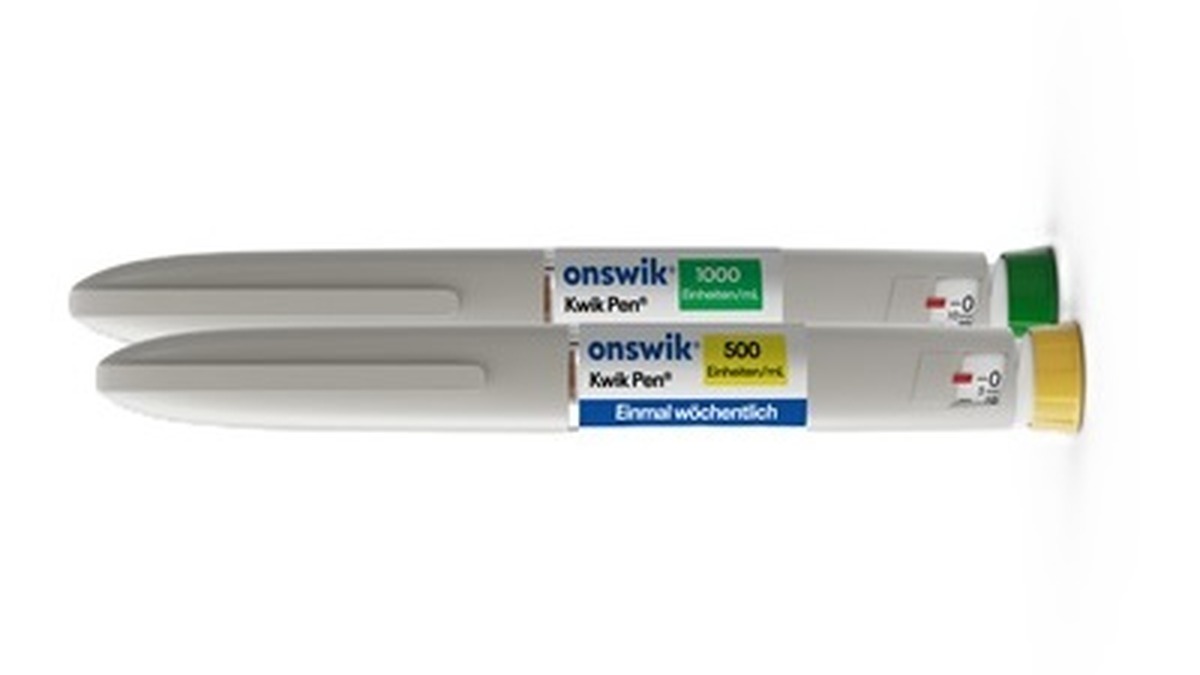
Onswik prefilled pen. Image: Eli Lilly and Company.
The FDA approved Onswik (insulin efsitora alfa-gobe) on September 23; Lilly announced the approval on September 24. The long-acting insulin is injected once weekly as an adjunct to diet and exercise to improve glucose control in adults with type 2 diabetes. It is the second once-weekly basal insulin approved in the US.
The details:
The dosing change: Switching from daily to weekly basal insulin would move a patient from roughly 365 to 52 basal injections a year, about 313 fewer. Patients needing mealtime insulin or other injections would still take those separately.
The trial evidence: Four randomized QWINT studies involving more than 3,400 adults compared weekly efsitora with daily glargine or degludec. Each met its primary endpoint for noninferior A1C reduction. They did not demonstrate fewer emergency visits or better real-world adherence.
The clinical limits: Lilly expects the KwikPen in two concentrations in the coming months. As with other insulins, hypoglycemia remains an important risk. Onswik is not recommended for type 1 diabetes because of an increased risk of severe hypoglycemia.
The Signal: Fewer injections could make treatment easier for some patients, but access, dose adjustment, and safety monitoring will shape its value. Watch how Onswik and Novo Nordisk’s Awiqli are covered and used.
INTERVENTIONAL ONCOLOGY & MEDTECH
2. FDA Clears TriSalus’s TriNav Advance for More Flexible Embolization Delivery

TriNav Advance infusion device. Image: TriSalus Life Sciences.
TriSalus announced FDA 510(k) clearance on September 22 for TriNav Advance, extending its Pressure-Enabled Drug Delivery device portfolio. The new configuration is designed to help interventional radiologists reach smaller, more distal vessels through a compatible microcatheter during embolization procedures.
The details:
Two ways to use it: In telescoping mode, a compatible delivery microcatheter passes through TriNav Advance while its SmartValve sits farther upstream. In high-flow mode, the device works without an added microcatheter for infusion through its larger lumen.
The intended advantage: TriSalus says its pressure-enabled approach modulates local flow to improve delivery and limit exposure outside the target area. The clearance expands procedural options; it does not establish that TriNav Advance improves survival, response rates, or the performance of radioligands and immunotherapies.
The rollout: A limited US release is planned over the coming weeks. Clinicians must assess which anatomies benefit and whether the added setup fits their workflow.
The Signal: Device design may help physicians deliver treatment through difficult vascular routes. The evidence to watch now is comparative clinical performance, including delivery consistency, off-target effects, procedure time, and patient outcomes.
CARDIOVASCULAR AI & REIMBURSEMENT
3. Earlier This Month, Elucid Raised $55M to Expand Coronary CT Analysis

Elucid announced a $55 million Series D to expand its cardiovascular imaging platform. Image: Elucid.
Elucid announced an oversubscribed $55 million Series D on September 2, bringing total reported funding to about $185 million. It supports FDA-cleared Plaque-IQ and BioIntegrated FFR-CT, which remains under FDA 510(k) review. This is earlier-September context, not a new round today.
The details:
What is cleared: Plaque-IQ analyzes coronary and carotid CT images to quantify plaque characteristics. Elucid says its approach has been validated against tissue histopathology; that does not mean every CT result is a direct tissue measurement or can replace an invasive test for every patient.
What remains under review: BioIntegrated FFR-CT aims to assess the functional significance of coronary disease using CT data. Its FDA submission is pending; it has not been cleared.
What the code changes: Category I CPT code 75577 took effect January 1 for qualifying quantitative coronary plaque analysis. Elucid cites 2026 national average payment figures of $1,012 in physician offices and imaging centers and $951 in hospital outpatient settings. Actual payment depends on the payer, setting, documentation, coverage policy, and medical necessity; the code itself guarantees none of those payments.
The Signal: A defined code can make adoption easier to evaluate financially, but it does not make every scan reimbursable or every cath lab visit avoidable. Elucid’s test is whether clinicians find the analysis useful and payers cover it consistently in appropriate patients.

QUICK HITS
👀 WHAT WE'RE WATCHING NEXT
1. Weekly insulin in the real world: How will formularies position Onswik alongside Awiqli and daily basal insulins? Injection frequency is measurable today; differences in persistence, hypoglycemia, and total cost will need observation as patients and clinicians use the products.
2. Pressure-enabled delivery evidence: TriNav Advance can address a wider range of vessel anatomy, according to TriSalus. We will watch for comparative procedure and patient data before linking the new clearance to better tumor response or survival.
3. The imaging reimbursement gap: Will coronary plaque analysis qualify for coverage in routine settings, and will its information change management? Elucid’s FFR-CT product also needs an FDA decision before claims about its clinical rollout can be made.
💰 FOLLOW THE MONEY
The deals:
Elucid: Its September 2 $55 million Series D supports Plaque-IQ and an FFR-CT product still under review.
Ferry Health: Announced a $9 million seed round when it launched from stealth on September 16. Its agents call providers to verify availability and help book appointments. Ferry says more than one million patients have access through partners; that is not a count of active users.
Health Force: Raised €4.2 million in a September 17 seed round led by LUMO Labs to expand supervised hospital operations agents. Its cited work includes insurance workflows and quality reporting; broader resource optimization is an expansion plan.
Nix Biosensors: Announced a $10 million Series A on September 15 to grow its hydration technology and develop Nix Health algorithms for licensing to consumer platforms. Those algorithms are distinct from the company’s existing sweat-sensing hardware.
The pattern: Investors are funding ways to make established workflows easier to deliver: imaging interpretation, appointment scheduling, hospital administration, and hydration monitoring. The rounds do not, by themselves, establish clinical benefit, savings for buyers, or a guaranteed path to reimbursement.
📆 UPCOMING HEALTHTECH EVENTS
TCT 2026: October 31-November 3, 2026 | San Diego, CA. An interventional cardiovascular meeting focused on evidence, procedures, imaging, and clinical practice.
HLTH USA 2026: November 15-18, 2026 | Las Vegas, NV. Healthcare leaders, payers, founders, and investors meet to discuss care delivery, technology, and business models.
RSNA 2026: November 29-December 3, 2026 | Chicago, IL. Radiology’s annual scientific assembly, covering imaging research, clinical applications, and technology.
🛠️ Trending HealthTech AI Tools
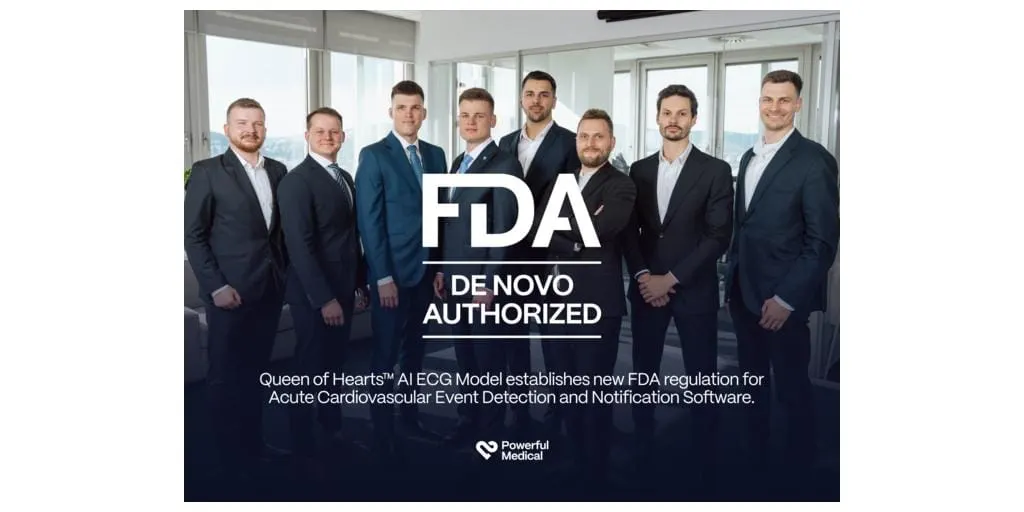
Powerful Medical’s Queen of Hearts: FDA De Novo-authorized AI support for assessing 12-lead ECGs for acute coronary occlusion. This is an earlier September regulatory story, included here as a tool rather than repeated as a lead development.
Veeva Falcon: An announced agentic platform for clinical, regulatory, and safety workflows, with early-adopter availability planned for November 2026. Its initial focus includes document intake, health-authority correspondence, and safety-case triage.
OpenEvidence: A medical evidence search and answer platform for clinicians. Its research model Darwin has reported benchmark results, but an exam score does not establish reliability for every patient question.
🛠️ Trending HealthTech AI Startups
Ferry Health: Patient navigation startup founded by Mehul Mehta, Keyur Mehta, and Andrew Buie. Its scheduling assistant is accessible to more than one million patients through partners across all 50 states; actual usage is a different measure.
Health Force: Barcelona-based hospital operations AI company led by co-founder and CEO Fadi Haddad. It reports deployments in insurance operations and quality reporting and plans to expand into further workflows.
Nix Biosensors: Boston company led by founder and CEO Meridith Cass. Its sweat-sensing hydration products have existing sports and occupational uses, while its new consumer-platform algorithm business is being developed.
DECISION INTELLIGENCE
Highlights: Deep Dives & Industry Reports
The Once-Weekly Basal Insulin Shift: Inside Lilly’s Onswik Approval and the Battle for Metabolic Adherence. How the weekly formulation works, what the four QWINT trials measured, and why fewer basal injections should be separated from unproven claims about long-term adherence or admissions.
The Biophysical Tumor Barrier: Inside TriSalus’s FDA Clearance and the Fluid Mechanics of Interventional Oncology. A closer look at TriNav Advance’s two configurations, the proposed delivery mechanism, and the comparative evidence still needed to establish better patient outcomes.
The CPT 75577 Playbook: Inside Elucid’s $55M Raise and the Economics of Non-Invasive Cardiovascular AI. An analysis of the September 2 financing, plaque characterization, and what the new CPT code does and does not guarantee for coverage.
What would most influence your organization’s decision to adopt a new clinical technology? |
That's it for today!
Onswik makes the basal dosing schedule much lighter for eligible adults with type 2 diabetes. TriNav Advance gives interventional radiologists another way to work through difficult vessels. Elucid’s funding gives its imaging platform room to expand, provided the clinical and payment pathways hold up outside the announcement.
The next chapter for each is practical: who can access it, how safely teams can use it, and whether the benefit shows up in care rather than only in a product description. Which of those tests is hardest for your team to answer today?
How did we do today? |
See you tomorrow,
Dr. Dereck Mush, MD, MBA
The HealthTech Signal is independently funded. Sponsorships help us invest in better reporting, research, and a stronger newsletter for our readers. Want to reach HealthTech founders & executives while supporting the Signal? Get in touch.
Was this email forwarded to you? Sign up here.
Until tomorrow,
The HealthTech Signal
Related reading


The Coronary Plaque Reimbursement Playbook: Inside Elucid's $55M Raise and the Economics of Non-Invasive Cardiovascular AI

The Post-Aromatase Battlefield: Breaking Down Eli Lilly's Inluriyo Strategy, Companion Diagnostic Moats, and the Oral SERD Market Shift

The AI ECG Cardiology Market After Queen of Hearts: Who the De Novo Clearance Actually Benefits
Keep exploring