Good morning, HealthTech insiders. The healthcare industry just spent two decades arguing about where patients fit in the digital health conversation. Yesterday, the market gave three simultaneous answers: a wearable on their wrist, an app they already downloaded, and a bundled price their employer can actually budget for.
Abbott got FDA clearance for a sensor that monitors both glucose and ketones simultaneously. Sword Health is buying Headspace, a mindfulness app with 65 million users, for up to $300M. And Transcarent launched the first bundled payment model for CAR T and BiTE cancer therapies. The tools are finally arriving at the patient layer. The problem is that Pew Research found this week that 53% of US adults feel they have no say when AI touches their care. The technology is moving. The consent and transparency layer is not keeping up
In today's Signal:
Abbott's Libre Duo 10 Day gets De Novo clearance: the world's first dual glucose-ketone sensor, targeting a 55% rise in DKA hospital admissions over the last decade
Sword Health acquires Headspace for $200-300M, combining AI physical therapy with the world's most-used mindfulness platform
53% of US adults feel they have no say when AI is used in their healthcare, per a Pew Research Center survey of 3,488 Americans
Transcarent launches the first bundled payment model for CAR T and BiTE cancer therapies, promising up to $150K in employer savings per patient
Quick Hits: Arintra $25M Series B; Insilico Medicine H1 2026 results; Boston Scientific confirms cyberattack
LATEST DEVELOPMENTS
MEDICAL DEVICES
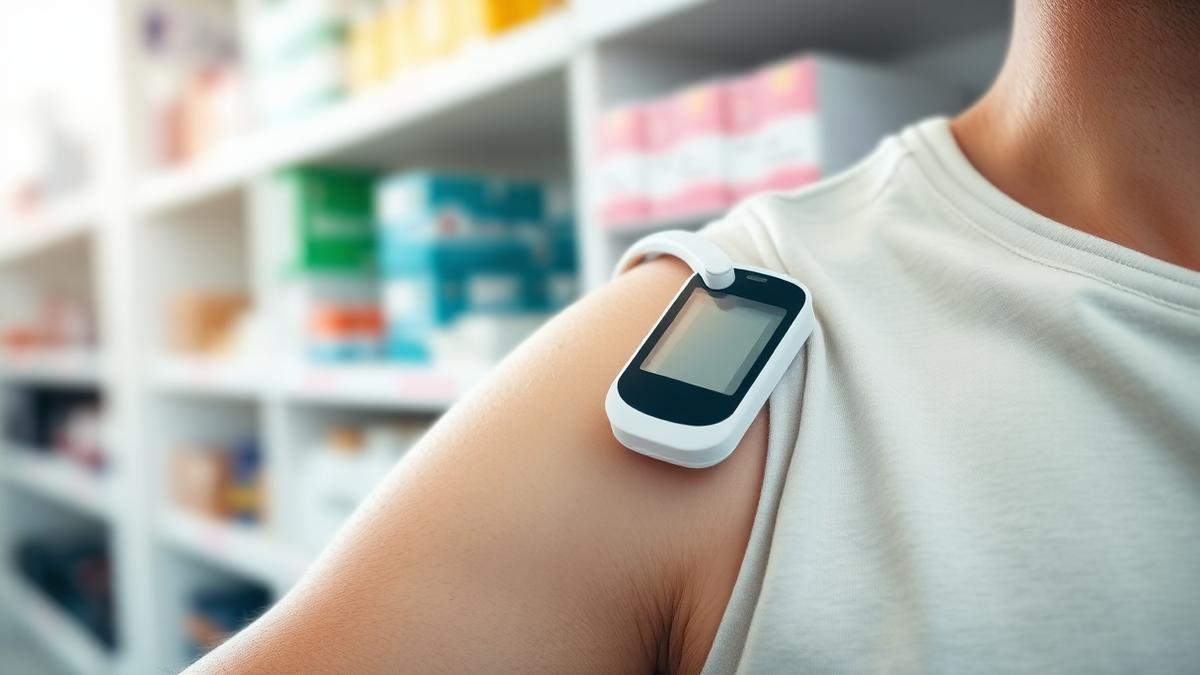
1. Abbott's new wearable watches your ketones while you live your life

Source: Abbott / MD+DI, August 26, 2026. Image courtesy of Abbott.
The signal: The FDA gave Abbott De Novo authorization for the Libre Duo 10 Day, the world's first cleared device to continuously monitor both glucose and ketones simultaneously. No blood test needed, no extra reader. One wearable, two signals, always on.
The details:
Libre Duo 10 Day meets both the FDA's iCGM (continuous glucose monitoring) standard AND the new iCGK (continuous ketone monitoring) standard, the first device ever to do so.
DKA hospital admissions have risen 55% over the last decade. The sensor alerts users before symptoms mimic a common infection and patients miss the window to act.
US launch planned for later in 2026. Pump integrations with Beta Bionics iLet and Sequel Med Tech twiist expected by year end; Insulet and Tandem follow in 2027.
Why it matters: Abbott just made DKA prevention passive. Instead of asking diabetic patients to remember to test ketones when they feel sick, which is exactly when they least want to, the sensor alerts them in the background. That changes the care model for type 1 patients on AID pumps, and the FDA's creation of a new iCGK benchmark means competitors now have a defined regulatory path to follow Abbott in.
CONSUMER HEALTH
2. The AI physio company just bought the world's most-used mindfulness app.
The signal: Sword Health, the AI-powered virtual physical therapy company last valued at over $4 billion, is acquiring Headspace, the mindfulness and mental health app with roughly 65 million users, for somewhere between $200 million and $300 million in cash. The deal is set to close September 14.
The details:
Sword Health has raised $493 million total. Its AI-first virtual physical therapy platform was already expanding into mental health before this deal; Headspace gives it an immediate, massive consumer base.
Headspace (parent OrangeDot) brings a consumer-first brand identity and employer health benefit relationships that complement Sword's enterprise sale motion.
Per Endpoints News and Axios Pro, August 25. Filing with Massachusetts Health Policy Commission was filed July 22.
Why it matters: Sword Health is making the same bet UHS made with Talkspace last month: the company that owns the digital front door to mental and physical health beats the company that only offers clinical sessions. Headspace's 65 million users is a distribution asset that would take years and hundreds of millions to replicate organically.
POLICY
3. Pew just polled 3,500 Americans on AI in their care. The consent gap is bigger than anyone is admitting.
The signal: A Pew Research Center survey of 3,488 US adults, published August 25, found that 53% feel they have 'not too much' or no control over the use of AI in their healthcare, and 46% were unsure whether AI had been used in their care at all.
The details:
72% of respondents said it is 'extremely' or 'very' important that providers tell them when AI is used. 81% want disclosure when AI analyzes their medical scans or makes a diagnosis.
63% of respondents want more say over whether AI is used. Disclosure expectations drop only modestly for lower-stakes uses: 64% want it for AI-generated prescription refills, 56% for appointment scheduling.
White adults (60%) are more likely than Black (43%), Hispanic (40%), and Asian (42%) adults to report having little to no say, suggesting the consent gap cuts differently by race.
Why it matters: The companies deploying AI in clinical settings are running ahead of the consent frameworks that will eventually govern them. Pew's data lands just days after the FDA's GenAI device discussion paper and the PLOS study showing 99.8% of cleared AI devices were never tested on patients. The accountability pressure is building from three directions at once.
QUICK HITS
💰 FOLLOW THE MONEY
The deals: Abbott's Libre Duo 10 Day received De Novo authorization (product clearance, not a funding round). Sword Health is acquiring Headspace for $200-300M in cash, effective September 14. Arintra raised a $25M Series B, total funding $51M. Insilico Medicine reported H1 2026 results: $4.3B+ in collaborations signed with Servier, SK Biopharmaceuticals, and Takeda.
The pattern: Two different bets on where patient-facing digital health goes next: hardware-meets-wearable (Abbott's sensor category creation) and consumer software consolidation (Sword buying distribution). Revenue cycle AI continues attracting steady capital as reducing claim denials becomes a CFO priority. Today's pattern is not a blockbuster week; it is a series of infrastructure plays.
🩺 THE CLINICIAN’S SIGNAL
On the Abbott Libre Duo clearance: For endocrinologists managing type 1 patients, the question is not whether continuous ketone monitoring helps; it is whether payors will cover it before it is widely adopted. Abbott has not disclosed pricing, and without coverage the patients who need early DKA warning most may not be able to afford the sensor.
On the Pew AI consent data: Clinicians are often the ones AI companies point to for trust legitimacy, but this survey shows patients do not feel the conversation is happening. Physicians who deploy AI scribes or diagnostic AI without clear patient disclosure are sitting in an uncomfortable position: patients expect to be told, and 80%+ of respondents want disclosure even for note-taking.
On Transcarent's bundled cancer payment model: CAR T and BiTE therapies involve significant toxicity monitoring requirements. Moving them to community settings saves employers money. Whether community oncology sites have the infrastructure to manage cytokine release syndrome and grade 3+ toxicities at scale is a separate clinical question worth watching.
🛠️ Trending HealthTech AI Tools & Startups
Abbott Libre Duo 10 Day: De Novo cleared dual glucose-ketone continuous monitor; first device to meet both iCGM and iCGK standards simultaneously; AI-powered alert system for DKA prevention.
Headspace (acquired by Sword Health): 65-million-user mindfulness and mental health platform folding into Sword's AI-assisted physical and mental care stack.
Insilico Medicine Pharma.AI: Generative AI drug discovery platform (HKEX: 3696) in Phase III for rentosertib (IPF) and Phase II for garutadustat (IBD); 9 pre-clinical candidates and 8 clinical advancements in H1 2026.
Arintra Revenue Assurance Platform: Agentic AI for hospital revenue cycle management; $25M Series B; automated coding and denial prediction for enterprise health systems.
Sword Health: Founded by Virgilio Bento; $493M raised total; acquiring Headspace for up to $300M; expanding AI virtual physical therapy into mental and behavioral health stack.
Arintra: Founded and led by CEO Nitesh Shroff; Austin, TX; $25M Series B, total $51M; agentic AI for hospital billing accuracy and denial prevention.
Transcarent: President Snezana Mahon leads bundled payment model for CAR T and BiTE cancer therapies; employer-facing, community-oncology-connected, certified nurse navigators included.
Insilico Medicine: Founded by Alex Zhavoronkov; HKEX 3696; Phase III for rentosertib in IPF; $4.3B+ in collaborations signed in H1 2026.
📣 Highlights: Events, Lists & Deep Dives
TRENDING DEEP DIVE: Continuous Ketone Monitoring: The DKA Prevention Layer Wearables Just Unlocked - https://thehealthtechsignal.com/p/continuous-ketone-monitoring-dka-prevention-2026

HEALTHTECH LIST: Top 10 Employer Health Navigation Platforms Reshaping Benefits in 2026 - https://thehealthtechsignal.com/p/top-employer-health-navigation-platforms-2026
DIAGNOSTIC TECH: AI Diagnostics and Consent: What Patients Deserve to Know Before Their Next Scan - https://thehealthtechsignal.com/p/ai-diagnostics-consent-what-patients-deserve-to-know
INDUSTRY CALENDAR: HealthTech Conferences and Events August to October 2026 -- https://thehealthtechsignal.com/events
That's it for today!
The patient-layer infrastructure build that's been promised for years is actually happening right now: wearables, apps, and payment models landing at the bedside simultaneously. But patient data from Pew says the consent conversation hasn't caught up. The next six months will tell us whether the industry addresses that voluntarily or waits for a regulator to force it.
Tell me where you think the patient consent framework needs to land, and whether you think health systems or the FDA should be driving it.
Before you go, was today’s Signal worth your time? Let us know. Your feedback helps us keep improving what we send you.
How did we do today? |
See you tomorrow,
Dr. Dereck Mush, MD, MBA
The HealthTech Signal is independently funded. Sponsorships help us invest in better reporting, research, and a stronger newsletter for our readers. Want to reach HealthTech founders & executives while supporting the Signal? Get in touch.
Was this email forwarded to you? Sign up here.
Until tomorrow,
The HealthTech Signal