This account draws on reporting by KGOU and Public Radio Tulsa, StateImpact Oklahoma. The HealthTech Signal has not independently visited the hospitals described.
In stroke care there is a phrase clinicians repeat until it becomes reflexive: time is brain. For every minute a large vessel stroke goes untreated, the average patient loses an estimated 1.9 million neurons. In rural Oklahoma, where the nearest neurologist might be a two hour drive away, that math used to mean patients simply lost more brain than their counterparts in cities. Public radio reporting from StateImpact Oklahoma describes a telemedicine program built specifically to close that gap, connecting small rural emergency departments to stroke specialists via video within minutes of a patient arriving.
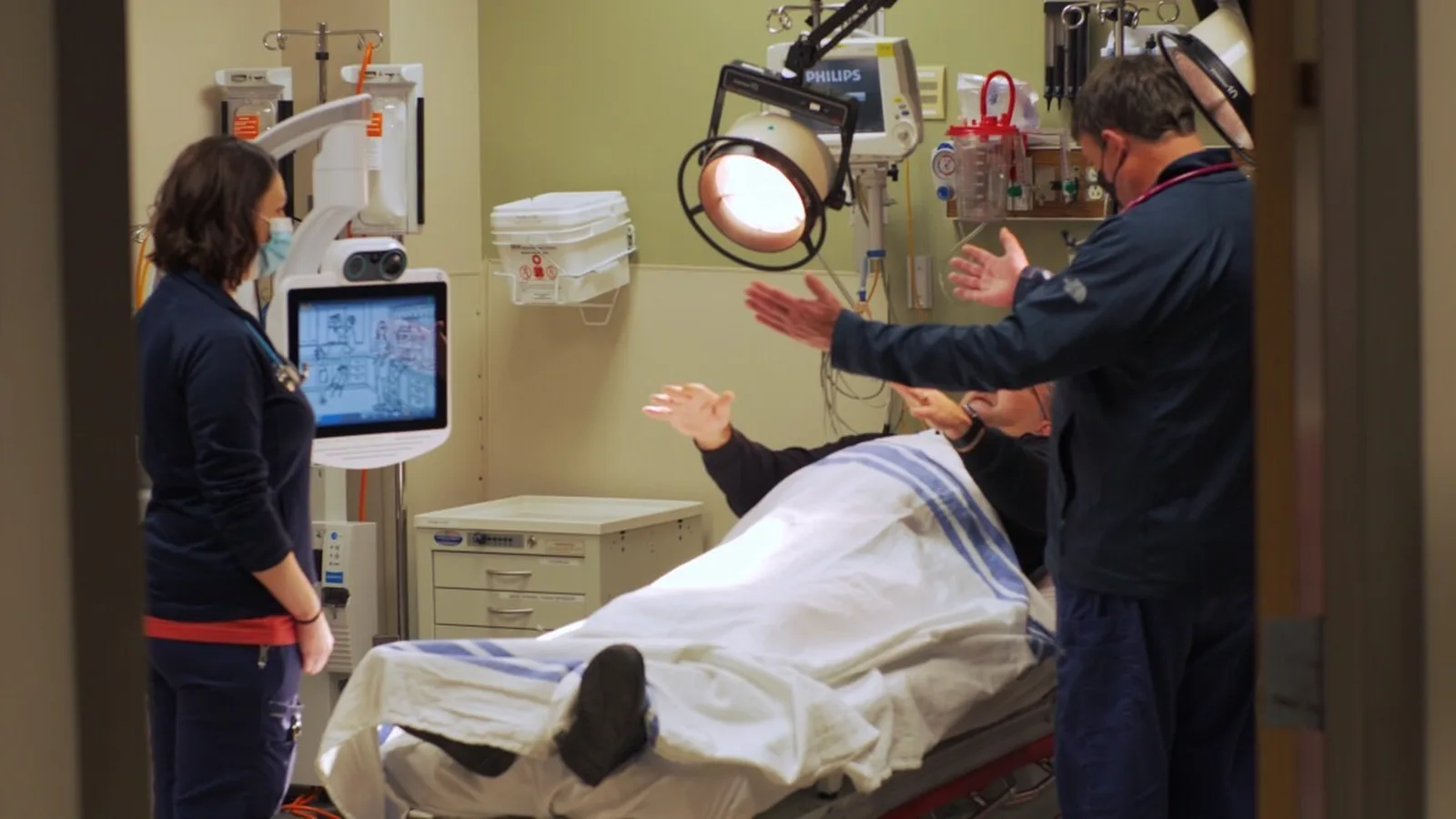
The program puts a mobile cart with a camera and screen in rural emergency rooms across the state. When a patient arrives with stroke symptoms, the local ER team can connect a remote neurologist onto that screen almost immediately, someone trained specifically in acute stroke who can examine the patient over video, review imaging as it comes in, and make the call on whether to administer clot-busting medication, all without the patient ever leaving the small town hospital.
Why the clock is the entire disease
Ischemic stroke, caused by a blood clot blocking flow to part of the brain, has a treatment, tissue plasminogen activator, that dissolves the clot and can dramatically reduce long-term disability. But it only works within a narrow window, generally up to 4.5 hours from symptom onset, and the benefit shrinks the longer a patient waits. For the more severe large vessel strokes, a different intervention, mechanical thrombectomy, physically removes the clot, and it too has a time-dependent benefit that narrows the case for intervention with every passing hour.
The problem for rural patients has never been a lack of effective treatments. It has been access to a physician trained and confident enough to diagnose a stroke correctly and authorize the clot-busting drug within that window, at a small hospital that might see only a handful of stroke cases per year and does not have a neurologist on staff. Misdiagnosing a stroke, or hesitating to give a powerful clot-dissolving drug without specialist backup, has historically meant rural patients either got treated too late or transferred hours away before treatment could start at all.
What telestroke actually changes
A telestroke consult compresses the specialist access problem down to the time it takes to wheel a cart to the bedside and dial in. The remote neurologist can conduct a standardized stroke exam over video, essentially the same assessment they would perform in person, review CT results transmitted digitally, and make a treatment recommendation the local ER physician can act on immediately. This model has been validated in the broader medical literature for over a decade, with multiple studies showing telestroke-guided treatment produces outcomes comparable to in-person specialist care, and significantly better outcomes than the alternative of no specialist access at all.
What is notable about programs like Oklahoma's is the geographic scale required to make this work in a genuinely rural state. A single hub of stroke neurologists based in a city like Oklahoma City or Tulsa can, through this model, cover dozens of small hospitals spread across a state where driving to the nearest stroke center could itself burn through the entire treatment window before a patient even arrives.
The clinical honesty required here
I want to be careful not to overstate what telestroke does. It does not replace the need for stroke centers, and it does not turn a small rural ER into a comprehensive stroke unit. Patients who need mechanical thrombectomy or intensive post-stroke monitoring still generally need to be transferred to a larger center. What telestroke changes is the decision at the front door: whether to give clot-busting medication now, at the local hospital, inside the treatment window, rather than waiting for a transfer that might arrive after the window has closed.
That distinction matters enormously for outcomes. A patient who receives the clot-dissolving drug at their local ER before transfer arrives at the stroke center in dramatically better condition than one who received nothing until arrival. Telestroke is not solving rural stroke care end to end. It is solving the single most time-sensitive decision inside it.
The systemic tension: funding and staffing a program that treats rare events
Telestroke programs face a structural funding challenge that is different from most healthtech deployments. Any individual rural hospital sees strokes infrequently, which makes it hard to justify the ongoing cost of maintaining 24/7 telestroke coverage purely on a per-hospital basis. These programs generally only pencil out at a network or state level, often requiring state health department involvement, academic medical center partnerships, or federal rural health grant funding to sustain the infrastructure and the physician staffing behind it.
Reimbursement has also historically lagged the clinical need. Medicare and many state Medicaid programs have expanded telehealth reimbursement rules in recent years, including specific billing codes for telestroke consults, but rural hospitals operating on thin margins still face real financial strain in staffing and maintaining these systems, even when the clinical case for them is not in dispute.
The takeaway
There is no dramatic new device at the center of this story, no gene edit, no implant. It is a camera, a screen, and a neurologist who does not have to be in the room. That combination is unglamorous, and it is also one of the most cost-effective interventions in this entire newsletter's beat, because it targets the single variable that determines stroke outcomes more than almost anything else: time. The technology here is not the hard part. Funding it consistently enough that every rural ER in a state has access to it, every hour of every day, is.
Key Signals
Telestroke programs address the single variable most predictive of stroke outcomes, the minutes between symptom onset and treatment, by putting specialist judgment at the bedside instantly rather than after a transfer. The evidence base for telestroke-guided treatment producing outcomes comparable to in-person specialist care is now over a decade deep, which distinguishes it from many newer digital health interventions still awaiting outcome data. The model does not eliminate the need for larger stroke centers, since patients requiring thrombectomy or intensive monitoring still require transfer after the initial treatment decision. The persistent bottleneck is financial rather than technical, since any single rural hospital sees too few strokes to justify standalone investment, making state or network-level funding the real determinant of whether these programs reach the patients who need them.