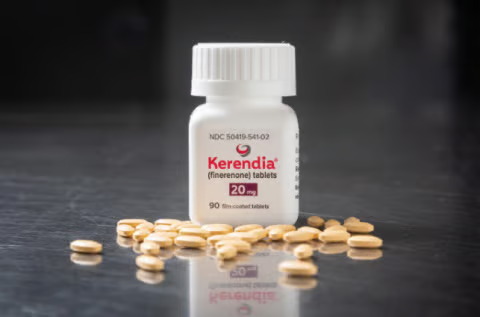
For adults living with type 1 diabetes and chronic kidney disease, therapeutic progress has arrived unevenly. ACE inhibitors and angiotensin receptor blockers have anchored care since captopril's 1993 indication, while much of the cardiorenal drug renaissance has focused on type 2 diabetes. Bayer's Phase 3 FINE-ONE result puts a different biological pathway—and a long-excluded population—back at the center of nephrology strategy.
The headline is a 25% placebo-adjusted reduction in urine albumin-to-creatinine ratio at six months. The more consequential question is whether selective mineralocorticoid-receptor blockade can become a durable organ-protection layer without importing the ketoacidosis concern that has limited SGLT2 use in type 1 diabetes.
In this deep dive, we are going to look at:
- Why this matters now: the clinical arithmetic of the type 1 renal gap
- What actually happened in FINE-ONE
- The obvious read versus the deeper signal
- A comparative taxonomy of cardiorenal drug classes
- The evidence ladder from mechanism to clinical outcomes
- The HealthTech investor's signal
- The strongest operational counter-thesis
- Four observable milestones through 2028
- The bottom line for clinical and life-sciences leaders