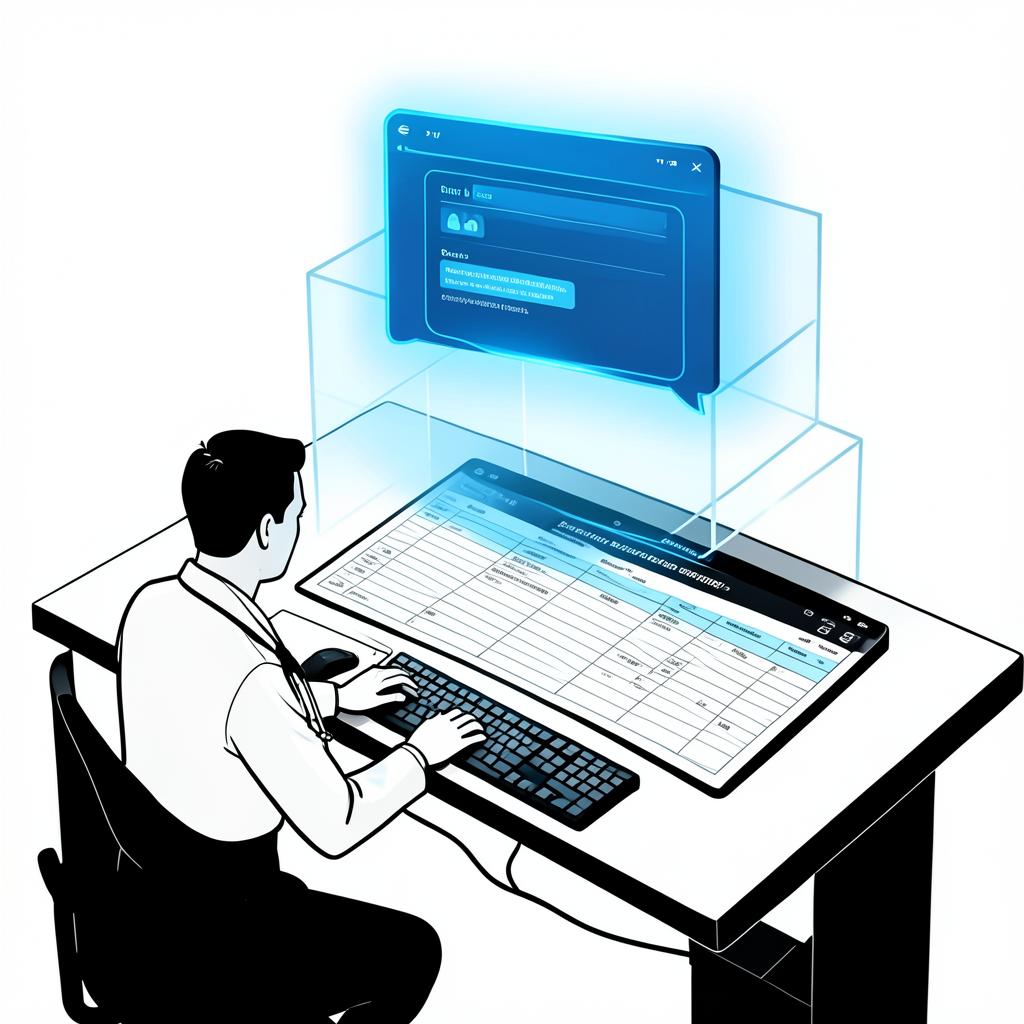
At 2:00 AM in a quiet data center in Salt Lake City, a clinical data engineer watches an alert log turn orange. A real-time data stream carrying arterial blood gas measurements from three critical care units has stalled. The cause is an unmapped laboratory code that the upstream electronic health record platform failed to translate. This incident highlights the unglamorous reality of clinical machine learning. While public discussion focuses on generative models and diagnostic accuracy, the operational success of healthcare artificial intelligence depends entirely on a silent, robust layer of infrastructure.
To move clinical models from laboratory prototypes into active patient care, technology teams must build on top of standardized, reliable software components. The HealthTech AI Infrastructure 50 catalogs the essential data standards, open-source libraries, database technologies, and security frameworks that allow operators to run clinical algorithms safely. These fifty elements form the modern engine room of digital health.
1. HL7 FHIR
Fast Healthcare Interoperability Resources is a standardized data protocol designed to facilitate the exchange of health information between computer systems. Why it matters: It acts as the universal API layer that extracts structured clinical data from electronic health records to feed real-time predictive models.
2. DICOM
Digital Imaging and Communications in Medicine is the international standard for storing, transmitting, and sharing medical images. Why it matters: It is the foundational raw format that computer vision models ingest to perform automated image segmentation and classification.
3. OMOP Common Data Model
Observational Medical Outcomes Partnership is a standardized data schema designed to harmonize disparate observational databases. Why it matters: It enables multi-center clinical trials and aggregate machine learning research without requiring institutions to share raw patient records.
4. SNOMED CT
Systematized Nomenclature of Medicine Clinical Terms is a systematic, computer-processable collection of medical terms. Why it matters: It provides the precise clinical vocabulary required to turn unstructured physician notes into machine-readable inputs.
5. LOINC
Logical Observation Identifiers Names and Codes is a universal database standard for identifying medical laboratory observations. Why it matters: It ensures that lab values from different clinical laboratories map to the exact same database field in an AI training set.
6. RxNorm
RxNorm is a normalized naming system for clinical drugs produced by the National Library of Medicine. Why it matters: It standardizes medication inputs for clinical decision support models to predict adverse drug interactions.
7. Apache Spark
Why it matters: This distributed computing engine processes petabytes of unstructured medical records and genomic datasets simultaneously.
8. Apache Kafka
Why it matters: It provides low-latency event streaming to feed real-time patient monitoring algorithms in intensive care units.
9. dbt
Why it matters: It allows clinical data analysts to transform raw hospital database schemas into structured, clean tables ready for machine learning feature extraction.
10. Snowflake
Why it matters: Its decoupled compute and storage architecture allows health systems to run heavy analytical queries without slowing down production databases.
11. Databricks
Why it matters: The platform unified data lakehouse architecture lets data scientists collaboratively build and train clinical models in a single workspace.
12. pgvector
Why it matters: This PostgreSQL extension allows developers to store and query vector embeddings directly inside their existing relational databases.
13. Pinecone
Vector databases are specialized data stores designed to index and search high-dimensional vector embeddings. Why it matters: It enables fast similarity searches across millions of clinical documents for retrieval-augmented generation.
14. Milvus
Why it matters: This open-source vector database handles large-scale genomic and proteomic embeddings with high throughput.
15. Qdrant
Why it matters: Its precise filtering mechanism allows developers to search clinical vectors while strictly filtering by patient metadata.
16. PyTorch
Why it matters: It is the dominant deep learning framework used by medical researchers to design novel neural network architectures.
17. TensorFlow
Why it matters: Its robust ecosystem supports legacy computer vision deployments in medical imaging equipment.
18. ONNX Runtime
Why it matters: It serializes models from different frameworks to run efficiently on low-power edge devices in outpatient clinics.
19. Hugging Face Transformers
Why it matters: It offers pre-trained language models that can be fine-tuned on clinical text with minimal computational overhead.
20. LangChain
Why it matters: It simplifies the orchestration of multi-step clinical workflows using large language models.
21. LlamaIndex
Why it matters: It connects proprietary clinical documents to large language models for precise context injection.
22. NVIDIA Clara
Why it matters: This application framework accelerates medical imaging and genomics processing using specialized GPU hardware.
23. MONAI
Medical Open Network for AI is a PyTorch-based framework tailored specifically for deep learning in medical imaging. Why it matters: It provides standardized pre-processing pipelines and neural network layers optimized for 3D medical images.
24. Triton Inference Server
Why it matters: It standardizes the deployment of multiple clinical models on a single GPU node to maximize hardware utilization.
25. AWS HealthLake
Why it matters: It automatically extracts clinical entities from unstructured data and indexes them in a search-ready FHIR format.
26. Google Cloud Healthcare API
Why it matters: It bridges legacy healthcare protocols like HL7 v2 and modern cloud-based analytics pipelines seamlessly.
27. Azure Health Data Services
Why it matters: It provides a secure, compliant cloud environment for processing and storing protected health information.
28. MLflow
Why it matters: It tracks clinical model hyperparameters and artifacts to ensure absolute reproducibility during validation studies.
29. Weights & Biases
Why it matters: It allows machine learning teams to monitor clinical model training metrics and spot gradient issues early.
30. Kubeflow
Why it matters: It orchestrates complex machine learning workflows on Kubernetes to ensure training tasks scale reliably.
31. Apache Airflow
Why it matters: It schedules and monitors the batch processing jobs that update clinical data warehouses overnight.
32. Great Expectations
Why it matters: This testing tool prevents silent pipeline failures by validating that incoming clinical data matches expected schemas.
33. Pandera
Why it matters: It provides runtime data validation for dataframes, ensuring that clinical model inputs remain structured.
34. WhyLogs
Data drift is the gradual change over time in the statistical distribution of input data used by a machine learning model. Why it matters: It profiles dataset statistics to detect when incoming clinical data drifts from the original training distribution.
35. FastAPI
Why it matters: It allows developers to quickly build high-performance APIs for serving clinical model predictions to EHRs.
36. Docker
Containerization is a software development process where an application and its dependencies are packaged together into a single lightweight execution environment. Why it matters: It packages clinical applications into isolated containers to guarantee they run identically across different hospital environments.
37. Kubernetes
Why it matters: It manages the deployment, scaling, and failover of clinical AI container applications across hospital clusters.
38. HashiCorp Vault
Why it matters: It secures and manages API keys, certificates, and database credentials used by clinical data pipelines.
39. Let's Encrypt
Why it matters: It automates the generation of SSL certificates to ensure all internal hospital API communication is encrypted.
40. Keycloak
Why it matters: It provides open-source identity and access management to control which clinicians can access specific AI endpoints.
41. OpenID Connect
Why it matters: It standardizes user authentication, allowing clinicians to log into AI applications using their existing hospital credentials.
42. Orthanc
Why it matters: This lightweight, REST-ready DICOM server allows developers to build clean clinical interfaces around legacy imaging systems.
43. dcm4chee
Why it matters: It serves as an open-source clinical image archive capable of storing millions of patient scans securely.
44. HAPI FHIR
Why it matters: It is the most widely used open-source library for building FHIR-compliant backend servers in Java.
45. Firely Server
Why it matters: It provides a turnkey, high-performance FHIR database that simplifies secure data storage for developers.
46. Clinical Quality Language
Why it matters: This high-level language allows clinical rules to be authored once and executed across different data platforms.
47. DuckDB
Why it matters: It allows developers to run extremely fast analytical queries on local clinical datasets without setting up a full server.
48. Prometheus
Why it matters: It monitors system metrics to alert engineers when clinical inference servers run low on memory.
49. Grafana
Why it matters: It visualizes performance metrics to help IT teams track model latency and uptime inside the hospital.
50. Apache Spark NLP
Why it matters: It processes massive clinical text corpora at scale, extracting structured concepts from clinical notes.
Key Signals
The separation between top-tier clinical AI deployments and failed pilots is determined by the robustness of the underlying data pipeline, not the parameter size of the model.
Clinical operators should prioritize tools that support open-source interoperability standards over proprietary database schemas to avoid vendor lock-in as models evolve.
As regulatory bodies demand greater transparency, infrastructure that automatically logs data drift and preserves model lineage will become mandatory for clinical validation.