
For more than seven decades, the pharmacological management of schizophrenia has been defined by a fundamental mechanistic compromise: dopamine D2 receptor antagonism reliably silences the positive symptoms of psychosis (auditory hallucinations, persecutory delusions, and thought disorganization), yet leaves the experiential negative symptoms largely untouched.
These negative symptoms, specifically avolition (loss of motivation), asociality (social withdrawal), and anhedonia (inability to experience anticipatory pleasure), represent the primary pathophysiological driver of lifelong social and occupational disability in schizophrenia. While dopamine blockade prevents acute psychiatric hospitalization, it does nothing to restore the neural circuits required to initiate and sustain goal-directed behavior.
In This Deep Dive:
- Why this matters now: The clinical void of experiential negative symptoms in schizophrenia.
- What actually happened: Pivotal Phase 3 CONVOKE trial efficacy, CAINS-MAP scores, and adherence data.
- The obvious read versus the deeper signal: Digital adjuncts versus computational neuroplasticity.
- Competitive taxonomy & clinical maturity: Next-generation neuropsychiatric pipelines.
- The Evidence Ladder: Cognitive reward modeling to FDA 510(k) clearance.
- 📈 The HealthTech Investor's Signal: Commercial reimbursement rails, CPT codes, and psychiatric TAM expansion.
- Counter-thesis: Outpatient real-world adherence, Medicaid coverage latency, and clinician inertia.
- Forward intelligence: 4 observable test indicators for the upcoming 12 to 24 months.
- The bottom line for psychiatric health systems and digital health investors.
Why this matters now
Schizophrenia affects approximately 24 million individuals globally, including 2.8 million Americans, generating over $155 billion in annual direct healthcare and societal disability costs. Second-generation atypical antipsychotics generate billions in annual revenue, but clinical trials targeting negative symptoms with small molecules have suffered a persistent failure streak across alpha-7 nicotinic agonists, glycine transporter inhibitors, and glutamate modulators.
Because experiential negative symptoms stem from impaired corticostriatal reward-prediction error processing rather than simple hyperdopaminergic signaling, pharmacological monotherapy has proven fundamentally incapable of retraining damaged behavioral pathways. By securing FDA 510(k) clearance for Motivista (CT-155), Click Therapeutics has established the first authorized therapeutic of any kind specifically indicated to reduce experiential negative symptoms in adults with schizophrenia.
What actually happened
In the pivotal, double-blind, sham-controlled Phase 3 CONVOKE trial (published in JAMA Network Open, n=457 across 42 US clinical sites), adults with schizophrenia maintained on stable antipsychotic therapy were randomized to either Motivista or an active digital control app for 16 weeks.
Motivista met its primary endpoint with high statistical significance, demonstrating a 62% relative reduction in experiential negative symptoms on the Clinical Assessment Interview for Negative Symptoms Motivation and Pleasure subscale (CAINS-MAP). Patients receiving Motivista achieved a mean change of -6.8 points versus -4.2 points in the digital control arm (least squares mean difference -2.6 points, 95% CI: -4.0 to -1.2, p=0.0003, standardized effect size Cohen's d = -0.36).
Crucially, patient engagement remained robust throughout the multi-month trial: participants completed an average of 10 minutes of daily interactive micro-interventions (~1 hour per week), maintaining a 70.4% sustained adherence rate at Week 15. The safety profile was pristine, with zero treatment-related serious adverse events and no exacerbation of underlying positive psychotic symptoms.
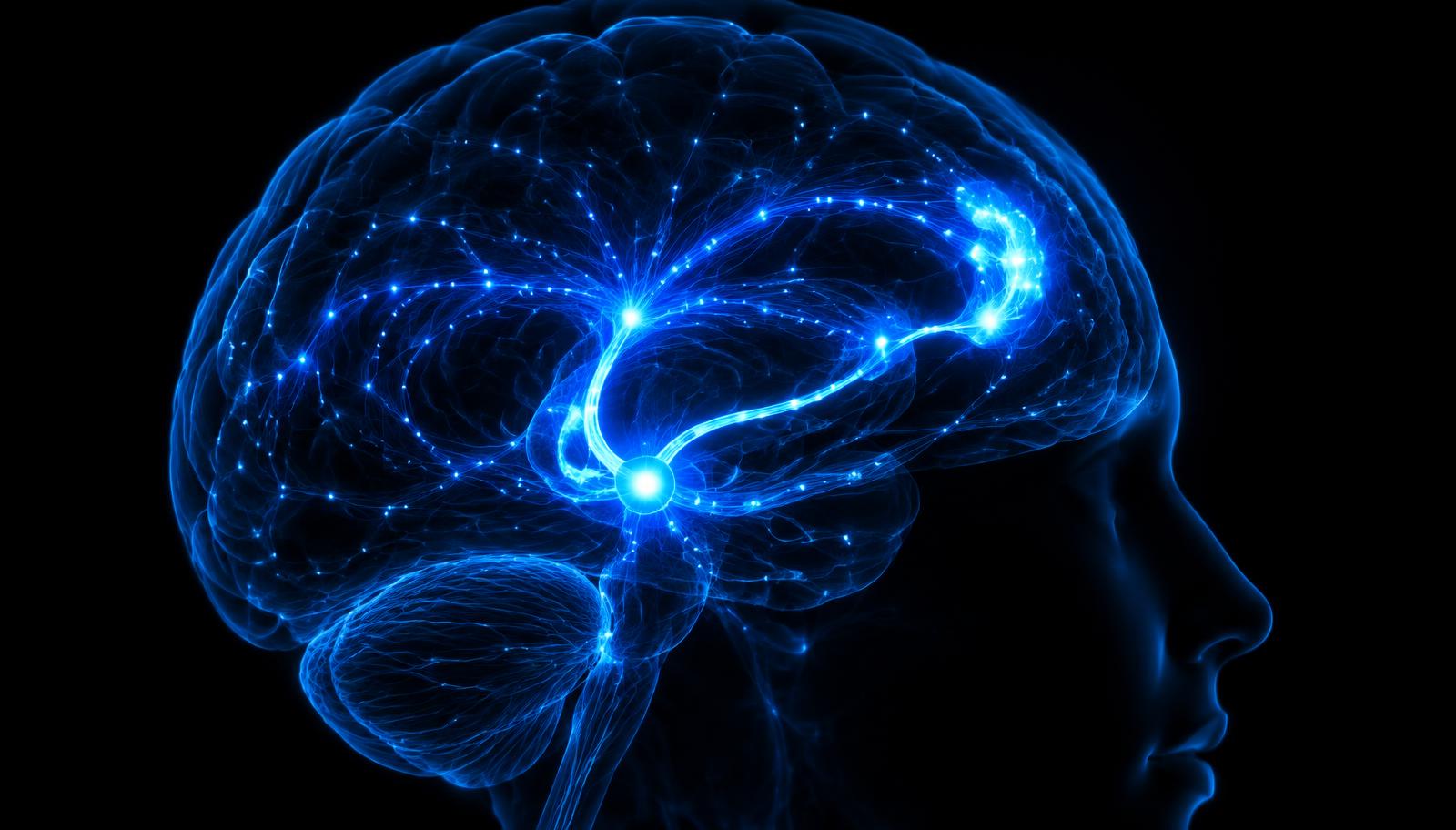
An abstract visualization of the striatal reward circuits that prescription software aims to retrain. Image: The HealthTech Signal
The obvious read versus the deeper signal
The superficial takeaway across healthtech media is that a digital health company has launched another smartphone application for mental health. The deeper neurobiological signal is the validation of prescription software as an active neuroplasticity agent operating in tandem with molecular pharmacology.
Motivista does not function as a passive digital symptom diary or generic mindfulness library. Instead, it deploys structured behavioral activation, real-time anticipatory pleasure calibration, and micro-contingency reinforcement schedules that directly target dysfunctional dopaminergic reward prediction in the ventral striatum and prefrontal cortex. While antipsychotic drugs chemically clamp hyperactive mesolimbic dopamine surges, Motivista systematically retrains hypoactive mesocortical reward circuits through progressive experiential learning. This establishes a dual-modality paradigm: pharmacotherapy stabilizes acute neurochemistry, while prescription software restores cognitive and behavioral architecture.
🔒 HEALTHTECH SIGNAL PLUS · EXCLUSIVE SUBSCRIBER INTELLIGENCE