Cancer was not an abstract industry opportunity for Nuno Prego Ramos. It had entered his family.
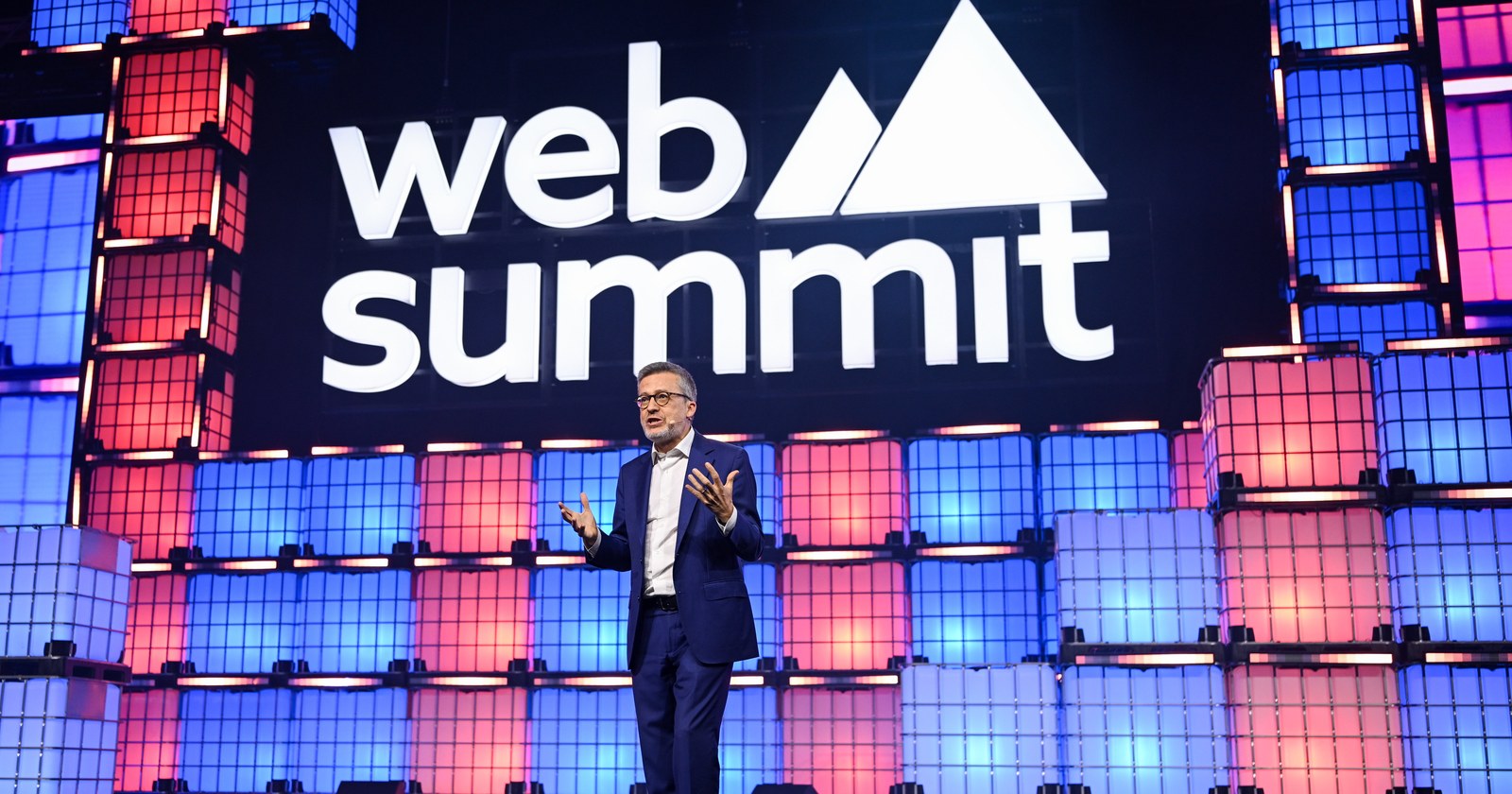
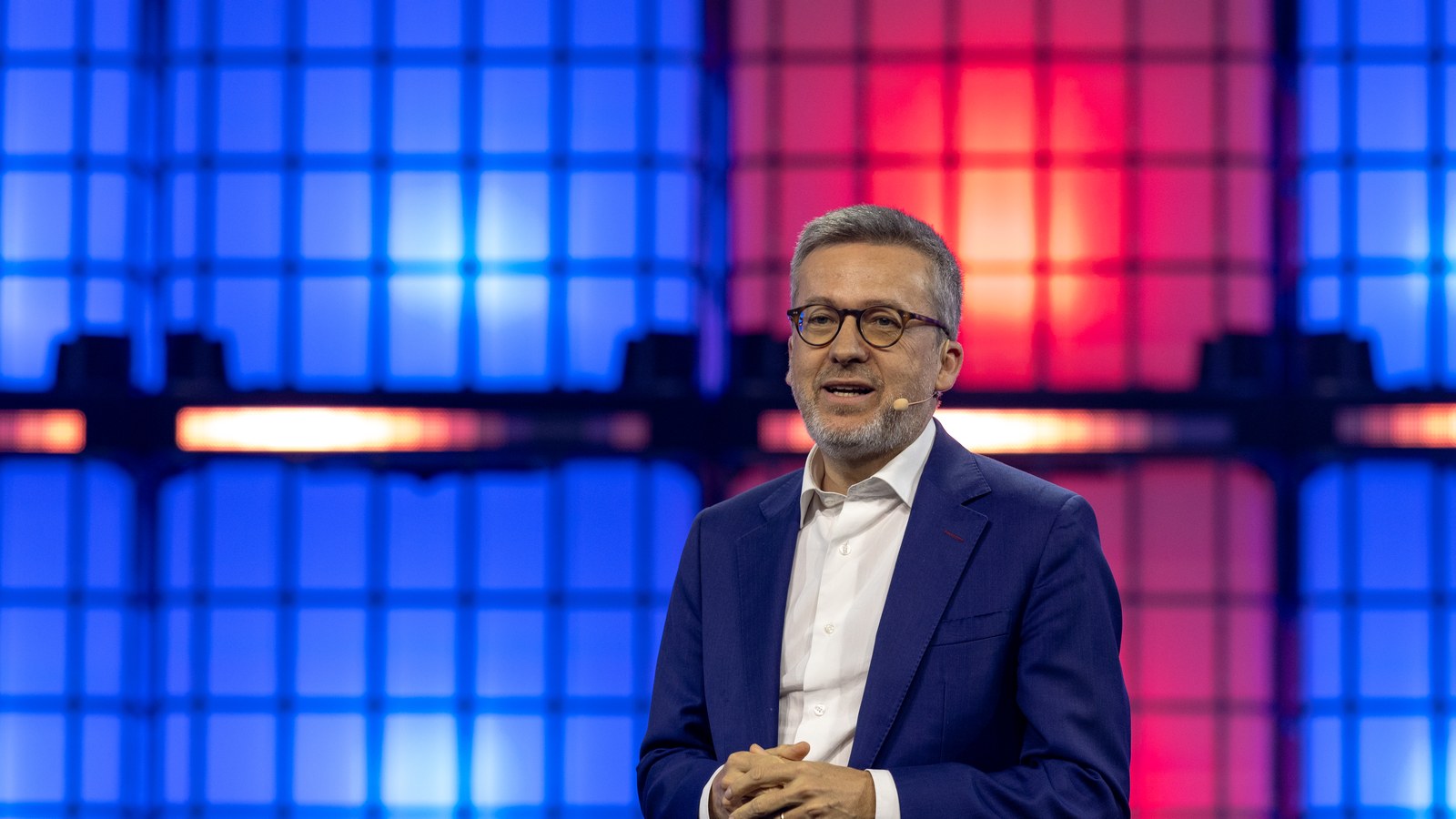
That was the story Lisbon mayor Carlos Moedas chose to tell on the opening night of Web Summit 2026. Ramos had originally pursued law, according to the mayor. Experience with cancer in someone close to him shifted his attention towards biochemistry. Eventually, he worked with researcher Professor Paula Videira on a problem familiar to oncology: how do you recognise and attack malignant cells without damaging healthy tissue along the way?
It is a powerful beginning, partly because we hear so many biotechnology stories told in reverse. We start with a funding figure, a company valuation or a licensing announcement. The years of scientific work, uncertainty and motivation that made the commercial milestone possible appear as background. Moedas put the human problem first.
There is an important factual distinction, though. In the speech, the transaction sounded like the sale of a Portuguese company to BioNTech for a billion dollars. The documented agreement was different. CellmAbs announced in January 2024 that it had entered a patent-assignment and licensing deal with BioNTech. The German company acquired a preclinical antibody candidate and associated antibody-drug-conjugate technology. CellmAbs would receive upfront and near-term payments, with eligibility for further milestones and tiered royalties. The company was not publicly reported as having been sold outright for a fixed billion-dollar price.
That correction matters. It also makes the commercial lesson more interesting.
The science was the starting point, not the whole business
The appeal of targeted cancer treatment is obvious. If a therapy can distinguish tumour cells from healthy cells more precisely, it may provide a way to attack disease while limiting unnecessary harm. However, a compelling biological mechanism is not a finished medicine. It has to survive laboratory validation, development choices, manufacturing questions, safety assessment and eventually clinical investigation.
CellmAbs was founded in 2019 by Nuno Prego Ramos and Professor Paula Videira, with Bionova Capital and Portugal Ventures identified among its early investors. Its work focused on cancer-specific therapeutic approaches. The BioNTech agreement concerned a preclinical antibody candidate and related ADC technology, not an already approved cancer drug. That word, preclinical, should stay in any account of the story. It tells readers where the asset sat in its development journey.
An antibody-drug conjugate is built around a practical idea: use the targeting ability of an antibody to help deliver a therapeutic payload to cells expressing a relevant marker. Whether a particular ADC works depends on far more than that description. Target selectivity, expression in normal tissue, payload potency, linker behaviour, delivery and resistance all affect the development challenge. A promising target does not guarantee a safe or effective treatment in patients.
For scientists, the temptation is to tell the story through the mechanism. For investors and pharmaceutical partners, the questions multiply. Is the biology convincing? Can the candidate be manufactured consistently? Is intellectual property defensible? Is there a patient group with a meaningful unmet need? What evidence supports moving into the next stage?
The commercially valuable asset is therefore not simply a clever idea. It is a body of work that gives another organisation enough confidence to commit capital, expertise and development effort.
What the deal actually says about commercialisation
The CellmAbs announcement stated that the company had raised a single seed investment of approximately $1.6 million in June 2019 before reaching its subsequent scientific and development milestones. That is a striking contrast with the scale of payments a licensing agreement might eventually produce. But potential milestones are not the same as money received, and royalties depend on later outcomes.
This is how many important biotech agreements are structured. The buyer or licensee obtains access to a promising asset; the original developer receives compensation and may share in value created if the programme advances. The structure distributes risk across a process in which scientific success is far from assured.
It is also a reminder that the most useful exit for a research-led startup may not be a public listing or outright acquisition. Sometimes the key milestone is a partnership with a company that has the resources, capabilities and appetite to take the programme forward.
That does not make the smaller company less ambitious. It shows an understanding of where its comparative advantage lies. A focused academic spinout can be excellent at discovering and characterising an asset. A larger pharmaceutical company may be better equipped to fund complex later-stage development. Those are different businesses, even if both contribute to the same treatment journey.
One of the hardest leadership decisions is recognising the point at which progress requires capabilities you do not have internally. A well-structured licensing deal can turn that recognition into a development strategy.

The unusual combination behind the company
Moedas highlighted the meeting of people from different disciplines. Ramos brought an unconventional path through law and biochemistry; Videira brought scientific expertise. That combination is not magical in itself. Plenty of multidisciplinary teams fail. Its value lies in the different questions people are trained to ask.
Scientists are rightly concerned with mechanisms and evidence. Commercial leaders may ask what the product could become, who would fund the next step and what kind of partner needs to be involved. Regulatory specialists want to understand intended use, development standards and acceptable uncertainty. Clinicians ask whether the resulting intervention would address a real decision or treatment gap.
A team that lacks one of those perspectives can spend years optimising something that another stakeholder cannot use, finance or approve. In drug development, that disconnect can be extraordinarily expensive.
An effective translational team does not need every member to become an expert in every field. It needs people who are curious enough to understand where the next discipline begins and humble enough to recognise where their own knowledge ends.

Why this matters beyond Portugal
Europe does not lack excellent research. The more difficult challenge is moving promising work through the many transitions that separate a university laboratory from a treatment available to patients. Each transition demands a different kind of evidence and often a different source of capital.
The CellmAbs story illustrates one pathway, not a universal formula. A company begins with a biological hypothesis, develops a candidate, protects and tests its intellectual property, and forms a partnership to advance the technology. Many other programmes stall at one of those steps, and there is no guarantee that this particular candidate will ultimately reach patients.
For founders, the sensible question is not, “How do we become the next billion-dollar biotech?” It is, “Which de-risking milestone would make our asset credible to the next organisation in the chain?” That milestone may be a stronger preclinical package, better biomarker data, improved manufacturing feasibility or an agreement on the target product profile.
For universities, it raises questions about technology-transfer support and whether academic teams can access commercial expertise before the science reaches an expensive bottleneck. For investors, it is a reminder to evaluate the quality of a development programme, not just the excitement around its underlying biology.
And for policymakers who want more domestic biotech champions, it suggests that the useful metric is not simply the number of startups created. It is how many research programmes acquire the skills, infrastructure and partnerships needed to move responsibly into clinical development.
The part worth remembering
Carlos Moedas closed his argument by urging founders to bring a problem they could not walk away from. It was a fitting ending to the CellmAbs example. Personal experience can help someone choose a difficult problem and stay with it through years of uncertainty.
But personal conviction does not replace evidence. Nor does good science automatically become a useful product. The work in between is exactly where translational medicine happens.
The Portuguese company did not need a misleading billion-dollar acquisition headline to make its story worth telling. The verified licensing agreement, the founders' different backgrounds and the movement of a preclinical programme into a global pharmaceutical partnership are already substantial.
In HealthTech, the most important moment is rarely the press release alone. It is the point at which years of research have become credible enough for someone else to help carry the risk. That is the part of the CellmAbs story that more founders should study.
Key Signals
The CellmAbs story is a licensing deal, not a billion-dollar sale: BioNTech acquired a preclinical antibody candidate and related ADC technology, with upfront payments, milestones and tiered royalties. The company reached that point on a single seed round of about $1.6 million, which shows how much of a biotech asset's value is validated science rather than capital raised. For research-led startups, a well-structured partnership with a larger pharmaceutical company can be the milestone that matters, not an acquisition headline.