A patient with recurrent respiratory papillomatosis lives on a surgical calendar. HPV types 6 and 11 cause wart-like growths in the airway, most often on the vocal cords. They are benign, but they come back, so the patient goes back to the operating room, sometimes several times a year, and each operation risks a little more damage to the voice. For decades, surgery was the treatment. Since August 2025 there has been one approved medicine. Since October 30, 2026 there are two.
The second one, INOVIO's VOCERYQ, is the more unusual product. It is the first plasmid DNA-based immunotherapy approved in the U.S., according to the FDA, and INOVIO calls it the first FDA-approved DNA medicine. It only works with a device: a handheld electroporation system called CELLECTRA 5PSP that uses brief electrical pulses to get the DNA into muscle cells. That makes this approval as much a HealthTech story as a biotech one. Below we look at what the FDA approved, how the evidence compares with the therapy already on the market, and what has to go right in the clinic for a device-delivered medicine to succeed.
The approval proves a DNA medicine can clear the FDA. The launch will test whether a drug that needs a device in the room can win against one that does not.
In This Deep Dive
- Why this matters now
- What actually happened
- The obvious read versus the deeper signal
- Category map and taxonomy
- Evidence Ladder
- Regulation, payment and international divergence
- Capital flows and bottom-up economics
- The HealthTech Investor's Signal
- Implementation priorities
- Forward Intelligence
- The Bottom Line
Why this matters now
Genetic medicines have split into a few delivery families. Viral vectors, such as adenovirus and AAV, are efficient but can trigger immune responses against the vector itself, which can limit repeat dosing. Lipid nanoparticles carry mRNA and became familiar during the COVID-19 vaccine rollout. Plasmid DNA is the oldest idea of the three and, until now, had no approved product in the U.S. Its appeal is simplicity: a circular piece of DNA that tells cells to make specific proteins, without a viral shell or a lipid coat. Its weakness has always been delivery, because naked DNA does not get into cells efficiently on its own.
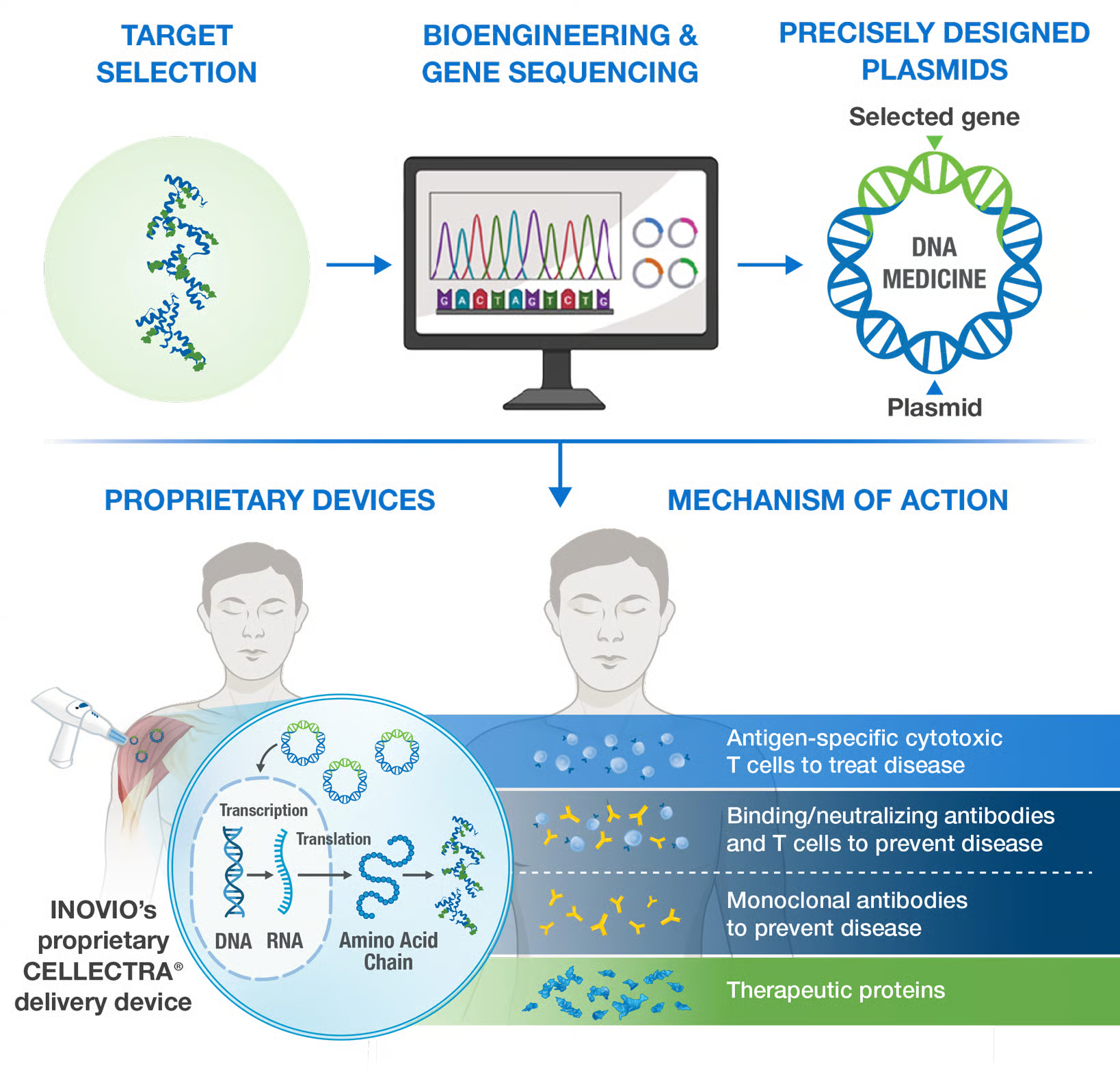
INOVIO's answer is electroporation. Its CELLECTRA devices deliver brief electrical pulses at the injection site, which temporarily open cell membranes so the plasmids can enter. INOVIO says this approach avoids chemical adjuvants and lipid nanoparticles and avoids the anti-vector response seen with viral platforms. The company has worked on this platform for many years across infectious disease and cancer programs. VOCERYQ is its first approved product.
The disease context sharpens the stakes. The FDA estimated about 1,000 new RRP cases a year in the U.S. when it approved PAPZIMEOS in 2025. INOVIO, based on claims data, estimates a prevalent U.S. population of at least 25,000 patients. Those two numbers measure different things, new cases versus people living with the disease, and the second is a company estimate. Either way, this is a rare disease where a small number of specialist centers see a large share of patients, which shapes how any launch will work.
Certainty: (A) incidence per FDA and prevalence estimate per INOVIO, each attributed; (A) platform description per INOVIO; (B) our summary of delivery families is general.
What actually happened
On October 30, the FDA's Center for Biologics Evaluation and Research granted accelerated approval to VOCERYQ (doruxapapogene ralaplasmid and lalikinogene sifuplasmid-gxfd) to reduce the frequency of surgical papilloma excisions in adults with RRP. INOVIO announced the approval the same day.
The product
- Mechanism: DNA plasmids encoding HPV-6 and HPV-11 antigens, designed to train the immune system to attack infected cells. The prescribing information describes a second plasmid encoding IL-12, an immune signaling protein, to strengthen the response.
- Delivery: intramuscular injection followed by electroporation with the CELLECTRA 5PSP device.
- Regimen: four doses, three weeks apart, after a standard debulking surgery to remove visible papillomas. INOVIO describes this as a 9-week dosing regimen with no additional surgery required during dosing.
- Designations: Orphan Drug and Breakthrough Therapy designations from the FDA, and Orphan designation in the EU for INO-3107.
The evidence
- Study: RRP-001, open-label, 32 adults who had needed two or more surgeries in the year before treatment. All 32 completed the study.
- Efficacy population: the 26 patients who had needed three or more surgeries in the prior year, with a median of 4.5 (range 3 to 8).
- Result: 7 of 26 (27%, 95% CI 12% to 48%) had a complete response, defined as needing no surgery in the 12 months after treatment.
- Safety: the most common adverse reactions were injection site reactions, headache, fatigue, hypertension, nausea and dizziness. The label warns about electroporation-related effects, including muscle contractions, transient bleeding and vasovagal reactions, and advises avoiding administration in extremities with ipsilateral ICDs/pacemakers, metal implants or skin abnormalities at the treatment site.
Conditions and launch
Because this is an accelerated approval, continued approval may depend on a confirmatory study. INOVIO says the FDA requires a draft protocol by the end of 2026 and expects to align on a final protocol by mid-2027. INOVIO expects to make VOCERYQ available to order and ship in about 60 days, with full field deployment in the first quarter of 2027, and has engaged Syneos Health to recruit and deploy its medical and commercial field teams. The company hosts a conference call on November 2 at 8:00 AM ET (1:00 PM Lisbon) on label details and commercialization.
What people said
CBER Director Karim Mikhail described RRP patients facing "an exhausting and relentless cycle of repeated surgeries." INOVIO CEO Jacqueline Shea, PhD, said VOCERYQ "is designed to deliver what we understand matters most to patients, which is the reduction of the surgical burden caused by RRP." Simon Best, MD, of Johns Hopkins University, a lead investigator, said: "every surgery carries the risk of laryngeal injury." Kim McClellan, President of the RRP Foundation, said the approval brings patients "an important step closer to ensuring every RRP patient has access to a non-surgical treatment option that works for them."
Certainty: (A) indication, regimen, trial figures, safety language and timelines per FDA, the prescribing information and INOVIO; (A) quotes as published.
The obvious read versus the deeper signal
The obvious read: INOVIO has an approved product, DNA medicines have a U.S. approval, and RRP patients have another option besides surgery. All true.
The deeper signal: VOCERYQ is a test of whether a medicine that depends on a device can compete. The therapy already on the market, Precigen's PAPZIMEOS, is a non-replicating adenoviral vector given by subcutaneous injection, four doses over 12 weeks. It received full approval in August 2025 based on a single-arm study in which 51.4% of patients (18 of 35) had a complete response, using the same definition of no surgery in the following 12 months. VOCERYQ arrives with accelerated approval, a 27% complete response rate in its efficacy population, and a device that must be available and used correctly at each administering site; purchase, placement and servicing terms have not yet been disclosed.
The two trials are not directly comparable. They had different patient selection, different sizes and no head-to-head arm, and the confidence intervals are wide. But clinicians and payers will compare the headline numbers anyway, and INOVIO will need to make its case on other grounds. Three stand out. First, mechanism: a plasmid platform does not provoke an immune response against a viral vector, which INOVIO argues matters for safety and potential redosing. Second, the patient experience: the regimen is nine weeks, and the label lists mostly mild, short-lived reactions. Third, breadth: INOVIO calls its indication broad, covering adults with RRP without a specific surgery-frequency threshold in the indication statement.
There is a quieter fourth point. The device is a delivery platform as well as an implementation requirement. Every clinic that installs CELLECTRA and trains staff to use it becomes a site that can deliver future INOVIO products. If the platform produces more approvals, the device network is the distribution channel. If it does not, the device is a cost that only one product has to carry.
Certainty: (A) PAPZIMEOS approval, route, regimen and response rate per FDA; (A) VOCERYQ figures per FDA and INOVIO; (B) the comparison is ours and is cross-trial, so it is not a valid efficacy ranking; (C) the device-as-distribution thesis is forward-looking.