At 07:30 on a Tuesday, the clinical informatics team at a multi-state health system gathers to review the telemetry from a 50-doctor pilot of an ambient artificial intelligence scribe. The self-reported surveys are glowing; clinicians claim they are saving an average of 90 minutes per day on charting. However, the system's electronic health record, or EHR, audit logs show a more nuanced reality. Actual active time in the EHR has decreased by 52 minutes per day, with the remaining time redirected toward closing outstanding charts from the previous week. This discrepancy highlights the gap between clinician perception and enterprise operations.
For healthcare operators, deploying ambient AI at an enterprise level requires moving past the initial excitement of pilot programs. While a single clinic can adopt a tool on a smartphone, scaling to 5,000 clinicians across multiple specialties requires a systematic playbook. This article outlines the operational, technical, and clinical governance frameworks required to scale ambient clinical intelligence successfully.
Establishing the Enterprise Infrastructure
Deploying an AI scribe across thousands of clinicians requires a robust infrastructure strategy. Ambient clinical intelligence refers to the technology that securely captures natural conversation between a clinician and a patient, parses the clinical concepts, and structures them into a medical note. To deploy this at scale, health systems must choose between a native EHR integration or a standalone mobile application that writes back to the EHR via API.
Native integrations offer a smoother user experience but often come with higher licensing costs and longer deployment timelines. Standalone applications can be deployed in days, but they require clinicians to switch screens and manage separate logins. Enterprise operators must evaluate the integration depth based on existing IT resources. A direct API integration should support bi-directional data flow, allowing the scribe to pull the patient schedule and push the structured note directly into the correct encounter folder.
Modern EHR vendors have introduced specialized developer frameworks to support ambient technologies. These frameworks allow the ambient app to run within the EHR user interface, maintaining context synchronization so that when a clinician clicks into a patient chart, the mobile app automatically loads the correct patient. This eliminates transcription errors and reduces the friction of logging into multiple systems.
Clinical Workflow Design and Template Governance
The primary failure point of scaling AI scribes is the lack of standardized clinical workflows. When left to their own devices, clinicians use ambient tools in highly divergent ways. Some leave the microphone running during physical exams, while others dictate a summary after the patient leaves the room.
Enterprise playbooks must define three distinct workflow models: real-time ambient capture, structured dictation, and post-visit summarization. Training programs should emphasize the 'structured conversation' technique, where clinicians explicitly state their physical exam findings and assessment plans during the patient encounter. This practice improves note accuracy and reduces the time spent editing drafts later.
Furthermore, template governance is critical. If a health system has 400 different templates for a standard physical exam, the AI engine will struggle to format notes consistently. Operations teams must consolidate these into a standardized set of enterprise templates before launching the technology. This consolidation reduces the editing burden on clinicians and ensures consistent documentation across the entire system.
Specialty-specific customization is also necessary. A pediatrician interacts with a patient and parent in a highly conversational, non-linear way, while an orthopedic surgeon uses structured, physical-exam-heavy descriptions. The enterprise playbook must account for these variations by configuring different voice-capture settings and template architectures for each clinical department.
Financial Modeling and ROI Validation
An enterprise deployment of ambient AI represents a significant capital commitment, with typical enterprise licensing costs ranging from 150 to 300 dollars per clinician per month. To justify this spend, finance teams must look beyond subjective metrics like clinician satisfaction.
The return on investment must be tracked through three hard operational metrics: relative value unit, or RVU, generation; patient access metrics; and documentation speed. When clinicians spend less time typing, they can open up additional appointment slots. An increase of just 0.5 patient visits per day per clinician can fully offset the monthly licensing cost of the software.
Additionally, health systems should monitor chart closure times. Documentation lag, defined as the time between a patient encounter and the signing of the clinical note, is a leading indicator of billing delays and compliance risks. Successful enterprise deployments typically reduce documentation lag from an average of 36 hours down to less than four hours, accelerating the revenue cycle and reducing administrative backlogs.
Information Governance, Compliance, and Data Security
Deploying AI tools that record patient encounters requires strict adherence to privacy regulations and information governance. Health systems must establish clear policies regarding patient consent, audio retention, and note verification.
Patient consent should be managed through a passive-active hybrid model. Signs should be posted in exam rooms explaining that ambient technology is used to assist with documentation, while clinicians should verbally confirm consent at the start of each visit. Consent decisions must be documented within the EHR to ensure compliance.
Audio retention is another critical decision point. To minimize liability and comply with privacy standards, health systems should configure the software to delete the raw audio recordings immediately after the structured note is generated and verified by the clinician. The AI should never store raw audio long-term, as this creates a significant target for data breaches.
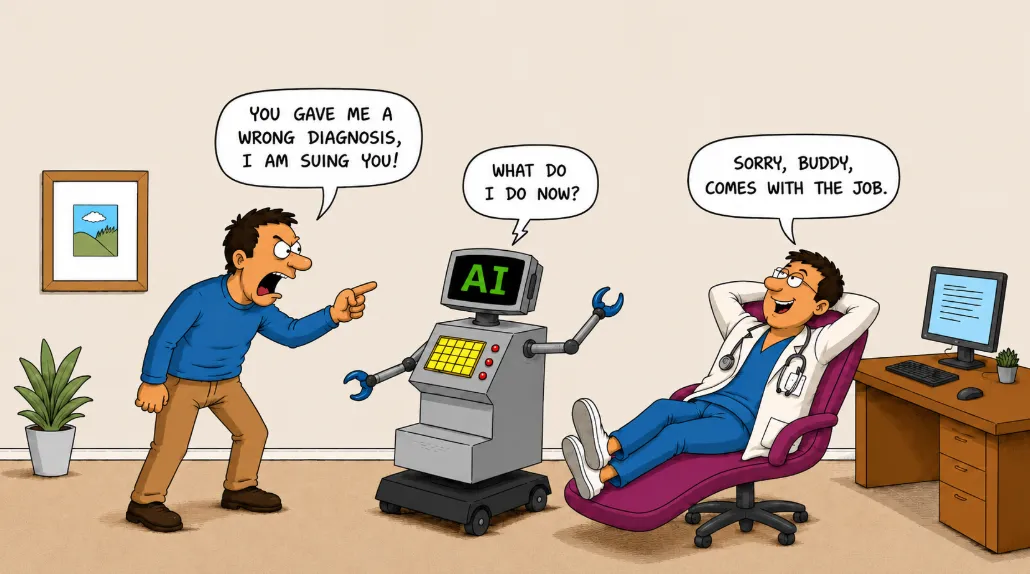
Finally, the clinician remains the ultimate author of the medical record. The enterprise policy must state clearly that the clinician is responsible for reviewing, editing, and signing every note. This step is not just a regulatory requirement; it is a clinical safety check that prevents AI errors from entering the permanent patient record.
Managing the Change and Driving Adoption
The final phase of the enterprise playbook is change management. Adoption of new technology is rarely linear, and health systems must prepare for a utilization curve.
Operators should identify clinical champions in each department to act as first-line support. These champions can help peer clinicians troubleshoot common issues, such as capturing conversations in noisy environments or managing patient interruptions. Peer-led training is consistently more effective than IT-led training in driving long-term adoption.
Monitoring usage data is essential. If a clinician's usage drops after the first month, operations teams must intervene to identify the barrier. Often, the issue is not the technology itself but a mismatch between the tool's default templates and the clinician's specific workflow. By addressing these pain points early, health systems can protect their investment and ensure high utilization across the entire network.
Key Signals
Enterprise adoption of ambient AI requires health systems to move beyond subjective clinician feedback and focus on objective EHR audit data to measure true operational impact.
Standardizing clinical templates and establishing clear governance rules before deploying ambient software is critical to minimizing the clinician editing burden.
Financial sustainability depends on translating saved administrative hours into increased patient access or reduced documentation lag, rather than relying solely on wellness metrics.
Establishing strict audio deletion policies and reinforcing that clinicians retain full legal responsibility for note accuracy are essential to mitigating regulatory and compliance risks.