A 68-year-old patient recovering from an elective bowel resection sits in bed 4 of a busy step-down unit. At 02:00, her heart rate trends from 82 to 94 beats per minute. Her temperature remains normal at 37.1 degrees Celsius, and her blood pressure is stable at 112/68. To a clinical nurse checking her vitals, she looks comfortable, if slightly tired. Yet behind the scenes, a machine learning model integrated into the electronic health record has already updated her sepsis risk score from 15 percent to 48 percent. Within twenty minutes, the clinical team receives a notification advising them to review her lactate levels and consider initiating fluid resuscitation.
Sepsis remains one of the most critical challenges in acute care medicine. It accounts for a significant portion of in-hospital deaths, and treating it effectively requires identifying the condition long before clinical shock manifests. Because the early symptoms of sepsis are notoriously subtle and mimic other post-surgical responses, early detection is difficult. Artificial intelligence offers a solution by continuously analyzing thousands of data points across a hospital network to flag patients on a downward trajectory. However, implementing these systems requires a deep understanding of clinical operations, algorithmic validation, and human factors.
The Mechanics of Early Detection
Legacy early warning systems rely on static thresholds, such as the Systemic Inflammatory Response Syndrome criteria or the Quick Sequential Organ Failure Assessment score. While these scoring systems are easy to calculate, they often lack specificity. They flag almost any patient with an elevated heart rate or respiration rate, regardless of the underlying cause.
Modern machine learning models address this limitation by analyzing temporal trends rather than isolated thresholds. These models ingest a continuous stream of structured data from the electronic health record, including vital signs, laboratory results, nursing notes, and medication administration records. To process this complex mix of data, engineers rely on sophisticated preprocessing steps. In this context, feature engineering is the process of selecting and transforming raw data points into distinct clinical indicators that help machine learning algorithms make accurate predictions. For example, instead of looking at a single temperature reading, a model might analyze the rate of change in temperature over six hours alongside the patient's cumulative fluid balance.
These features feed into algorithms like gradient-boosted decision trees or recurrent neural networks, which are highly adept at identifying non-linear relationships. A modern sepsis model does not simply wait for a lab result to return; it calculates the probability of sepsis based on the absence or delay of certain labs, recognizing that a clinician ordering a blood culture is itself a strong signal of clinical suspicion.
Balancing Sensitivity and Alert Fatigue
The primary barrier to successful AI adoption in acute care is not the accuracy of the underlying algorithm but the way it interacts with human workflows. When a clinical model is set to be highly sensitive, it captures almost every case of sepsis but also generates a massive number of false positives.
This trade-off directly contributes to a major operational hazard. In hospital settings, alert fatigue is the clinical phenomenon where healthcare providers become desensitized to safety warnings due to the sheer volume of low-utility notifications. When nurses and physicians are interrupted dozens of times per shift by automated alerts that do not require intervention, they begin to dismiss all warnings, including critical ones.
To mitigate this risk, health systems must conduct rigorous local validation before turning on any clinical alert. Models trained on data from one hospital often perform poorly when deployed at another due to differences in patient demographics, coding practices, and clinical protocols. Before a model goes live, clinical informatics teams should employ a staging period. Here, silent validation is the practice of running an algorithm in the background of a live clinical environment to collect performance data without showing results to clinical staff. This allows administrators to measure the model's positive predictive value and adjust alert thresholds to match the specific operational capacity of their clinical units.
Real-World Outcomes and Clinical Evidence
When deployed with careful operational oversight, sepsis AI models deliver measurable improvements in patient outcomes. Peer-reviewed literature increasingly supports the clinical utility of these systems when they are paired with structured response protocols.
A prominent multi-center study published in Nature Medicine evaluated an early warning system deployed across five hospitals over a two-year period, covering more than 500,000 patient admissions. The researchers observed a 1.8-hour median reduction in the time from clinical presentation to first antibiotic delivery for patients with sepsis. More importantly, the implementation of the system was associated with an absolute reduction in in-hospital mortality of 3.3 percentage points, representing a significant survival benefit.
The critical takeaway from this evidence is that the model itself does not save lives; the rapid clinical response triggered by the model does. In successful deployments, the AI serves as a screening tool, while a standardized clinical bundle consisting of lactate measurement, blood cultures, and broad-spectrum antibiotics serves as the intervention. If the clinical team does not trust the tool or lacks the resources to act quickly on its alerts, the clinical benefit disappears.
The Operational Playbook for Health Systems
For healthtech operators and clinical leaders, deploying a sepsis AI model requires a structured operational framework. The software deployment is only the first step of a complex change management process.
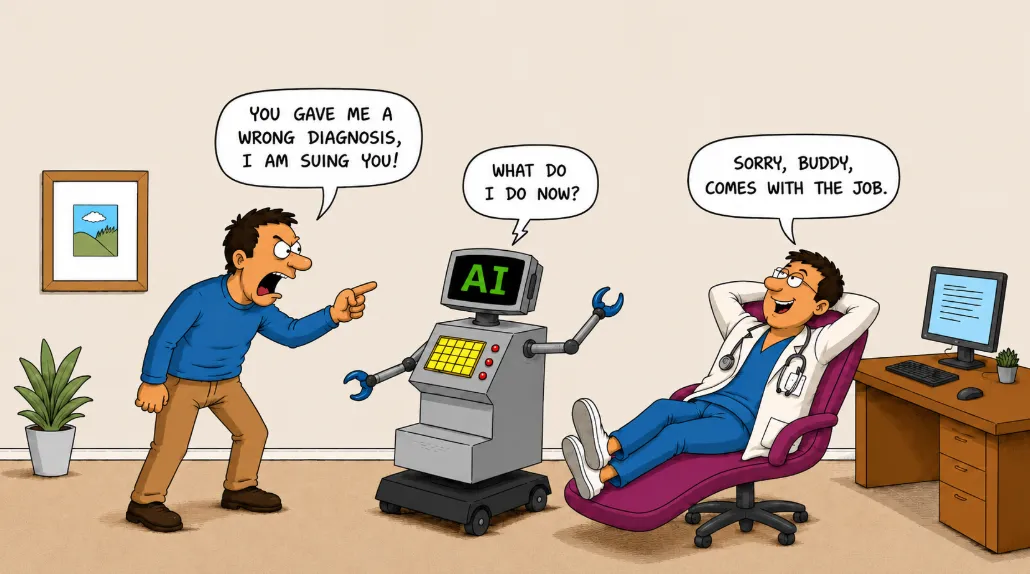
First, organizations must implement a human-in-the-loop architecture. In this framework, human-in-the-loop design is a workflow architecture where artificial intelligence systems assist human decision-making rather than initiating clinical actions autonomously. Sepsis alerts should rarely go directly to a busy bedside physician. Instead, many successful health systems route alerts to a centralized clinical surveillance team or a dedicated rapid response nurse. These experienced clinicians review the patient's chart, filter out obvious false positives, and initiate a warm handoff to the bedside team only when clinical action is truly indicated.
Second, health systems must establish continuous monitoring protocols for their models. Clinical environments are dynamic; changes in laboratory equipment, electronic health record templates, or nursing documentation standards can alter the data streams feeding the model. This variance can lead to model drift, where predictive accuracy degrades over time. Regular audits of sensitivity, specificity, and positive predictive value must be scheduled at least twice a year to ensure the system continues to perform as expected.
Ultimately, sepsis AI is not a plug-and-play solution. It is a sophisticated clinical decision support tool that requires continuous maintenance, deep integration into nursing and medical workflows, and a culture of clinical trust. When these elements align, machine learning transforms from an administrative burden into a powerful tool for patient preservation.
Key Signals
Health systems must prioritize silent validation periods of at least three months to calibrate alert thresholds to their specific patient populations before enabling live notifications.
The clinical utility of sepsis AI is entirely dependent on the presence of a dedicated rapid response team capable of acting on alerts within thirty minutes of generation.
Continuous monitoring and bi-annual algorithmic audits are essential to protect clinical workflows against model drift caused by routine updates to electronic health records.