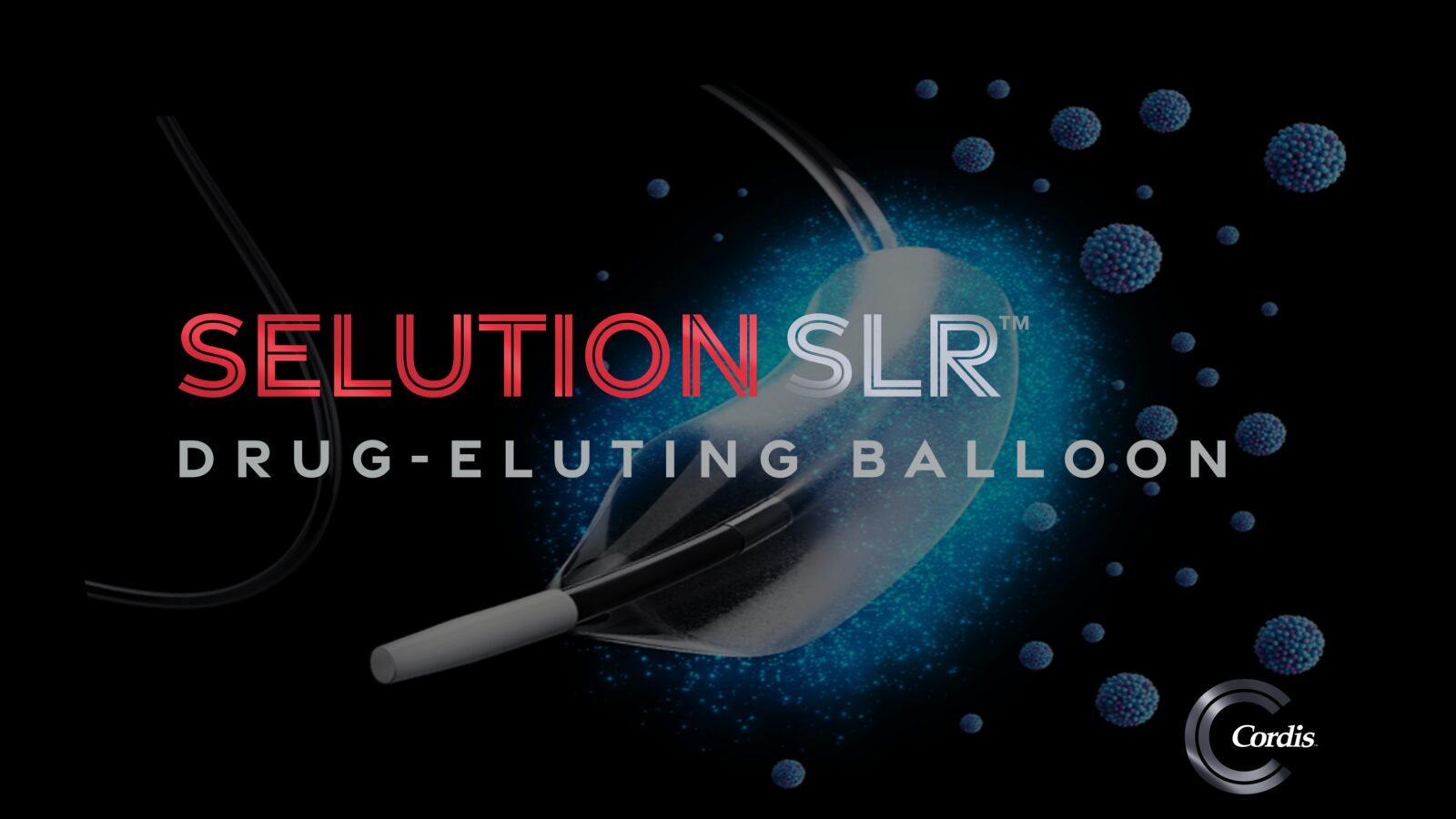

Good morning, HealthTech insiders. A narrowed coronary stent no longer automatically means another layer of metal. The FDA has approved Cordis’s sirolimus-eluting balloon for coronary in-stent restenosis, giving US cardiologists another way to deliver an anti-restenosis drug without leaving a new stent behind. The approval came on September 18, and Cordis announced it last Monday.
Two other developments show how differently a treatment can intervene at its source. Mirum and Incyte gained approval for an oral drug that targets the signaling behind abnormal bone formation in FOP. Prime Medicine, meanwhile, received clearance to begin testing a gene-editing candidate designed to correct a mutation behind alpha-1 antitrypsin deficiency. One is an approved treatment; the other is permission to begin a clinical trial. That distinction matters as much as the science.
In today's Signal:
Cordis expands the coronary balloon toolkit: SELUTION SLR becomes a US-approved sirolimus-eluting balloon for treating certain narrowed coronary stents.
Mirum and Incyte win an FOP approval: Once-daily Atebrioz reduces the volume of new heterotopic bone formation in patients aged 12 and older.
Prime Medicine moves PM647 toward patients: FDA IND clearance allows a first-in-human study of its investigational gene editor for alpha-1 antitrypsin deficiency.
The money behind the workflows: Heidi’s $340 million funding package and Forus’s earlier $150 million Series C back two different approaches to reducing work between a clinical decision and patient care.
The AI Work Handbook That Cuts Your Workday in Half
The 8-hour workday is becoming a 4-hour workday for people who know how to use AI.
Everyone else is still catching up.
This AI work playbook shows you exactly how to cut your work hours in half using AI.
Sign up for Superhuman AI and get:
50+ step-by-step AI tutorials to cut your workload in half, covering every part of your workday, from emails to strategy, used by 1M+ professionals at Google, Microsoft, and NASA
Superhuman AI newsletter (4 min daily) so you keep discovering new AI tools and skills to stay ahead in your career, the playbook is just the start
LATEST DEVELOPMENTS
INTERVENTIONAL CARDIOLOGY
1. Cordis Wins FDA Approval for Sirolimus-Eluting Balloon in Coronary Restenosis

The FDA approved MedAlliance’s SELUTION SLR 014 PTCA Drug-Eluting Balloon on September 18 for treating in-stent restenosis in coronary arteries within the device’s specified vessel and lesion sizes. MedAlliance is a Cordis company. The balloon delivers sirolimus during angioplasty without placing another permanent metal scaffold at the treated site.
The details:
The SELUTION4ISR study randomized 418 patients to the sirolimus balloon or usual care, which could include a repeat drug-eluting stent or balloon angioplasty.
At 12 months, the balloon met the study’s noninferiority test against that combined usual-care strategy. The published analysis did not establish noninferiority to repeat stenting in the single-layer restenosis subgroup.
Cordis has also completed enrollment in a separate 960-patient study of the balloon for new small-vessel coronary lesions. That use is a future regulatory question, not part of this approval.
The Signal: This gives interventional cardiologists a sirolimus-based option when a previously placed stent narrows. The practical question is which patients and lesion types benefit most compared with existing choices, including repeat stenting and the paclitaxel-coated coronary balloon FDA approved in 2024.
RARE DISEASE THERAPEUTICS
2. FDA Approves Atebrioz for Patients Aged 12 and Older With FOP

Mirum Pharmaceuticals and Incyte announced FDA approval of Atebrioz (zilurgisertib) on September 25. The once-daily oral ALK2 inhibitor is approved to reduce the volume of total new heterotopic ossification( bone forming in soft tissue) in adults and children aged 12 and older with fibrodysplasia ossificans progressiva, or FOP.
The details:
In the 24-week placebo-controlled part of the PROGRESS study, mean new bone lesion volume decreased by 3.2 cm³ in patients receiving zilurgisertib and increased by 24.6 cm³ in those receiving placebo.
Atebrioz targets ALK2 signaling, which is implicated in the abnormal bone formation associated with FOP.
Mirum expects the treatment to become available in the United States in October. Its approved age range begins at 12; research in younger children continues.
The Signal: Atebrioz gives FOP specialists another approved mechanism to consider. The controlled trial supports a reduction in new bone formation volume during the study period; it does not prove that the disease is halted or that existing abnormal bone disappears. Long-term outcomes and access will determine its place in care.
REGULATORY WATCH
3. AbbVie’s Juvmo Shows Promise in Phase 3 Parkinson’s Trials

A person living with Parkinson’s disease and an AbbVie scientist. Image: AbbVie.
AbbVie is developing Juvmo (tavapadon) as a once-daily oral treatment for Parkinson’s disease. It acts on dopamine D1/D5 receptors and has been studied both on its own in early Parkinson’s disease and alongside levodopa in people whose symptoms fluctuate. AbbVie submitted tavapadon for FDA review in 2025; I could not verify an FDA approval.
The details:
In the Phase 3 TEMPO-1 and TEMPO-2 trials, tavapadon met the primary endpoints measuring changes in motor symptoms and daily activities among people with early Parkinson’s disease.
In TEMPO-3, patients taking tavapadon alongside levodopa gained more “on” time without troublesome dyskinesia than patients taking placebo alongside levodopa. “On” time means periods when Parkinson’s symptoms are better controlled.
The results provide evidence of symptom improvement in the populations studied. The FDA’s decision will determine whether tavapadon can be marketed in the United States and what its approved uses would be.
The Signal: For people with Parkinson’s disease, the hours when treatment works well can matter as much as a change on a clinical rating scale. Tavapadon’s trial results make its once-daily approach worth watching. The question now is whether the FDA finds the overall evidence sufficient for approval, and, if it does, where Juvmo fits among existing treatment options.

QUICK HITS
👀 WHAT WE'RE WATCHING NEXT
Cath lab choices: How cardiologists select between sirolimus balloons, existing paclitaxel balloons, and repeat stenting for different restenosis patterns.
FOP access and follow-up: Atebrioz’s expected October availability, coverage decisions, and longer-term evidence as treatment extends beyond the controlled study period.
Prime editing in humans: PM647 trial initiation, dose escalation, and the first safety and biological activity readouts expected in 2027.
💰 FOLLOW THE MONEY
The deals:
Heidi Health: Announced a $100 million Series C led by Blackbird and a separate $240 million growth investment led by General Catalyst’s Customer Value Fund on September 22. The $900 million valuation refers to the equity round; the two financing components should not be described as one $340 million Series C.
Forus: Raised a $150 million Series C led by Bain Capital Ventures at a $3 billion valuation on September 8. Its software addresses the steps after prescribing, including insurance, financial assistance, and pharmacy coordination.
The pattern: Heidi is expanding the work clinical AI can do around an encounter; Forus is working on what happens after a prescription is written. Both companies are attracting capital to reduce administrative delays in established care pathways.
📆 UPCOMING HEALTHTECH EVENTS
Frontiers Health 2026: Oct 20-21 · bcc Berlin Congress Center, Berlin. Digital health, investment, and European market access.
Immerse Global Summit: Healthcare Edition: Oct 27-28 · Verizon Innovation Lab, San Francisco. Sessions on healthcare AI and extended reality in practical deployments.
HLTH USA 2026: Nov 15-18 · Venetian Expo, Las Vegas. A major gathering of healthcare organizations, technology companies, and investors.
🛠️ Trending HealthTech AI Tools
🧠 Firefly Neuroscience Evoke: FDA-cleared system combining quantitative EEG and event-related potentials to help qualified clinicians assess brain function. Its clearance should not be presented as approval to diagnose a particular condition on its own.
🩺 Nabla: Ambient documentation software that generates structured encounter notes and offers coding suggestions for clinician review, with EHR integrations.
🎙️ Corti: Healthcare AI tools for speech-to-text, documentation, and medical coding. The draft’s claim that its triage tool detects coronary occlusions in emergency calls is not supported by the current product description I found.
🛠️ Trending HealthTech AI Startups
💊 Forus: AI-supported medication access, including prior authorization, financial assistance, and fulfillment routing. Its September financing was announced earlier this month.
🩺 Heidi Health: Ambient clinical documentation and related AI tools; its newly announced financing supports further expansion across health systems.
🧬 Prime Medicine: Developing PM647 for alpha-1 antitrypsin deficiency following FDA clearance to begin clinical study. It remains an investigational therapy.
DECISION INTELLIGENCE
Highlights: Deep Dives & Industry Reports
The Stentless Cath Lab: What SELUTION SLR Changes for Coronary Intervention
Where Cordis’s sirolimus balloon fits among the options for a narrowed stent, and what its trial does and does not show.The D1/D5 Bet: What AbbVie’s Juvmo Adds to Parkinson’s Care
What the TEMPO trials tell us about tavapadon’s motor benefits, and which claims about tolerability still need evidence.The ALK2 Opening: What Atebrioz Means for Rare Bone Disease
The placebo-controlled result behind Atebrioz’s approval and the practical questions facing its FOP launch.
Which result would most change care over the next two years? |
That's it for today!
A cardiologist treating a narrowed stent now has another way to deliver a drug without adding a second layer of metal. People living with FOP have a new treatment option aimed at reducing abnormal bone formation. And AbbVie’s once-daily Parkinson’s candidate, Juvmo, has shown promising results in Phase 3 trials as it awaits an FDA decision.
Each story has reached a different point. Cordis and Mirum must now show how their approved products perform in everyday care. For Juvmo, the next step is a regulatory decision, and, if approved, understanding where it fits alongside existing Parkinson’s treatments.
The question to watch is what happens after the milestone: Which patients actually receive these interventions, and how clearly can clinicians tell that their care is better because of them?
How did we do today? |
See you tomorrow,
Dr. Dereck Mush, MD, MBA
The HealthTech Signal is independently funded. Sponsorships help us invest in better reporting, research, and a stronger newsletter for our readers. Want to reach HealthTech founders & executives while supporting the Signal? Get in touch.
Was this email forwarded to you? Sign up here.
Until tomorrow,
The HealthTech Signal
Related reading


The D1/D5 Bet: What AbbVie's Juvmo Adds to Parkinson's Care

The AAV9 CNS Blueprint: Inside Ultragenyx's Landmark Fayuvi Approval

Brain Computer Interfaces Enter Pivotal Trials: What Has to Go Right Before the First FDA Approval
Keep exploring