
In this deep dive
- The precise population and limits in Tempus's announcement
- The difference between a signal on an ECG and an imaging diagnosis
- The operational funnel from alert to echocardiogram to treatment decision
- The performance numbers still needed for adoption decisions
- A practical scorecard for a health-system pilot
A new question for an old test
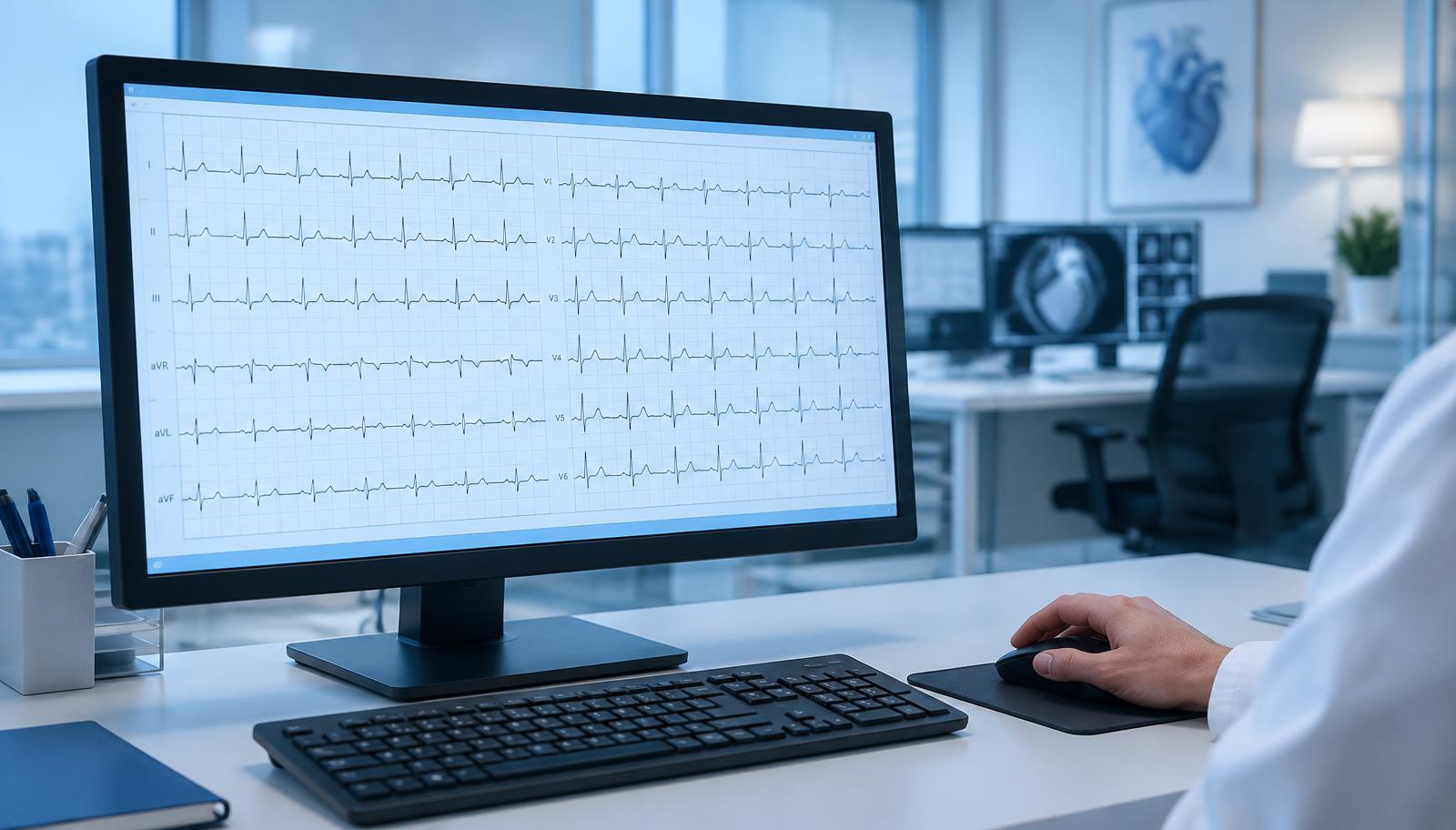
A resting 12-lead ECG is routine in many care settings. It records the heart's electrical activity, while mitral regurgitation is a mechanical problem: blood leaks backward through a valve. Clinicians usually need cardiac imaging, particularly echocardiography, to assess the valve. Tempus is betting that patterns in the ECG can identify some patients whose valve disease merits a closer look. This is an inference tool built on an existing test, rather than an ECG replacing imaging. Tempus product announcement
On September 28, Tempus announced FDA 510(k) clearance for ECG-MR, its fourth cleared ECG-AI product. The software analyzes resting, non-ambulatory, clinical diagnostic 12-lead ECGs collected at a healthcare facility. Its intended population is patients 65 or older at risk of cardiovascular disease who have had no mitral valve intervention and no prior diagnosis of moderate or severe mitral regurgitation. The company lists risk factors and symptoms such as coronary disease, hypertension, obesity, diabetes, dyspnea, chest pain, and lower-extremity edema. Tempus indication and limitations
The clearance has a boundary
ECG-MR returns a binary output for clinician interpretation. It is not a stand-alone cardiac diagnosis, is not intended for serial patient monitoring, and should not be used on ECGs with paced rhythms. Tempus says the result belongs alongside the original recording, symptoms, history, and other tests. A positive alert should prompt a clinical decision about further assessment, often imaging; a negative result does not end the evaluation of a symptomatic patient.
A 510(k) clearance is a regulatory determination of substantial equivalence for a defined device and use. The announcement does not provide the model's sensitivity, specificity, validation cohort, or prospective effect on patient outcomes. These numbers may exist in a regulatory submission or later publication, but the release alone cannot support a claim that the algorithm will reduce missed diagnoses or improve survival. Tempus announcement · FDA explanation of 510(k)