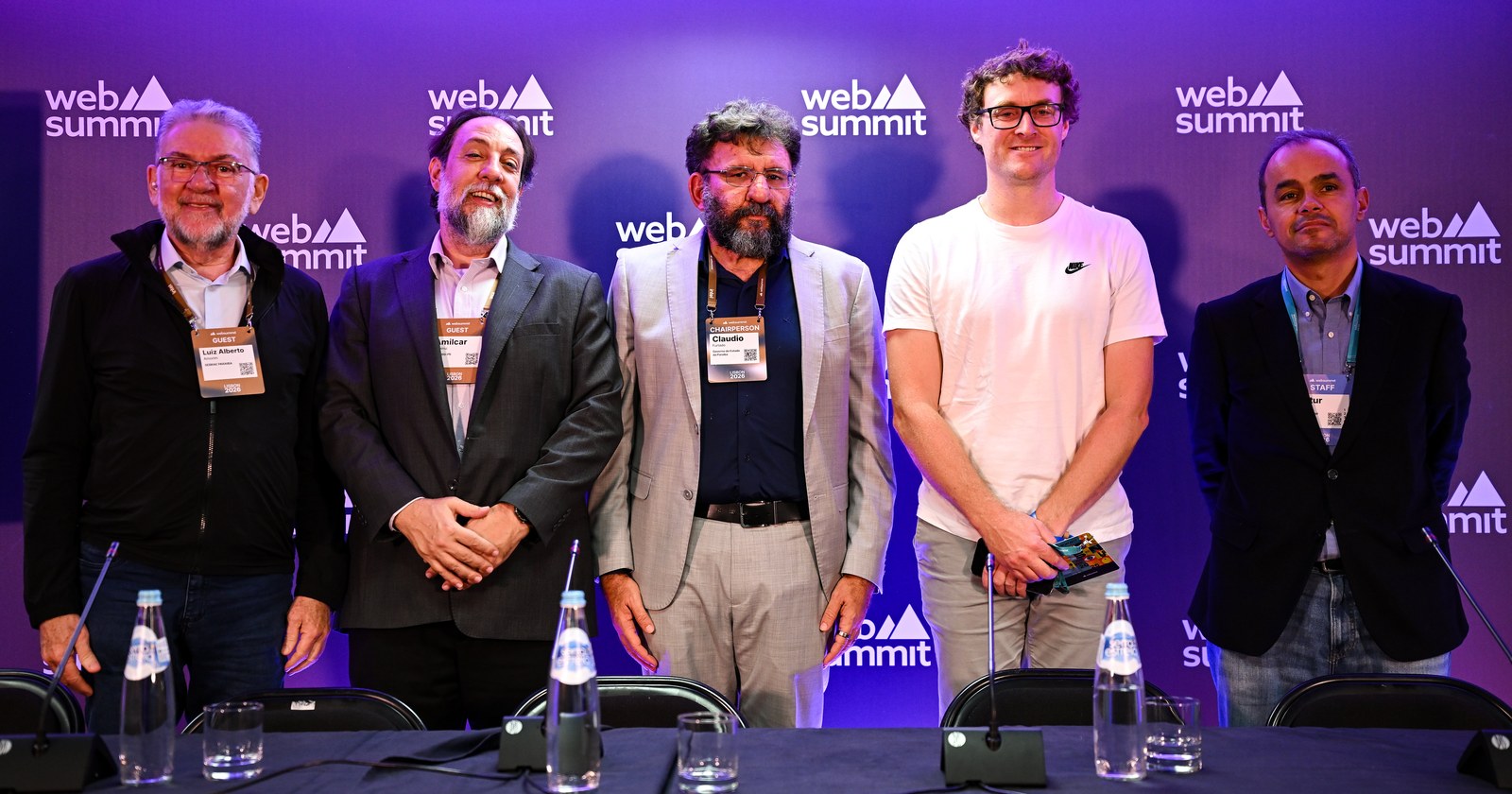
Paraíba came to Web Summit Lisbon with more than a delegation photo. The Brazilian state brought 30 startups, including 11 in health, and signed an agreement intended to bring a Web Summit Spotlight event to João Pessoa for four years.
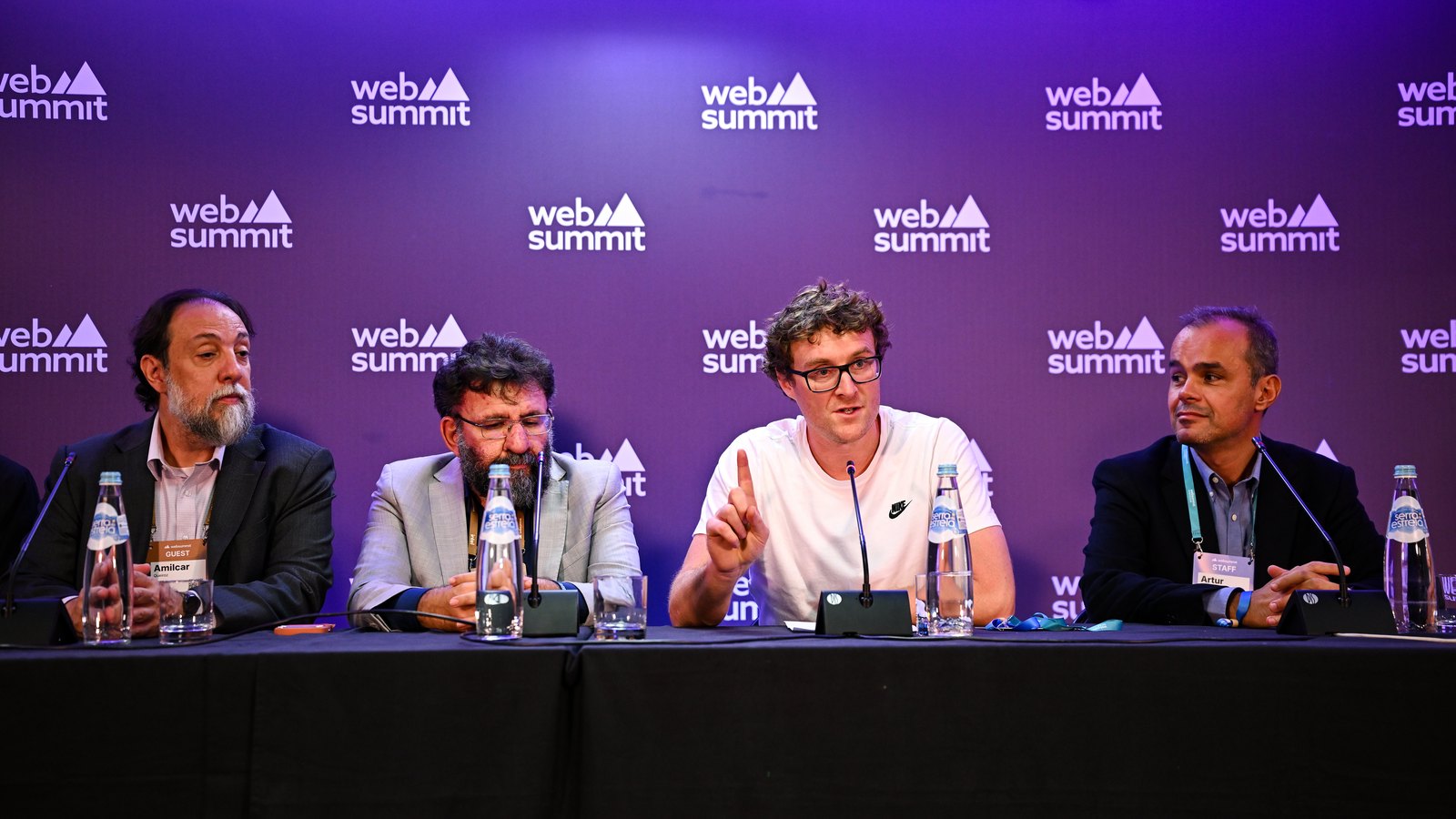
The timing matters. Público reported the agreement as signed on Tuesday, November 10, 2026. An official press conference photographed on Thursday, November 12, was a separate appearance, not evidence that the deal was signed on Thursday.
What did Paraíba agree with Web Summit?
The agreement concerns a four-year Spotlight initiative in João Pessoa. A regional event can help attract attention and international connections to a local innovation ecosystem. But it is not equivalent to winning a global startup competition, nor should every subsequent exploratory conversation be called a signed partnership.
Paraíba's presence was unusually healthcare-heavy: 11 of the 30 startups were classified as health companies. That gives the mission a distinctive angle beyond general technology promotion.
Which healthcare startups were featured?
One of the most visible examples was INOVACUBO's CareWear Sénior, a sensor-equipped shirt aimed at monitoring older adults. Público described development connected to the Federal University of Paraíba and its Embrapii unit. The idea addresses a practical issue: helping carers or healthcare teams notice changes that might otherwise go unseen.
Yet a wearable that records physiological signals is not automatically an effective medical monitoring service. The value depends on measurement quality, alert performance, response workflows and whether the technology changes patient outcomes.
Another company discussed in local coverage was HALI Soluções Tecnológicas. Physician and founder Luana Fernandes presented HALI Studio as a white-label system intended to support patient follow-up between consultations. That model targets a different gap: the period after a clinical encounter, when the patient still has questions and the care team may lack regular feedback.
Other named health-related participants in published reporting included RevigoradaMente and Neoron. Their inclusion in the delegation does not necessarily represent funding or commercial wins without separate evidence.
What about the other agreements being discussed?
Later reporting citing Paraíba's science and technology authorities described conversations with potential international partners. Some relationships in that account originated in 2025 or at Web Summit Rio 2026, not at this Lisbon edition. A conversation, a memorandum and a signed four-year Spotlight agreement are three different things.
That distinction protects the integrity of the story. It also makes the Spotlight agreement itself more meaningful: unlike speculative partnership discussions, it was reported as an actual signed commitment.

What happens next?
For Paraíba's health startups, the conference can create introductions. The difficult work comes afterward: establishing clinical and commercial partnerships, navigating market requirements and proving value in settings outside the founders' home networks.
The state has secured a platform for ongoing visibility. Whether that platform generates sustainable health-technology companies will depend on the deals, deployments and evidence produced over the next four years.
Why a four-year regional agreement matters
Technology conferences often celebrate a single company securing an investment or partnership. The Paraíba announcement operates at a different level. A regional government is attempting to give a wider set of businesses repeated international exposure rather than treating one trip as the finish line.
That distinction matters because startup internationalisation rarely happens in one meeting. Founders need to identify which buyers are relevant, learn how different markets work, establish relationships and follow up long after the event has ended. A multiyear arrangement may make that process more systematic by creating repeated opportunities for companies to participate and make contacts.
Paraíba and Web Summit signed a four-year Spotlight agreement on Tuesday, followed by a press conference on Thursday. The agreement concerns a Spotlight initiative in João Pessoa; investment and commercial contracts remain separate milestones for participating startups.
The health component is nonetheless notable. Eleven health startups were included among a 30-startup regional mission, making healthcare an important part of the delegation's presence. Their inclusion is best distinguished from clinical approval, but it does show that public agencies see opportunities for companies working on healthcare-related problems.
What being selected for an international mission can do
An international delegation can provide practical benefits to an early company. It may reduce the cost of attending a conference, help founders prepare their presentations and put them in contact with people they would otherwise struggle to reach. The effect can be especially valuable for teams located outside the major technology centres that attract most global attention.
But participation is a starting point. A founder can collect dozens of business cards without finding a customer willing to adopt the product. The difficult part is identifying which conversations are commercially meaningful and converting them into concrete next steps.
This is particularly true in healthcare. A hospital may find a startup's technology interesting but have no budget, authority or capacity to evaluate it immediately. A prospective partner may need local clinical evidence or an explanation of how the product would fit into the health system. Investors may need a clearer picture of regulatory obligations before making a decision.
A regional programme can improve the odds by preparing companies for those realities. It cannot make them disappear. The most useful measure of success will be what happens after the delegates return home, not how crowded the pavilion was during the conference.
The health startups need different kinds of proof
The Paraíba mission brought together health-related companies with different ambitions. Among the companies highlighted in coverage of the Paraíba initiative were INOVACUBO, CareWear Sénior, HALI and RevigoradaMente. A reader should not assume those startups offer the same type of product or have reached the same stage of development.
Digital platforms, wearables, care services and other healthcare technologies face different adoption hurdles. Some primarily need to show that customers can use the product and that the service improves an existing workflow. Others may need clinical studies, technical validation or regulatory assessment. A public programme can support several kinds of innovation, but an article should avoid evaluating all of them using one generic startup metric.
Intended use, the population served and documented benefits determine the significance of a health company's progress. A proof of concept tests an idea, a pilot evaluates it in a defined setting, and commercial deployment brings a different set of operational responsibilities.
Public-sector ambition and commercial reality
Regional development programmes often pursue several goals at once. Officials want companies to attract investment, reach new markets and create economic opportunity. Startups want customers, capital and useful relationships. Conference organisers want a strong international presence. Those objectives can align, but they are not identical.
An agreement to promote a state at a global event is not a procurement contract for health services. A conversation with a foreign institution is not automatically a signed partnership. Likewise, an official expression of interest does not establish that a company has passed due diligence. Making those distinctions protects the credibility of the announcement and the startups involved.
The best long-term programme would track concrete outcomes. How many companies return for additional market work? Which secure paying customers or formal evaluations? How many establish partnerships that persist beyond the initial publicity? Are companies able to learn from opportunities that do not materialise? These measures would make the investment in international exposure easier to assess.
In healthcare, public reporting could also distinguish commercial progress from clinical progress. A company might sign a distribution agreement while still working on validation. Another might finish a study without immediately finding a commercial buyer. Both may be meaningful steps, but they should not be collapsed into an unqualified success figure.
Why Portugal is a plausible place to build connections
Lisbon brings international founders and buyers into a concentrated setting during Web Summit. Portugal is also a European market with its own healthcare organisations, research institutions and startup ecosystem. For Brazilian entrepreneurs, the shared language can make introductions and early conversations easier, though it does not eliminate the operational differences between the two healthcare environments.
European expansion requires a clear understanding of the specific country and intended product. Data handling, professional services, devices and procurement practices cannot be assumed to work identically across jurisdictions. The same product may need an entirely different commercial pathway depending on whether its buyer is a consumer, a hospital or a public agency.
The value of a conference relationship is therefore often the opportunity to ask better questions early. Instead of treating Europe as an abstract market, a founder can identify a particular use case and learn whether a credible partner exists to test it.
What comes next for Paraíba
The four-year Spotlight agreement gives Paraíba an opportunity to support startups beyond a single conference week. Participant selection, sustained support and measurable results will determine the programme's longer-term value.
For the health startups, the strongest follow-up stories would describe actual pilots, collaborations, independently documented outcomes and commercial agreements. The announcement itself deserves coverage, but it does not necessarily represent evidence that all 11 health companies have entered European healthcare.
Paraíba's ambition is worth taking seriously. Building an international pipeline of startups can be a more durable strategy than celebrating a single prize. The challenge will be converting exposure into measurable progress and distinguishing the deals that are signed from the conversations that may eventually lead to them.