A living therapy needs more than a promising biological mechanism. It needs a manufacturing process that can repeatedly deliver an appropriate product, maintain identity and quality, and fit the clinical pathway. Automation becomes strategically important when it strengthens that complete process, not simply when a robot performs an impressive laboratory movement.
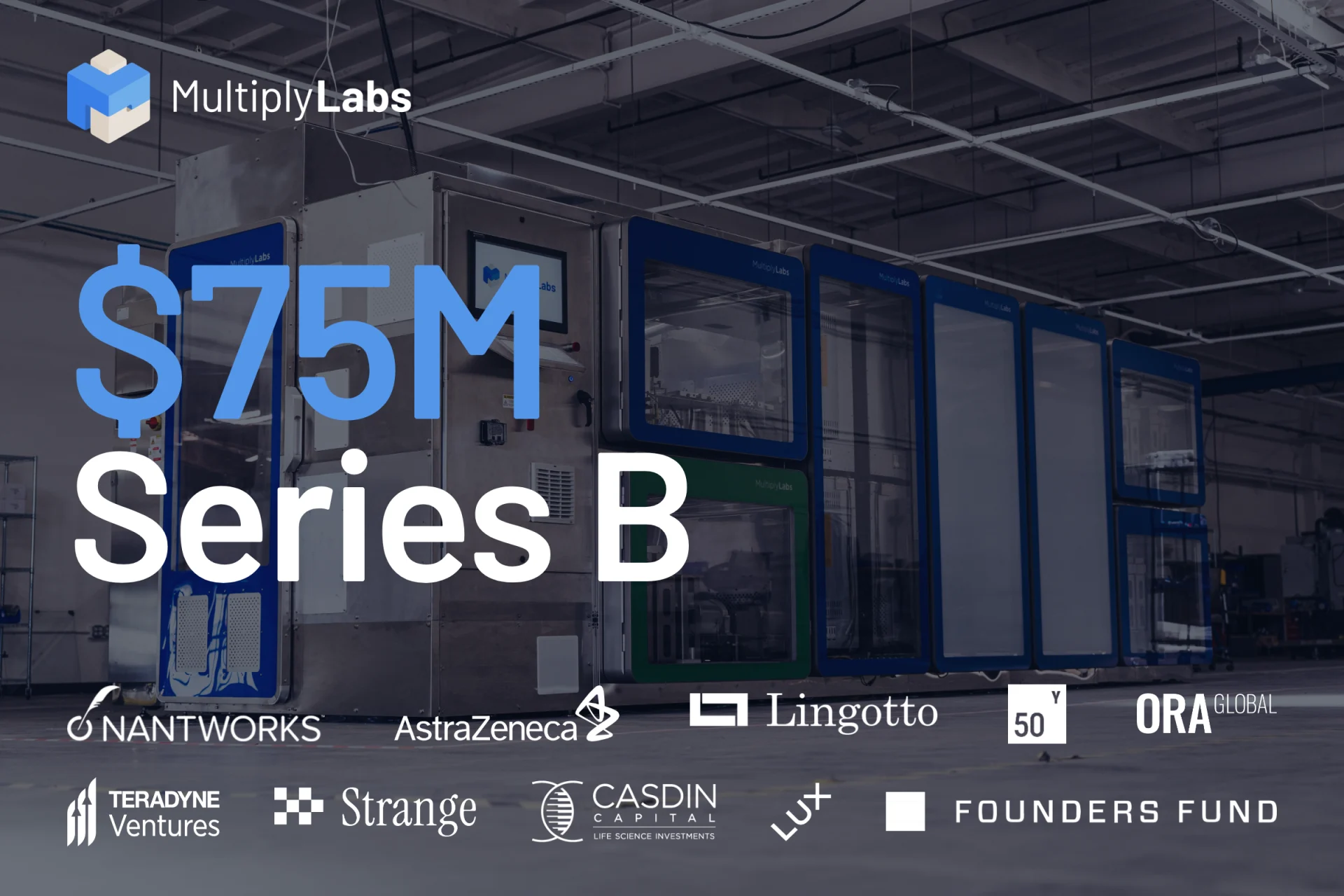
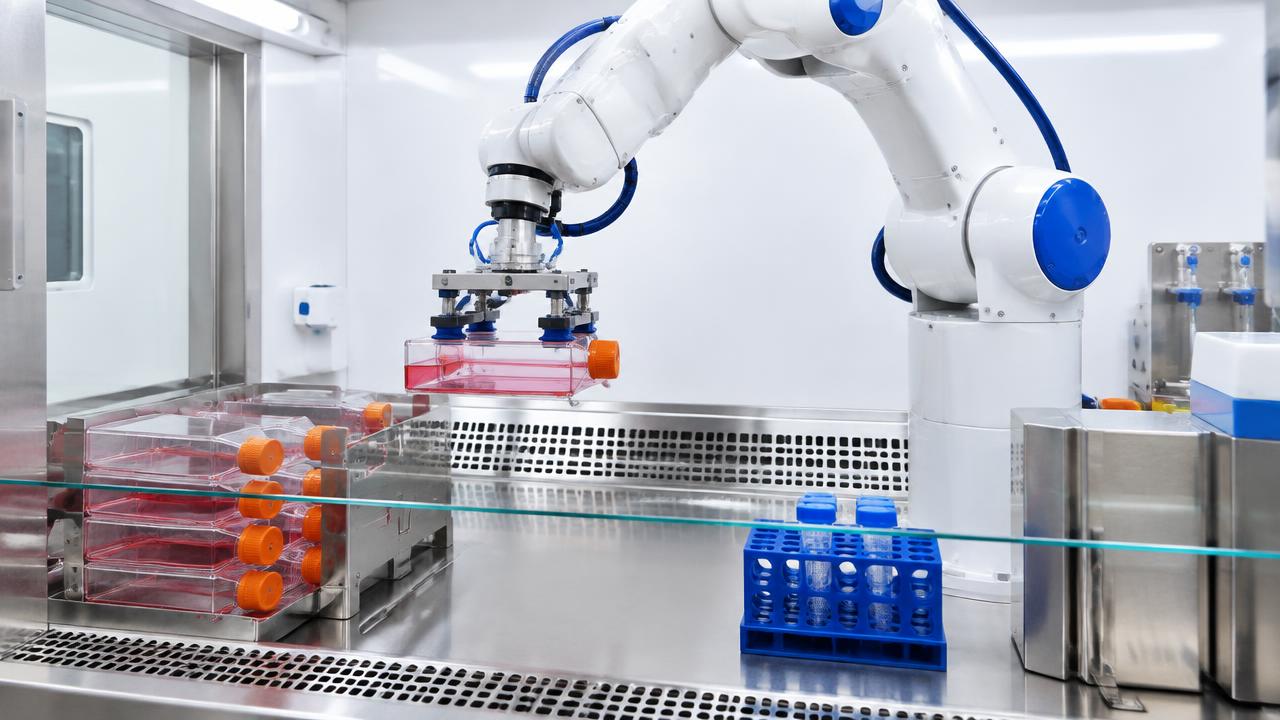
Multiply Labs is building around that operating challenge. Its robotic clusters are designed to work with existing biomanufacturing instruments, allowing developers to explore automation without making a proprietary instrument the starting point for every process. A $75 million Series B gives the company resources to develop and scale that approach.
In This Deep Dive
- The financing and the robotic-cluster architecture
- What 74% lower cost and up to 100 times throughput actually describe
- Process validation, identity and quality control
- Manufacturing economics beyond an equipment purchase
- The HealthTech Investor's Signal and adoption evidence to watch
What actually happened
Multiply Labs announced its $75 million Series B on October 6, 2026, not October 27. The financing was led by Dr. Patrick Soon-Shiong with NantWorks. New investors included AstraZeneca, Lingotto, Teradyne and Strange Ventures; the announcement also named returning backers including Casdin Capital, Lux Capital and Founders Fund. Company-reported total funding exceeded $100 million.
Fred Parietti and Alice Melocchi are co-founders and serve as CEO and CSO, respectively. The company describes enclosed robotic clusters that automate existing instruments in a closed, GMP-compliant process. Its official product language is robotic clusters, rather than a separately verified product called Biomanufacturing Pods.
An investor relationship is not automatically a commercial deployment. Collaborations should be read from their own announcements and defined scope. For example, Multiply's Thermo Fisher announcement describes work around integrating the Gibco CTS DynaCellect platform into automation, not a blanket regulatory approval for every therapy produced with it.
Why existing instruments matter
Biological manufacturing processes are built around specific equipment, materials, settings and quality attributes. A system that can operate existing instruments offers a potentially useful path to automation because it starts closer to a developer's current process. That can support technology-transfer planning and reduce the number of changes considered together.
It does not eliminate validation. Replacing a manual step with a robotic action can affect timing, handling and records even when the underlying instrument is unchanged. The engineering value is a more repeatable execution layer; the clinical value still depends on the product that emerges from the entire workflow.
Read the productivity figures with their scope
Multiply reports 74% lower cost per dose and up to 100 times throughput compared with manual manufacturing. These are company-reported system claims. They are not a universal reduction in therapy price, a guaranteed outcome for every CAR-T process or proof that every site can achieve the same result.
Cost per dose depends on the process, staffing, utilization, facilities, materials, maintenance and quality requirements. Throughput depends on what is counted and how a cluster is configured. A purchasing team should request the assumptions behind the comparison and test them against its intended production schedule.
Nor do those figures establish a five-day vein-to-vein timeline or a particular contamination rate. Manufacturing duration is only part of the patient pathway; collection, transport, release testing and clinical readiness remain relevant.