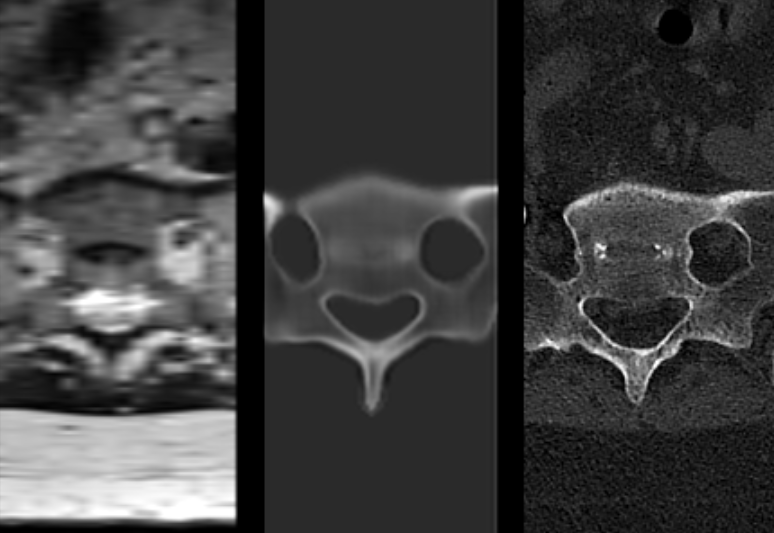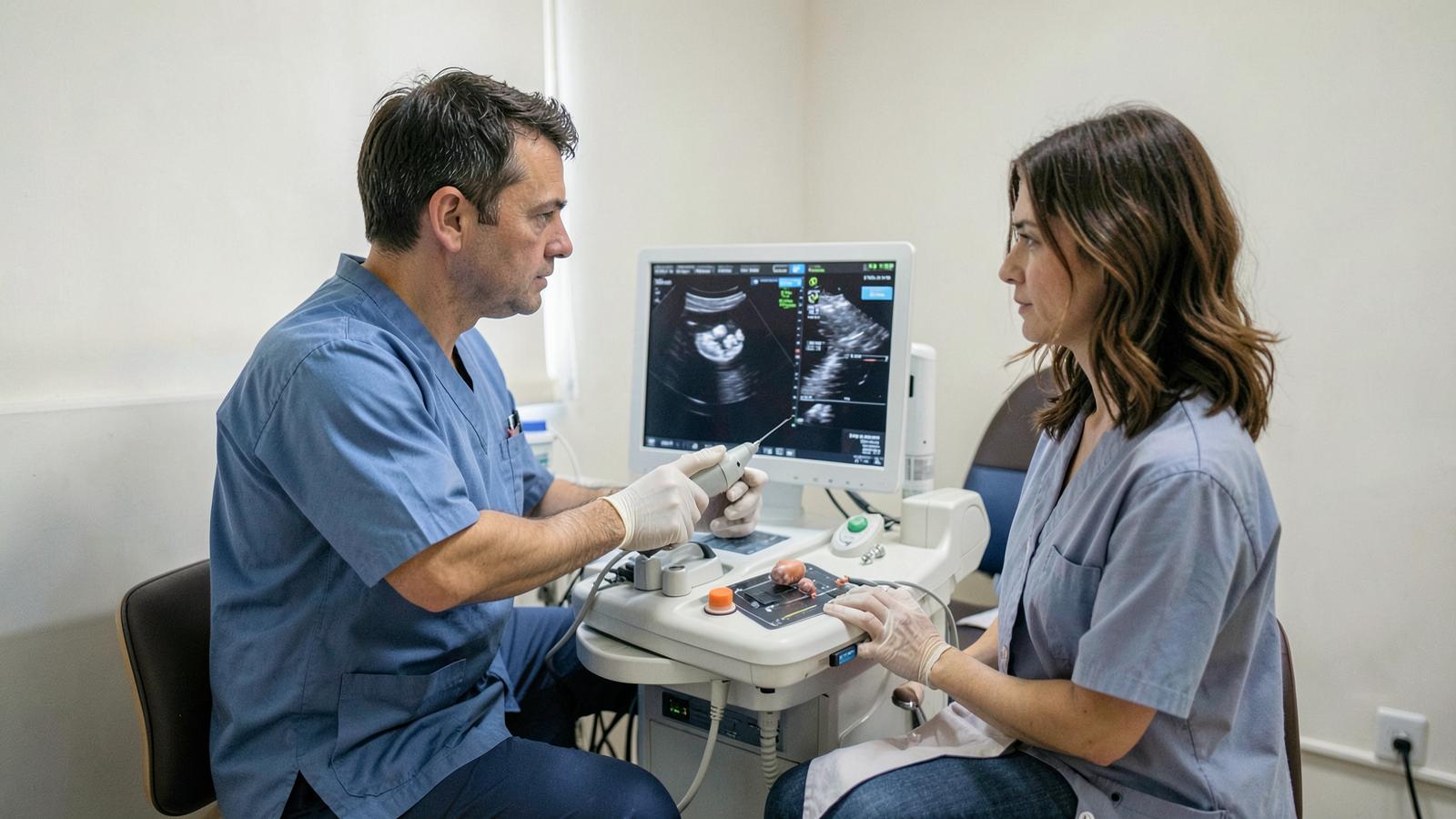
A radiologist in a busy hospital reads a biparametric prostate MRI in a fraction of the time it once took, with a software overlay flagging the region most likely to harbor clinically significant cancer before the human eye settles on it. That is no longer a research demo. Through 2026, a run of multicenter, prostatectomy-validated studies has shown commercial AI decision-support tools performing at or above the level of practicing radiologists on the specific task that determines whether a man gets a needle biopsy: distinguishing clinically significant prostate cancer from indolent or absent disease on MRI.
Prostate cancer is the second most common cancer in men worldwide, and MRI has become the standard first step before biopsy in most developed health systems, largely because it lets clinicians skip biopsy altogether for men whose scans show low suspicion. The problem has always been variability. PI-RADS, the standard scoring system radiologists use to grade suspicion on a scan, is reproducible in expert hands but drifts meaningfully between readers of different experience levels, and between busy community hospitals and academic centers with dedicated genitourinary radiologists. That variability translates directly into missed cancers in some settings and unnecessary biopsies in others.

What the 2026 evidence actually shows
A European Journal of Radiology study published this year examined a commercial AI tool's effect on biparametric MRI interpretation across radiologists at different experience levels, run as a retrospective, prostatectomy-validated multi-reader study, meaning the true cancer status of each case was confirmed by pathology after surgery rather than by a second radiologist's opinion. The AI tool's addition narrowed the performance gap between junior and senior readers, the pattern researchers have been hoping to see since less experienced readers stand to gain the most from a consistent second opinion.
A separate multicenter, multiscanner study published in European Radiology this year looked specifically at whether AI decision support could improve the efficiency of biopsy referral decisions, testing the tool across different MRI scanner manufacturers and imaging protocols, which matters because a tool trained on one vendor's images has historically struggled to generalize to another's. The results supported using AI support to help triage which patients need biopsy without an accuracy tradeoff, a practical workflow question that matters more to a hospital's daily operations than a headline accuracy number.
Earlier landmark work, the PI-CAI study run as an international, non-inferiority trial comparing AI-assisted and radiologist-only detection of prostate cancer on MRI, established the baseline finding that AI-assisted detection was non-inferior to standard radiologist reading, giving the field its first large, prospective-style evidence that these tools do not need a human radiologist as the sole reader to catch clinically significant disease.
Why this matters beyond accuracy
The practical case for AI-assisted prostate MRI is about access as much as accuracy. Genitourinary radiology subspecialists are concentrated in academic centers, and the men most likely to be seen at a community hospital or a rural practice are also the ones least likely to get a subspecialist's read on an ambiguous scan. A validated AI second opinion, built into the radiologist's existing reading software rather than as a separate step, gives every reading site a version of the consistency that used to be available only where a fellowship-trained genitourinary radiologist happened to be on staff. That is a meaningful equity story in a cancer where Black men in the United States are diagnosed with more advanced disease on average and have less consistent access to subspecialist imaging read.
There is also a foundation model layer emerging beneath the commercial tools. Research published this year in npj Digital Medicine describes techniques for adapting large vision foundation models, originally trained on broad medical imaging data, to the specific and subtle appearance of prostate cancer on MRI using targeted contrastive learning, aiming to reduce how much labeled prostate-specific data a new AI tool needs before it performs well. If that approach matures, it lowers the cost of building and validating the next generation of these tools, which should widen the field beyond the handful of vendors currently cleared for clinical use.

What health systems should watch before adopting
Implementation still requires care. Non-inferiority to human readers is a meaningful bar, but it is not the same as clear superiority, and health systems adopting these tools should expect them to function as a structured second opinion rather than a replacement for a trained radiologist's judgment. Scanner and protocol variability remains the practical failure mode most likely to bite an early adopter, which is why the multiscanner validation work published this year matters more than any single-site accuracy claim. Systems piloting these tools in 2026 have generally started with a defined role, flagging cases for a second look or standardizing PI-RADS scoring consistency, rather than an outright autonomous read.
Key Signals
The clearest signal from 2026 evidence is that AI decision support for prostate MRI has now cleared the multicenter, pathology-validated bar that matters for clinical adoption, not just single-site pilot data. The second signal is that the biggest measured benefit shows up among less experienced readers and in multiscanner settings, meaning the technology's strongest case is expanding consistent access at community and rural sites rather than replacing expertise at academic centers. The third is that foundation-model techniques aimed at cutting the labeled-data cost of building new prostate AI tools suggest the vendor field will widen over the next two to three years rather than stay locked to today's handful of cleared products. Health systems moving now are treating these tools as a structured second opinion inside existing radiologist workflow, which looks like the sustainable adoption path heading into 2027.