A stethoscope is one of the few clinical instruments that travels with the clinician rather than belonging to a department. That makes it an unusually interesting distribution point for medical AI. Software can reach an existing physical examination instead of asking a health system to create a separate screening appointment.
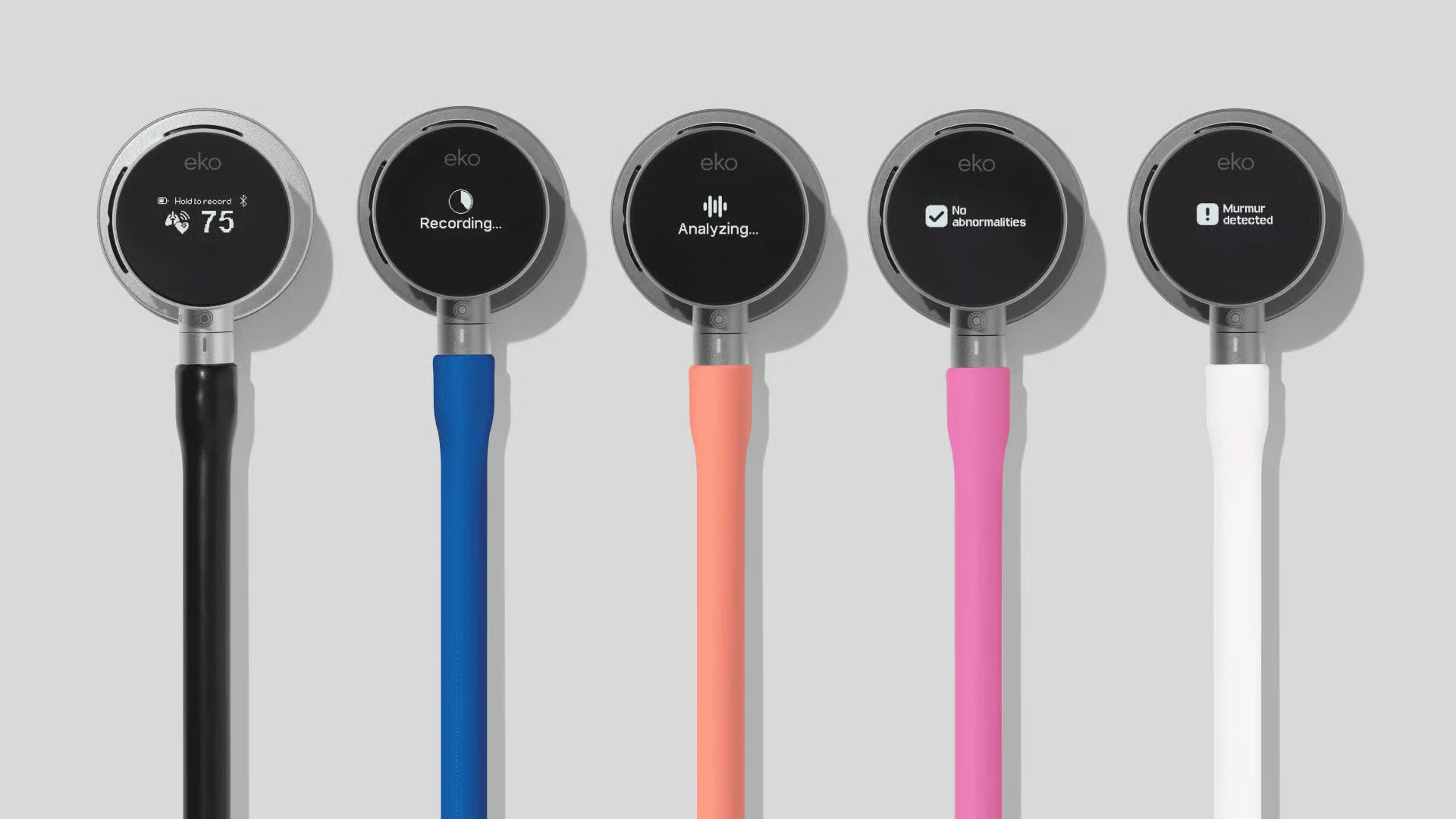
Eko's CORE 300 brings traditional listening, amplified digital sound and a heart-rate display into that familiar form. Paired software adds another layer: analysis of recorded heart sounds. The opportunity is a more measurable examination, but a murmur flag is still the beginning of a clinical decision, not a diagnosis of valve disease.
In This Deep Dive
- Why the everyday instrument matters
- What the launch and clearance establish
- Hardware, software and the referral pathway
- The evidence ladder and practical economics
- The HealthTech Investor's Signal
- Four observable developments to watch
Why this matters now
Primary care is the place where many patients first encounter cardiovascular assessment. A tool already used in the examination has a practical advantage over a separate diagnostic service: clinicians recognize its purpose and know where it belongs.
Digital auscultation can make a sound recordable, visible and shareable. AI can help identify patterns within that recording. Neither function removes the need to consider symptoms, examination findings and patient history. The meaningful opportunity is to support an appropriate next step consistently, not to convert every physical examination into automatic imaging.
What actually happened
Eko announced the CORE 300 launch on October 22, 2026. The FDA's device record identifies the CORE 300 Digital Stethoscope under 510(k) K261694, with a substantially equivalent decision dated July 23, 2026. The launch announcement and the clearance decision are different events.
Eko describes traditional and digital listening modes, up to 35 times sound amplification, noise cancellation and a real-time heart-rate display. Its product page displayed a $199 promotional price against $249 when checked. Prices can change, so these are observed listed prices, not a permanent commitment or a complete enterprise quote.
The company reports 750,000 devices sold worldwide across its business. That is a company sales figure, not an independently audited count of active CORE 300 devices. AI analysis requires pairing with the Eko app and an Eko+ membership, according to Eko's support materials. Hardware purchase alone should not be described as buying an unlimited AI service.

The obvious read versus the deeper signal
The obvious read is an upgraded stethoscope. The deeper signal is the possibility of distributing clinical software through an instrument a clinician already carries. That route differs from selling a new capital system, but it still requires workflow design and a clear software budget.
The article's supplied briefing described an illustrative Ohio patient encounter and instant aortic-stenosis identification. We have not treated that vignette as a documented patient case. Product specifications establish how the instrument operates; they do not establish how often it changes a diagnosis or improves an outcome in ordinary primary care.