
A clinical record becomes useful to medical AI when it connects a decision with what happened next. A diagnosis code on its own tells little about the image that prompted it, the treatment selected or the patient's subsequent course. Multimodal data infrastructure tries to assemble that longer story.
BioStack's seed announcement places that proposition across several healthcare markets. The company reports more than 100 million de-identified patient records spanning the United States, India, Brazil and Argentina. The important distinction is between the scale of a network and the quality of a particular dataset a researcher can actually use.
In This Deep Dive
- Why multimodal and international data matter
- What BioStack announced
- Network scale versus usable research cohorts
- Data architecture and the evidence ladder
- The HealthTech Investor's Signal
- Four observable developments to watch
Why this matters now
Medical models need more than large volumes of text. Imaging, laboratory results, medication histories and outcomes can describe different aspects of the same clinical course. Linking those modalities can support more useful research questions than any one modality alone.
Geographic reach adds another dimension. Disease mix, care pathways and documentation practices differ between health systems. A multi-country network creates an opportunity to study those differences explicitly. It does not automatically remove bias or make a model appropriate for every population.
The supplied briefing's claim that more than 80% of public training data comes from a handful of Western centers was not supported by its sources. The defensible premise is narrower: researchers should establish where their data comes from and test performance in the populations where a model will be used.
What actually happened
BioStack announced $9.5 million in seed financing and named Peak XV, Afore Capital, DCVC, Emerson Collective, SV Angel, Verdict Capital, Streamlined Ventures and Y Combinator among its backers. The announcement does not establish that every named investor co-led the round, and we have not assigned undisclosed investment amounts.
The company says its network covers the US, India, Brazil and Argentina, with over 100 million de-identified patient records. Its announcement describes notes, labs, imaging, medications, treatments and outcomes. Y Combinator's profile describes longitudinal multimodal data spanning imaging, EHR information and experimental assays.
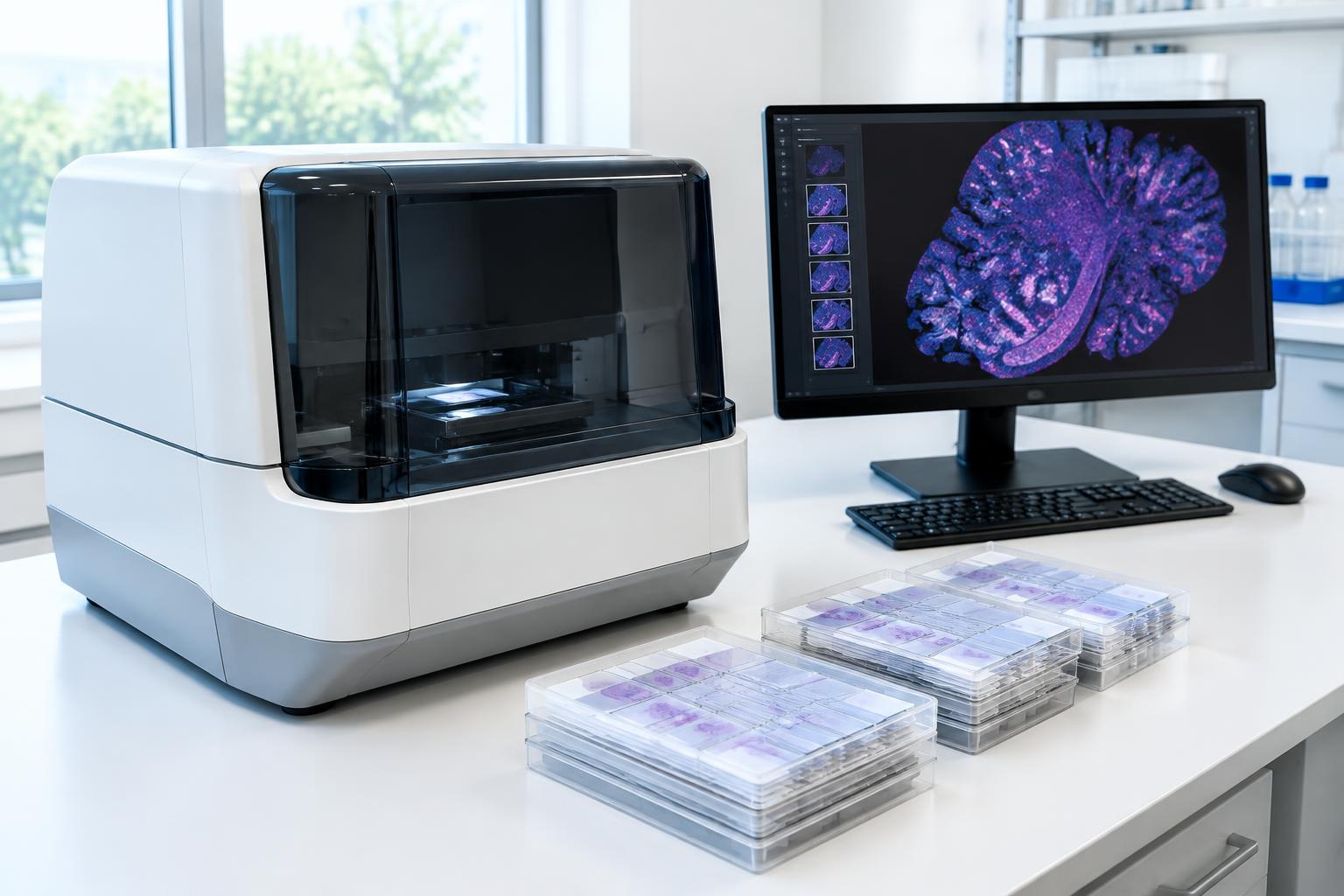
Those descriptions support the platform's direction, not a claim that every record contains every modality. We have not characterized all 100 million records as linked digital pathology and genetic sequencing files, nor described all of them as ready-made foundation-model training data.
The obvious read versus the deeper signal
The surface story is a data infrastructure company raising seed capital. The deeper signal is an attempt to connect clinically meaningful information across institutions and countries while preserving the permissions that make each use legitimate.
For a researcher, a large network is only the starting point. The valuable asset is a cohort that answers a defined question: who is included, what was measured, how events are linked and whether the relevant outcomes are observable. A smaller complete cohort can be more useful than a much larger collection of disconnected encounters.