Good morning, HealthTech insiders. The NHS sent test kits to 4 million women today. Not to the ones who already come in for appointments. To the ones who haven't shown up in years. That's the move people keep missing: the biggest clinical wins right now aren't coming from better tools. They're coming from putting existing tools somewhere they've never been before.

That's today's pattern. A Nature paper published this week shows AI can generate a full molecular portrait of a patient from routine blood markers that every GP already orders. A 528-patient randomized trial at the European Society of Cardiology Congress cut unnecessary invasive heart procedures by 44%. These aren't advances in accuracy. They're advances in reach. The question healthcare has been trying to answer isn't 'can AI outperform a cardiologist?' It's 'why are 30% of eligible women still missing cervical screening, and what do we actually do about it?'

In today's Signal:

  • NHS England launches national HPV home self-testing to 4 million under-screened women, starting today.

  • PULSE framework (Nature Computational Science): AI generates 251 metabolomic biomarkers from 61 routine blood markers, matching expensive specialist panels.

  • Heartflow FFRCT cuts unnecessary invasive cardiac catheterizations by 44% in government-funded RCT at ESC 2026.

  • Follow the money: Globus Medical buys Duke-incubated Higgs Boson Health; Abbott's new wearable creates the first US regulatory category for continuous ketone monitoring.

  • Quick Hits: Roche-Lilly Alzheimer's blood test FDA-cleared; Hyperfine portable MRI hits 92% concordance; BEACON-Neuro.AI raises seed to predict brain swelling post-stroke AMIE in video: Diagnostic AI moves beyond text benchmarks directly into patient video consultations.

LATEST DEVELOPMENTS

POLICY
1. The NHS stopped waiting for 4 million women to show up. It sent a kit to their door instead.

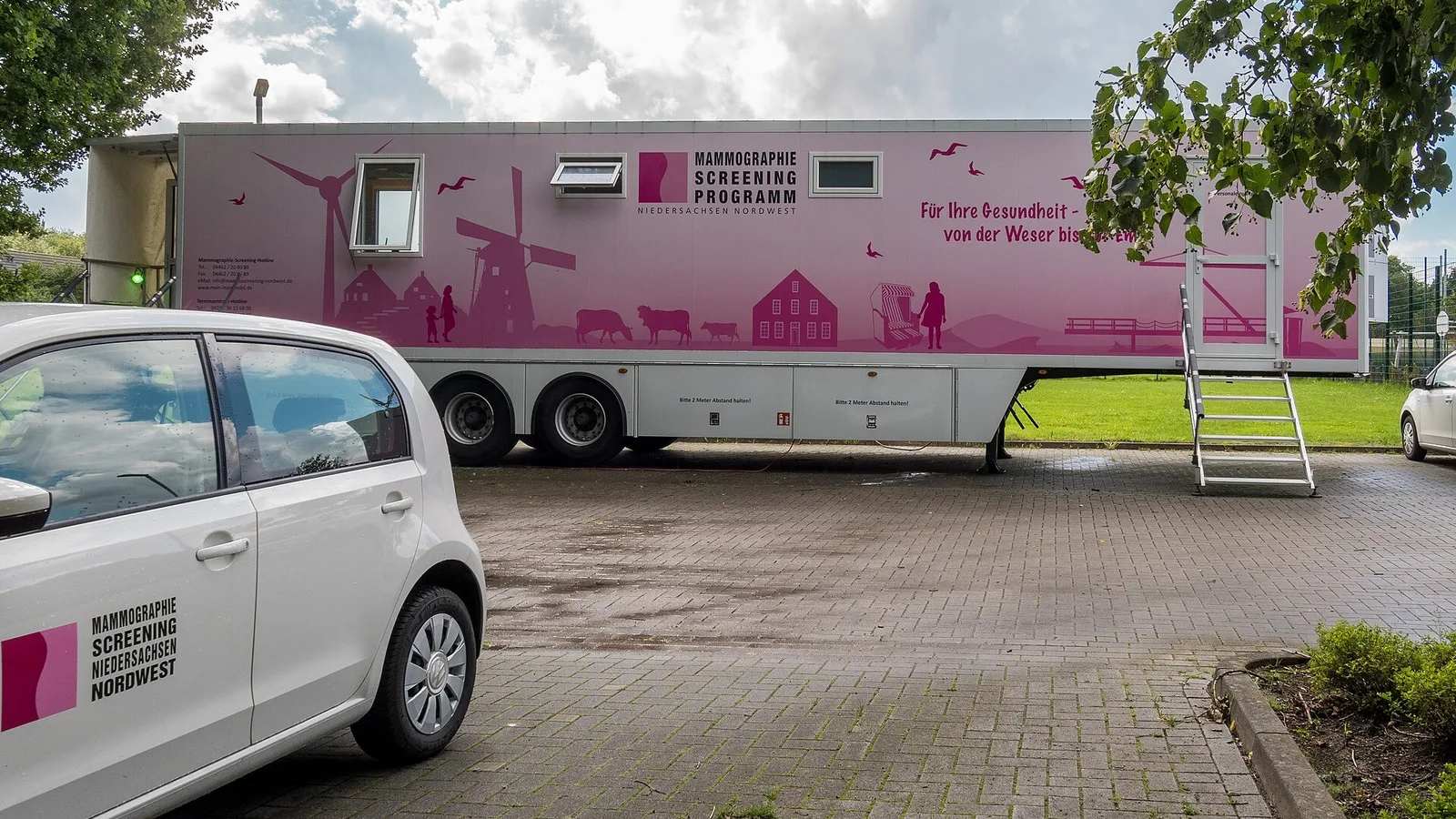
The signal: NHS England today began rolling out home HPV self-testing kits to 4 million women in England who are behind on cervical screening. Invitations arrive through the NHS App, text, email, or letter. Women order a swab kit, collect a sample at home, and post it back. If HPV is detected, they're called in for a proper appointment.

The details:

  • Only 68.8% of eligible women are currently up to date with cervical screening, below the NHS's 80% target. The rollout targets those aged 30 to 65 who've not attended after previous invitations.

  • The evidence base comes from the YouScreen trial, run by North London cancer alliances with King's College London, which found home self-testing could boost England's screened population by approximately 400,000 per year.

  • Cervical screening appointments remain the recommended route for those who already attend. This is a parallel offer, not a replacement.

Why it matters: A third of eligible women weren't coming in before today. Mailing them a kit is a simpler intervention than most HealthTech investments and it will almost certainly screen more patients than any clinical AI upgrade rolled out this year. The hard work in cancer prevention has always been logistics, not science.

CLINICAL AI
2. A routine blood test can now generate your full molecular portrait. AI just did the expensive bit for free.

Source: Nature Computational Science. The PULSE framework uses routine clinical data to infer missing multimodal biomarkers across patient visits.

The signal: A team from Macau University published PULSE (Patient Unified Longitudinal Signal Engine) in Nature Computational Science this week. The model reads 61 routine blood markers that any GP orders, and generates 251 full metabolomic biomarkers that normally require expensive specialist laboratory panels. It outperformed all benchmark methods against ground truth UK Biobank data.

The details:

  • PULSE uses a patient's own longitudinal history as context. The same test result means different things depending on where it is in your individual trajectory: the model learns that pattern rather than treating each visit in isolation.

  • Beyond metabolomics, it also generated proteomic profiles from standard labs and medical history, with AUC values of 0.72 to 0.83 for disease prediction across six common diseases, matching results from actual proteomic data.

  • Validated across UK Biobank, US and Chinese ICU cohorts (127,731 patients, 657,103 clinical visits). The framework is open-access and designed as a general foundation rather than a single-task product.

Why it matters: Deep molecular profiling has been limited to well-resourced research centres. If PULSE holds up in prospective validation, every GP practice with standard bloodwork suddenly has access to a layer of biology that currently costs hundreds or thousands per test. That's not a marginal improvement in precision medicine, it changes who can afford to participate in it.

DIAGNOSTICS
3. An AI heart scan just cut unnecessary cardiac catheter procedures by 44% in a government-funded randomized trial.

The signal: Heartflow presented FUSION trial results as Late-Breaking Science at the European Society of Cardiology Congress 2026 in Munich on August 28. Adding Heartflow FFRCT Analysis to standard coronary CT scans cut unnecessary invasive catheterization procedures by 44% over one year. The trial was published simultaneously in the Journal of the American College of Cardiology.

The details:

  • 528 patients with stable chest pain, 12 hospitals in the Netherlands. Funded by the Dutch National Health Care Institute, with no industry involvement in trial design or analysis.

  • The problem: when a CT scan shows a narrowing, cardiologists often can't tell from the image alone whether it's blocking blood flow enough to matter. The standard answer has been to send the patient for invasive catheterization, threading a catheter through an artery to the heart. Heartflow's AI creates a 3D blood flow model from the CT scan, making that invasive procedure unnecessary in 44% of cases.

  • Heartflow FFRCT is already endorsed in the 2026 SCCT/SCAI expert consensus statement and the American College of Cardiology's appropriate use criteria.

Why it matters: Invasive catheterization carries real procedural risk. Removing it from 44% of referrals is not an efficiency win on a spreadsheet; it's harm reduction at scale. This is the kind of independently funded evidence the FDA and payers will notice when Heartflow pushes for broader reimbursement.

QUICK HITS

💰 FOLLOW THE MONEY

  • The deals: Globus Medical (NYSE: GMED) acquired Higgs Boson Health (Aug 26), a Duke University-incubated digital healthcare experience company, no purchase price disclosed. BEACON-Neuro.AI announced a $3.2M seed round (Aug 28) alongside its FDA Breakthrough Device Designation for BEACONPredict, a stroke brain-swelling prediction AI from WashU Medicine. Abbott's Libre Duo De Novo authorization (Aug 25) established the world's first regulatory standard for continuous ketone monitoring, opening a new device category.

  • The pattern: The notable moves this week weren't mega-rounds. They were market-structure plays, a musculoskeletal device company buying digital patient experience software, a neurocritical-care startup using FDA Breakthrough designation as its financing story, and a regulatory first that creates a new category. When big rounds slow down, watch who is positioning for the next category rather than expanding inside an existing one.

🩺 THE CLINICIAN’S SIGNAL

  • On the NHS HPV rollout: Clinicians who've spent years chasing non-attenders know the limiting factor was never the science, it was getting the kit into someone's hands before they decided not to bother. A postal swab removes the appointment barrier entirely. Worth watching whether uptake among the previously unreachable 30% translates to earlier-stage findings, or whether low-engagement patients also tend to delay follow-up when HPV is detected.

  • On PULSE and metabolomic generation: Routine bloods have always carried more signal than clinicians had time to extract from them. A tool that surfaces metabolomic-level inference from existing lab panels doesn't add to the workflow, it adds to what the existing workflow already tells us. The question a clinical buyer needs answered is prospective validation in a population that matches their patient mix, not just UK Biobank.

  • On Heartflow FFRCT and catheterization reduction: The FUSION trial's independent funding is the detail that matters here. Cardiology has a well-documented history of procedure overutilization driven by financial incentives. An RCT with no industry involvement in design or analysis, showing 44% fewer catheterizations without worse outcomes, is exactly the kind of evidence that should move institutional protocols.

🛠️ Trending HealthTech AI Tools & Startups

  • Heartflow FFRCT Analysis: AI platform that generates a 3D coronary blood flow model from standard CT scans; 44% catheterization reduction in independent FUSION RCT; only CT-FFR technology prospectively validated against invasive gold standar

  • PULSE Framework (Nature Computational Science): Open-access longitudinal AI that reconstructs full metabolomic and proteomic profiles from routine blood tests; AUC 0.72-0.83 for six disease predictions; validated in UK Biobank and 127,731-patient cohort.

  • BEACONPredict (BEACON-Neuro.AI): FDA Breakthrough Device for predicting brain swelling after acute ischemic stroke; from Dr. Raj Dhar's WashU Medicine lab; De Novo pathway underway.

  • Hyperfine Swoop + Optive AI: Portable FDA-cleared brain MRI; NEURO PMR study shows 92% concordance with high-field MRI; new Optive AI software rolling out September 2026. Nordisk & AWS: Partnered to deploy agentic AI frameworks across multi-target drug discovery pipelines.

  • BEACON-Neuro.AI: Founded at WashU Medicine by Dr. Raj Dhar's lab; $3.2M seed announced Aug 28; BEACONPredict AI predicts life-threatening brain swelling post-stroke; FDA Breakthrough Device + TAP pilot; De Novo pathway in progress.

  • Higgs Boson Health: Duke University-incubated digital healthcare experience AI; acquired by Globus Medical (NYSE: GMED) Aug 26; covers full episode of care from pre-op through recovery; integrating into Globus Medical's orthopaedics platform.

  • MiiHealth AI: CEO Kelvin Summoogum; DAINA agentic AI handles pre-visit intake in patient's preferred language, writes into the EHR; seed closed Aug 26 led by Russell Glass (former Headspace CEO); Mayo Clinic cardiology deployment.

  • Trusted Health / ShiftOS: CEO Lennie Sliwinski; acquired ShiftOS and its Holly agentic scheduling AI (Aug 18); 50+ specialized sub-agents for hospital workforce scheduling; integrating into Trusted Works platform.

📣 Highlights: Events, Lists & Deep Dives

That's it for today!

The reach problem and the accuracy problem are not the same problem. Healthcare has been solving for accuracy. Today's issue is about what happens when you solve for reach instead: 4 million women who wouldn't come in get a kit. A routine blood panel becomes a molecular portrait. A CT scan replaces a catheter in 44% of the cases that used to get one. The tools aren't new. The distribution is.

If that pattern holds, the most consequential HealthTech companies of the next five years won't be the ones that built the best model. They'll be the ones who figured out how to put a working model somewhere the patient already is.

Before you go, was today’s Signal worth your time? Let us know. Your feedback helps us keep improving what we send you.

How did we do today?

See you tomorrow,

Dr. Dereck Mush, MD, MBA

The HealthTech Signal is independently funded. Sponsorships help us invest in better reporting, research, and a stronger newsletter for our readers. Want to reach HealthTech founders & executives while supporting the Signal? Get in touch.

Was this email forwarded to you? Sign up here.

Until tomorrow,
The HealthTech Signal