Growth-Accommodating Medtech: How Expandable Scaffolds Disrupt Congenital Surgical Cycles

Dr. Dereck Mush, MD, MBAThe Daily SignalOctober 5, 2026
PLUS: Jaypirca gets approved as an Initial Treatment for Certain Adults With CLL/SLL

Good morning, HealthTech insiders. A replacement heart valve has long presented a difficult problem for a growing child: the implant stays the same size while the patient does not. This week, the FDA approved Edwards Lifesciences’ AUTUS valve, which can be widened through a catheter procedure after its initial surgical placement. Two children in the approval study have undergone that expansion. Whether it spares many more children another open-heart operation will take longer follow-up to establish.
There are two other decisions to watch. Eli Lilly’s Jaypirca can now be used as an initial treatment for certain adults with CLL or SLL, while Tempus has cleared an AI tool that flags signs associated with mitral regurgitation on a routine ECG. One changes the options available today; the others test how much more useful a familiar treatment pathway or diagnostic test can become.
In today's Signal:
A valve that can expand: FDA-approved AUTUS is surgically implanted in children who need pulmonary valve replacement, then can be widened through a catheter as they grow. Its long-term durability remains under study.
Jaypirca moves into first-line CLL care: The FDA approved pirtobrutinib for previously untreated adults with CLL or SLL and no known 17p deletion after a Phase 3 trial showed longer progression-free survival than bendamustine plus rituximab.
An ECG flags possible valve disease: Tempus ECG-MR received FDA 510(k) clearance to identify signs associated with moderate or severe mitral regurgitation in eligible patients aged 65 or older. A positive result calls for clinical evaluation, not an immediate diagnosis.
The money: Parakeet Health announced a $10 million Series A; EliseAI announced a $350 million round. TwoStep’s $62.5 million Series A was announced earlier, on September 9.
Some stocks are built for a quarter… others for a lifetime.
Our 7 Stocks to Buy and Hold Forever report reveals companies with the strength to deliver year after year - through recessions, rate hikes, and even the next crash.
One is a tech leader with a 15% payout ratio - leaving decades of room for dividend growth.
Another is a utility that’s paid every quarter for 96 years straight.
And that’s not all - we’ve included 5 more companies that treat payouts as high priority.
These are the stocks that anchor portfolios and keep paying.
You can download this report for free as of today, but it won’t be free forever.
This is your chance to see all 7 names and tickers - from a consumer staples powerhouse with 20 years of outperformance to a healthcare leader with 61 years of payout hikes.
LATEST DEVELOPMENTS

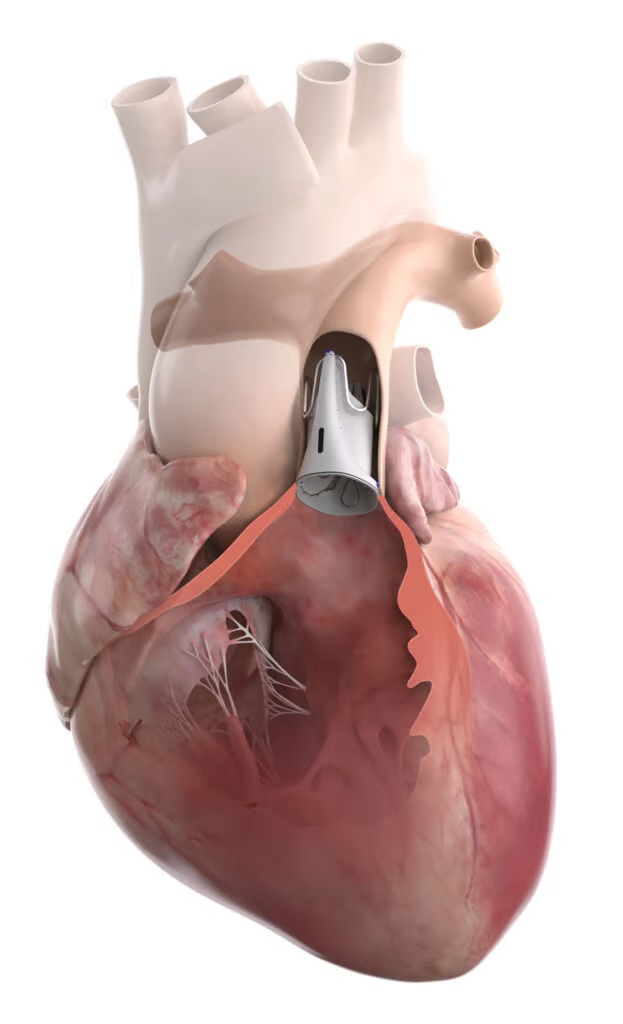
Image courtesy of Edwards Lifesciences.
The FDA approved Edwards Lifesciences’ AUTUS Size-Adjustable Valve on October 1 for pediatric patients with congenital pulmonary valve disease who need a replacement valve. It is surgically implanted and can later be widened using a balloon catheter, potentially reducing the need for another open-heart procedure as a child grows.
The details:
Designed for growth: The valve can be implanted at approximately 13 mm and expanded to as much as 22 mm. Its leaflets use a synthetic polymer rather than animal-derived tissue, the first FDA-approved valve to use polymeric leaflets.
The approval evidence: The study enrolled 62 children at 12 US sites. Among the first 60 evaluated at six months, the FDA reported acceptable blood-flow performance and no more than mild leakage through the valve.
What follow-up must answer: Three patients experienced valve-frame fractures and two had reduced leaflet movement, without reported symptoms from those events. Two children whose valve performance began to deteriorate as they grew underwent successful catheter-based expansion. The FDA says experience with expansion remains limited.
The Signal: AUTUS gives congenital heart teams a way to plan for growth after the initial implant. The central question is how the valve and its leaflets perform after repeated expansions over years, and how often that truly prevents another operation.

Image: Eli Lilly and Company
On October 2, the FDA expanded the approval of Eli Lilly’s Jaypirca (pirtobrutinib) to adults with previously untreated chronic lymphocytic leukemia or small lymphocytic lymphoma with no known 17p deletion. Jaypirca is a non-covalent BTK inhibitor that had already been approved for certain patients treated previously with a covalent BTK inhibitor.
The details:
The comparison: In the 282-patient BRUIN CLL-313 trial, Jaypirca was compared with bendamustine plus rituximab. At a median progression-free-survival follow-up of 28 months, median progression-free survival had not been reached with Jaypirca, versus 33.5 months with the comparator (hazard ratio 0.20).
The limit of that result: The trial did not compare Jaypirca directly with newer covalent BTK inhibitors such as acalabrutinib or zanubrutinib. Overall-survival data were immature at the primary analysis.
Safety still matters: The FDA lists warnings including infections, bleeding, low blood counts, cardiac arrhythmias, and liver toxicity. Serious adverse reactions occurred in 28% of patients receiving Jaypirca in this trial.
The Signal: Clinicians now have a non-covalent BTK inhibitor available at the start of treatment for this defined group. The result establishes an advantage over the trial’s chemoimmunotherapy comparator. Direct studies and longer follow-up will better show where Jaypirca belongs alongside today’s other targeted options.

Image: Tempus AI
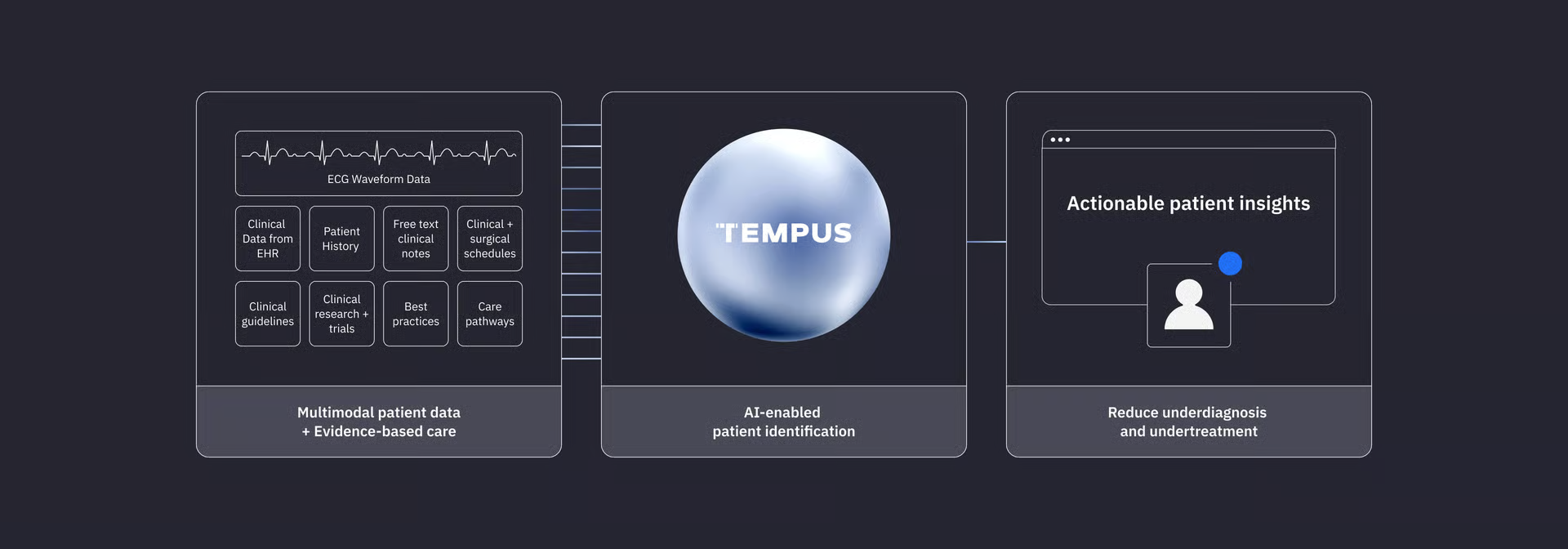
Tempus announced FDA 510(k) clearance on September 28 for ECG-MR, software that analyzes a standard resting 12-lead ECG for signs associated with previously undiagnosed moderate or severe mitral regurgitation. The FDA record lists K254297, with a September 25 clearance decision and an authorized Predetermined Change Control Plan.
The details:
Who it is for: The software is intended for ECGs recorded at a healthcare facility from patients 65 or older who are at risk of cardiovascular disease. Its indicated population excludes people with a prior mitral-valve intervention or a prior diagnosis of moderate or severe mitral regurgitation.
What it returns: ECG-MR produces a binary output for clinicians to interpret alongside symptoms, the original ECG, and other information. It is not a stand-alone diagnosis or a tool for serial patient monitoring.
The next clinical step: An alert may prompt further evaluation, such as echocardiography. The clearance itself does not establish how many additional patients will receive a confirmed diagnosis or need a valve procedure.
The Signal: Routine ECGs could become another way to identify patients who warrant a closer look at their heart valves. The practical test is whether alerts lead to timely, appropriate imaging without filling echo services with low-yield referrals.
QUICK HITS
AUTUS durability: How valve performance changes over longer follow-up, particularly after expansion, and whether the approach reduces repeat surgery.
Jaypirca’s place in treatment: Results from BRUIN CLL-314, which compares pirtobrutinib with ibrutinib in a BTK-inhibitor-naïve population. It will not, by itself, settle comparisons with every newer covalent inhibitor.
ECG-MR’s clinical yield: How often a flag leads to completed echocardiography, a confirmed diagnosis, and a change in care, and what additional demand it places on imaging teams.
The deals:
EliseAI: Announced a $350 million funding round at a reported $4 billion valuation on September 29, led by Andreessen Horowitz and Bessemer Venture Partners. The company operates in both housing and healthcare; the round should not be described as funding healthcare alone.
Parakeet Health: Announced a $10 million Series A on October 1, led by Canvas Ventures, to expand its patient-access platform across calls, outreach, scheduling, and related workflows.
TwoStep Therapeutics: Announced a $62.5 million Series A on September 9, alongside FDA clearance of an IND that permits it to begin a first-in-human study of its investigational peptide-drug conjugate TS-104. The IND clearance is permission to study the candidate, not drug approval.
The pattern: Investors are funding two distinct propositions here: automation that helps organizations turn patient inquiries into booked care, and experimental targeting technology that still has to prove itself in people. The announced rounds total $422.5 million, but they span nearly a month.
Frontiers Health 2026: October 20-21 | bcc Berlin Congress Center, Berlin. Digital health, life sciences, policy, and investment.
HLTH USA 2026: November 15-18 | The Venetian Expo, Las Vegas. Health system, payer, startup, and investor discussions on healthcare innovation.
RSNA 2026: November 29-December 3 | McCormick Place, Chicago. Radiology research, clinical imaging, and AI.
Heartvue.Proton: Heartvue.ai’s FDA-cleared cardiac MRI processing software supports quantitative assessment of heart structure and function. FDA record K260811 includes an authorized change-control plan; Innolitics is listed as the regulatory correspondent, not the product developer.
PMcardio Queen of Hearts: Powerful Medical’s previously covered, De Novo-authorized AI-ECG tool supports assessment of suspected acute coronary syndromes. It remains a tool to watch as teams evaluate its performance in clinical workflows.
OpenEvidence and OncoKB: Through a partnership with Memorial Sloan Kettering, OncoKB’s curated cancer-genomics interpretation is being integrated into OpenEvidence and MSK’s clinical workflow.
Parakeet Health: Connects patient calls, messages, outreach, and scheduling in one access platform; its newly announced Series A brings reported total funding to $13 million.
TwoStep Therapeutics: Developing peptide-drug conjugates that target multiple tumor-associated integrins. Its lead candidate is preparing for initial human testing.
EliseAI Healthcare: Applies conversational automation to healthcare operations, alongside a larger housing business. Its $350 million financing values the company as a whole at a reported $4 billion.
A Valve Designed for Growth: What AUTUS Approval Proves So Far
The design, early study results, observed device events, and long-term evidence needed to know whether expansion reduces repeat operations.
Jaypirca Enters First-Line CLL: What the BRUIN CLL-313 Comparison Shows
The benefit against bendamustine plus rituximab, the treatment population, safety findings, and the unanswered comparison with other BTK inhibitors.
What Can an ECG Reveal About a Heart Valve? The ECG-MR Test
Tempus’s intended use, the role of confirmatory imaging, and the operational questions surrounding AI-generated referrals.
Which result would most convincingly show that one of today’s advances is improving care? |
A child’s replacement valve can now be expanded after implantation. Some adults starting CLL treatment have another targeted option. And an ECG collected during ordinary care may point clinicians toward a previously unrecognized valve problem.
Each advance changes a decision clinicians can make. The question now is what happens after that decision: how long an expanded valve keeps working, how Jaypirca compares with the treatments patients receive today, and whether an ECG alert leads to useful care. Those answers will determine how much these milestones change daily practice.See you tomorrow,
Dr. Dereck Mush, MD, MBA
The HealthTech Signal is independently funded. Sponsorships help us invest in better reporting, research, and a stronger newsletter for our readers. Want to reach HealthTech founders & executives while supporting the Signal? Get in touch.
Was this email forwarded to you? Sign up here.
Until tomorrow,
The HealthTech Signal

Dr. Dereck Mush, MD, MBA
Dr. Dereck Mush, MD, MBAKeep exploring