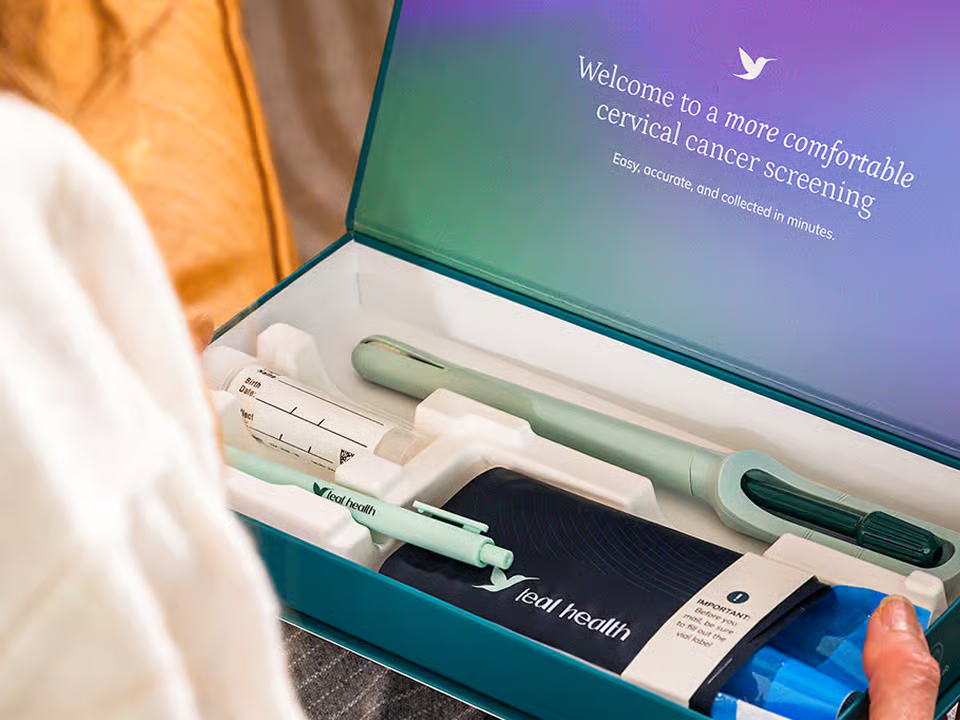
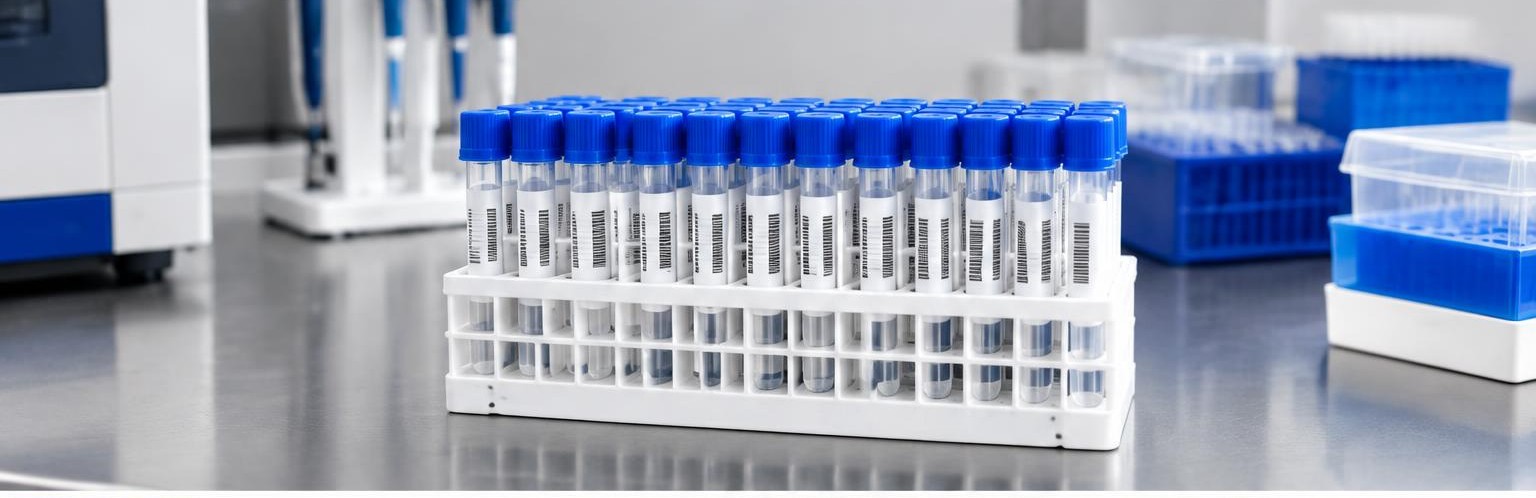
Moving sample collection into the home can change how a screening episode begins. The value depends on what happens after that first step: a usable specimen reaches the laboratory, a validated assay produces a result, and the person receives appropriate guidance and follow-up.
Teal Health's proposition brings those consumer and clinical tasks together. Its prescription collection device has a defined FDA authorization, published study evidence supports its use with a validated HPV assay, and new preventive-services guidance creates a policy opportunity in 2027. Understanding the opportunity requires keeping device authorization, test performance and insurance coverage distinct.
In This Deep Dive
- The financing announcement and FDA collection-device decision
- What SELF-CERV measured and what 96% means
- The scope of the updated 2027 preventive-services guidance
- Home-to-laboratory logistics and clinical follow-through
- The HealthTech Investor's Signal and four developments to watch
What actually happened
Teal announced a $22 million Series A on September 22, 2026. The round was led by .406 Ventures, with continued backing from Emerson Collective, managed by Yosemite, Forerunner and Serena Ventures, and new participation from MPower Partners. Teal says the round brings total funding to $45 million.
The October 27 publication date of this analysis should not be confused with the financing date. The investment supports expansion of an existing clinical and commercial proposition, rather than a newly authorized device announced this week.
The FDA granted the Teal Wand De Novo request on May 9, 2025, under DEN240045. The device is for prescription self-collection and transport of vaginal specimens, used with an FDA-approved HPV molecular assay with which it has been validated. It is not a standalone cancer-diagnosis device, and its authorization does not validate every assay or clinical use.
The study evidence: Collection and assay belong together
The published SELF-CERV study enrolled 609 participants aged 25 to 65 across 16 US clinical sites. It compared self-collected and clinician-collected specimens using the cobas HPV assay and assessed performance in the study's defined setting.
The study reported 96% sensitivity for CIN2+, a category of high-grade cervical precancerous lesions. Relative sensitivity compared with clinician-collected samples was 1.00. A separate 95% figure refers to positive agreement for high-risk HPV detection. Those are different endpoints and should not be exchanged for one another.
The findings support the collection-and-assay combination studied. They do not establish that every at-home method has the same performance or that an HPV-positive result itself diagnoses cancer. A screening result informs the next clinical step.
Why the 2027 policy matters
HRSA's updated women's preventive-services guidance includes clinician-collected or self-collected high-risk HPV testing for average-risk women aged 30 to 65. For average-risk women aged 21 to 29, the recommendation is cervical cytology. A study's age range, a device's labeling and a preventive-services recommendation are different boundaries.
The updated guideline takes effect for most plans starting January 1, 2027. The federal coverage framework applies to non-grandfathered group health plans and non-grandfathered group and individual coverage, subject to applicable rules and exceptions. It should not be described as every plan, every person or unconditional reimbursement for one company's offering.
The guidance also addresses additional testing needed to complete screening. That makes the complete clinical episode important to coverage planning. Actual access still involves benefit administration, networks, ordering and the services delivered.
| Question | Relevant evidence | What should not be assumed |
|---|---|---|
| What is authorized? | Prescription collection-device labeling | A standalone cancer diagnostic test |
| What was studied? | SELF-CERV collection and cobas assay results | Universal performance across all assays |
| Who is recommended? | Age and risk criteria in preventive guidance | Every person in every clinical circumstance |
| What is covered? | Applicable plan and benefit rules | Automatic payment for every service |