
A monitoring device can collect information that a patient would like to understand immediately. A patient can also supply context the device cannot observe. Penn’s new study asks whether a conversational interface can make that exchange useful in both directions.
The result is an early prototype with a specific clinical setting and clear limits. Its significance lies in the interaction between sensing, explanation and patient feedback, not evidence that an autonomous treatment system is ready for routine home use.
- Why this matters now
- What actually happened
- The obvious read versus the deeper signal
- Taxonomy: What the study tested, and what it did not
- The technical framework: Four parts of a patient, device conversation
- Capital flows, incentives, and bottom-up economics
- The HealthTech Investor’s Signal: A possible interface capability, not a finished product
- The counter-thesis: A useful hospital prototype may not translate to home
- Forward Intelligence: Four observable test indicators
- The Bottom Line for Device Developers and Care Leaders
Why this matters now
Medical monitoring often creates a gap between recording information and explaining what it means to the person being monitored. A conversational interface could make selected information easier to request while providing a route for patients to report what they experienced.
Our interpretation is that this could become an interface capability for connected devices. Its value would depend on the accuracy and relevance of the information, the effort required from patients and the care team’s ability to handle uncertainty.
What actually happened
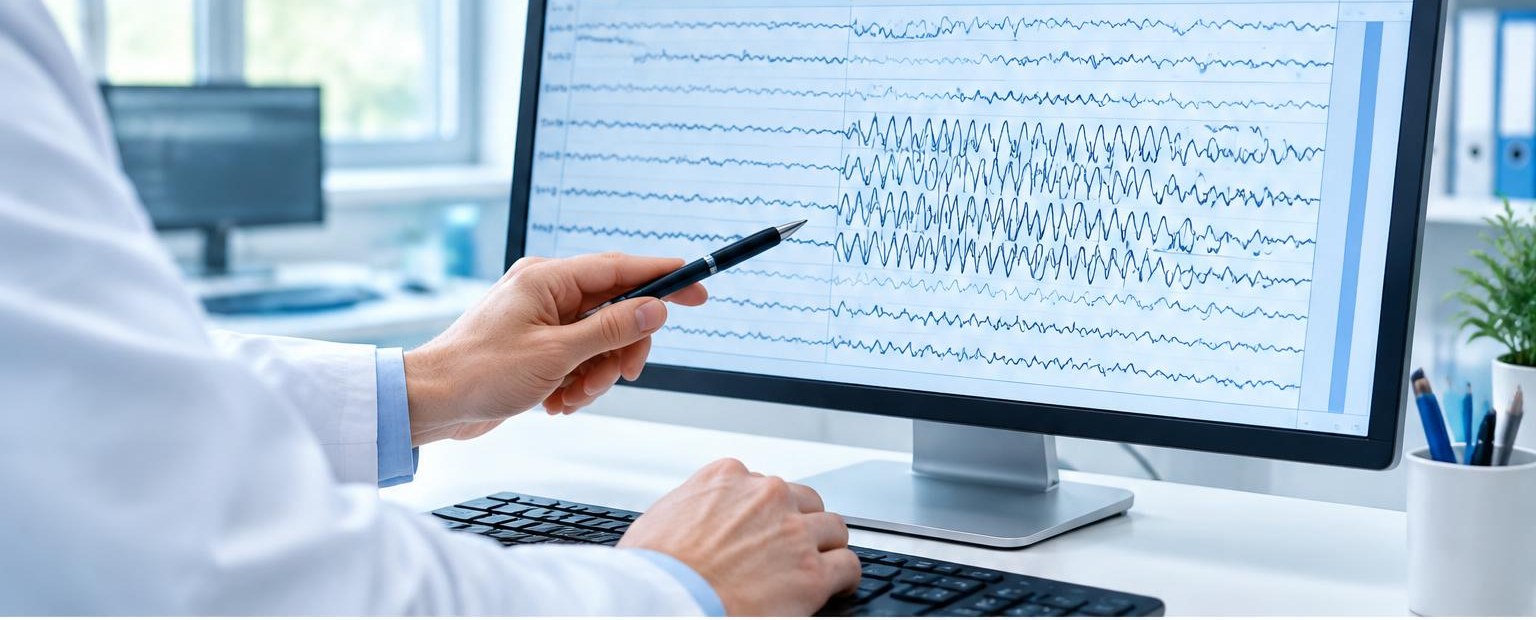
Published October 13 in Nature Medicine, the prospective, single-center observational study enrolled 13 adults undergoing inpatient video-EEG monitoring: 11 with scalp recordings and two with intracranial recordings. The prototype linked EEG analytics with a smartphone interface and did not alter standard-of-care treatment.
A separate pseudoprospective analysis evaluated detector fine-tuning using patient annotations. One reported comparison found a median 77.8% reduction in false alarms per hour. Importantly, the paper states that the validated baseline detector, not the newly fine-tuned models, was used during actual patient sessions. This is not evidence that live adaptive treatment reduced seizures.
The obvious read versus the deeper signal
The immediate story is a patient asking questions of a monitor. The deeper product question is whether a two-way interface can connect physiological signals with meaningful patient context without overwhelming either the patient or the care team.
Patient interaction and detector improvement need separate assessments. A usable conversation does not establish that an updated detector is safe to deploy; a better detector score does not establish better quality of life or fewer hospital visits. The study offers starting points for those questions.