Listen instead
SAN DIEGO. On November 19, Illumina said its BioInsight AI Lab won the 2026 Virtual Cell Challenge, hosted by Arc Institute. Of roughly 1,500 competitors, the company says, its predictions came closest to real experimental results across a wide range of biological measures.
The contest asked teams to predict what happens when a gene is knocked down in a cell line their models had never seen. Teams had only each cell's unperturbed state to work from. Arc scored the entries against hidden experimental data it generated itself.
For a company best known for selling DNA sequencers and reagents, the result is a statement about a different business: supplying the training data for AI biology.
What Illumina won
The entry paired two things. One is CellularAI, a new algorithm that predicts how a whole transcriptome responds to a genetic perturbation. The other is the Billion Cell Atlas, which Illumina calls the world's largest genome-wide genetic perturbation dataset. It records how individual cells respond to CRISPR edits across more than 200 disease-relevant cell lines.
Illumina is generating the atlas in a consortium with select pharmaceutical partners. It has not named them. Since announcing the atlas in January 2026, the company says its BioInsight AI Lab has sequenced more than 500 million single cells across multiple organ systems and disease types in nine months, with billions more planned.
First place paid $100,000, split between cash and NVIDIA Brev cloud credits, according to Arc. [NVIDIA](/startups/nvidia) sponsored the challenge and helped Arc build the scoring software. Second place paid $50,000 and third $25,000, on the same terms.
The algorithm is simpler than you might expect
CellularAI is not a giant neural network trained on the target cell type. By Illumina's own description, a meta-analysis sits at its core. It looks at how a gene responded when it was knocked down in other cell types, weights the evidence, corrects for measurement noise and traces each prediction back to the experiments it came from.
Arc's wrap-up describes the same design in more detail. The team estimated each knockdown's effect from several training datasets, combined them with a random-effects meta-analysis that weights each dataset by how closely its control cells resemble the new line, how noisy its estimates are and how efficient the knockdown was, then adapted the result to the new line and built 400 synthetic cells per knockdown from that line's own control cells. Training data included the Billion Cell Atlas and three published genome-scale CRISPRi datasets. The team also used LLM-based research agents running on eight NVIDIA H200 GPUs to tune the method, according to Arc.
That matters because this field has a credibility problem. Illumina's technical post notes that published perturbation models have struggled to beat a very basic baseline: the average expression across measured cells. The company reports that CellularAI performed about twice as well as that mean. Those figures are Illumina's. The challenge ranking, by contrast, rests on Arc's hidden data.
What the score actually says

Arc's own wrap-up is more cautious than a victory headline. The winning entry scored 0.440 on a scale where 0 is the average response across knockdowns and 1 is an independent replicate of the same experiment. Averaged over six metrics and three held-out cell lines, Arc says, the winning predictions covered 44% of the distance between that average and a replicate. Arc adds that the number does not represent accuracy and that individual metrics vary widely around it.
The field was large. Arc reports more than 5,441 registrations, 1,469 teams on the validation leaderboard and 805 teams with a final entry. That is the context for Illumina's figure of roughly 1,500 competitors.
This year's task was harder than the 2025 version. Teams got no training set from the target lines, only unperturbed control cells for each, and had to predict the response to 300 CRISPRi knockdowns in three held-out lines: AC16 cardiomyocytes, MOLM13 acute myeloid leukemia cells and U-87MG glioblastoma cells. Zero-shot has a limit here. Arc notes that teams could train on any public or private data, and that all but one of the 300 test targets already had public perturbation data in some other cell line. Simply carrying those measured responses over to a new line, with no learning at all, recovers a large part of the signal, Arc says.
Arc's analysis of where the models fell short is the part to read twice. The top ten entries predicted nearly the same response to a given knockdown in every cell line, with a cosine similarity between predicted responses in different lines of 0.77 to 0.89, against 0.55 for the measured responses. Arc concludes that current models recover roughly what a cross-line average would predict, while the part of the response that is specific to a cell line is still largely missing. That line-specific part is exactly what a virtual cell would need to improve on an experiment in another model system.
The models also over-called. On the validation lines, measured responses involved a median of 22 to 44 significant genes per target. X-team's predictions called 122 to 136, and Illumina's about 500.
Open code, closed data
Illumina released a first, streamlined open-source version of CellularAI on the same day. The release does not include the Billion Cell Atlas, and the open version was not trained on it. Researchers can run the method on their own compatible reference data. Only the atlas consortium partners get to use it with the largest reference library Illumina has built.
That is a familiar platform move: share the method, keep the input. Every additional cell sequenced for the atlas also consumes Illumina's own single cell chemistry, which is why the data play fits the company's core business.

Who else made the podium, and what it shows
Second place went to FlowState, two independent researchers, Sina Khodaveisi and Navid Bagheri. They used public data only: 222 perturbation-response datasets from 128 studies covering 86 cellular contexts. Third place went to X-team from Xaira Therapeutics, which built its entry around X-Cell, a masked diffusion model trained on more than 37 million cells of in-house and external Perturb-seq data, according to Arc. It was the only foundation model on the podium, and the team used it to decide which measured effects to carry into the new line rather than to generate cells directly.
Arc's reading is that all three winners built modular pipelines, not single end-to-end models. Each estimated a knockdown's effect from other cell types, adapted it using the new line's controls, then generated the cells. Arc says reference data and how carefully it is transferred matter at least as much as model architecture, for now, though it notes that ablation studies are needed to confirm that. It also says a podium finish did not require private data, since FlowState placed second on public data alone. Because open weights and code were not required this year, the team descriptions rely on what each team supplied.
Ion Genomics, a trade newsletter, adds that corporate-backed teams topped the leaderboard, with a Novo Nordisk Foundation team in fifth place and South Korea's AgingLab in sixth. It also reports that the Illumina team used over 200 million perturbed cells from 57 cell lines to build CellularAI.
What this means for the industry
Start with the buyer. A target discovery group at a drugmaker has a familiar problem: genetics points to a gene, but proving it matters in the right cell type costs months of CRISPR work. Rami Mehio, Illumina's senior vice president and general manager of BioInsight, said the atlas is positioned to help with drug discovery, drug repurposing and understanding mechanism of action. This result does not show any of that yet. It shows that a large, diverse perturbation dataset helps a model generalize to cell types it has not seen, better than the averages that have been hard to beat. That is a necessary step, not the finish.
The competitive picture is a race over data. Xaira released X-Atlas/Orion in June 2025: two genome-wide Perturb-seq screens of about eight million cells across HCT116 and HEK293T, targeting 18,903 genes. It is free for non-commercial use, and Xaira says it is open to commercial data collaborations. Tahoe's Tahoe-100M has more than 100 million cells from 50 cancer cell lines and over 1,100 drug treatments, released under a CC0 license and hosted in Arc's Virtual Cell Atlas, which Arc says holds data on over 600 million cells. Arc generated its own challenge data too: more than 30 million deeply sequenced cells across six cell lines, built from experiments that handled more than a billion cells.
Illumina's bet is the opposite of open. It is keeping the largest atlas inside a paying consortium and giving away the method. FlowState's second place is the awkward fact for that strategy. If carefully harmonized public data can sit near the top of a leaderboard against large private atlases, the moat has to come from something the public sets lack, such as breadth across more than 200 cell lines, consistency and scale. Illumina's team says its model worked because of the depth, diversity and quality of the atlas, and the next challenge will test that claim.
There is a second layer. The instruments in this race are not exclusively Illumina's. Xaira's atlas was sequenced on Illumina NovaSeq X Plus instruments, according to its preprint, while Arc says it used 10x Genomics Flex and Ultima Genomics UG100 platforms for this year's data, and its Virtual Cell Atlas credits Ultima for sequencing Tahoe-100M. Seen that way, owning a proprietary dataset is a way for Illumina to turn a contested sequencing market into a data business.
Regulation is a tailwind, though a narrow one. In April 2025 the FDA published a roadmap to reduce animal testing in preclinical safety studies, starting with monoclonal antibodies and encouraging sponsors to submit data from new approach methodologies, which include AI-based computational models. That policy concerns safety and toxicity, not target discovery, so it does not make a virtual cell a regulatory tool. It does show the agency is open to computational evidence, which helps every company in this field.
What it means for health systems and investors
For health systems, the honest answer is that nothing changes at the bedside this year. The effect, if it comes, arrives through the drug pipeline: better target selection could, in time, improve the odds that new drugs reach patients. Hospital research institutes and academic centers are closer to it, as possible data partners and as buyers of the tools. The questions to ask are practical ones: what the license terms are, whether results can be reproduced with the open code, and how patient-derived samples are governed if they feed commercial atlases.
For investors, this is a story about who captures value in a stack. Data generators sit at the bottom, model builders in the middle and drug programs at the top. Illumina wants the bottom layer and influence over the middle through open code. Xaira is attacking from the top with models and its own atlases. Tahoe and Arc are pushing open data that lowers everyone's entry cost. What is missing from the public record is the part investors would want most: what consortium partners pay, how long contracts run, and how much revenue the atlas adds to a company that sells instruments and reagents. Illumina has not disclosed any of it.
Risks and open questions
The biggest risk is reading a benchmark as biology. A model that matches the cross-line average well can win a leaderboard and still miss what makes one cell type behave differently from another. Arc's own figures show that gap. The 44% score and the 500 genes called against a measured 22 to 44 are reminders that the output is a prediction to be tested, not a result.
Second, the evidence for the algorithm is partly company-reported. The 2X improvement over the mean is Illumina's figure. The open-source version is a simplified release that was not trained on the atlas, so outside labs cannot yet reproduce the winning setup. Arc also notes that final ranks reflect some re-uploads, though it found the gains small, and that the field lost ground on the 171 test targets that were absent from the validation panel.
Third, the commercial terms are opaque. Illumina has not named its consortium partners or said what access costs. It has not said whether any drug target or program has come out of the atlas. A full manuscript on the method is due in early 2027.
The people behind it
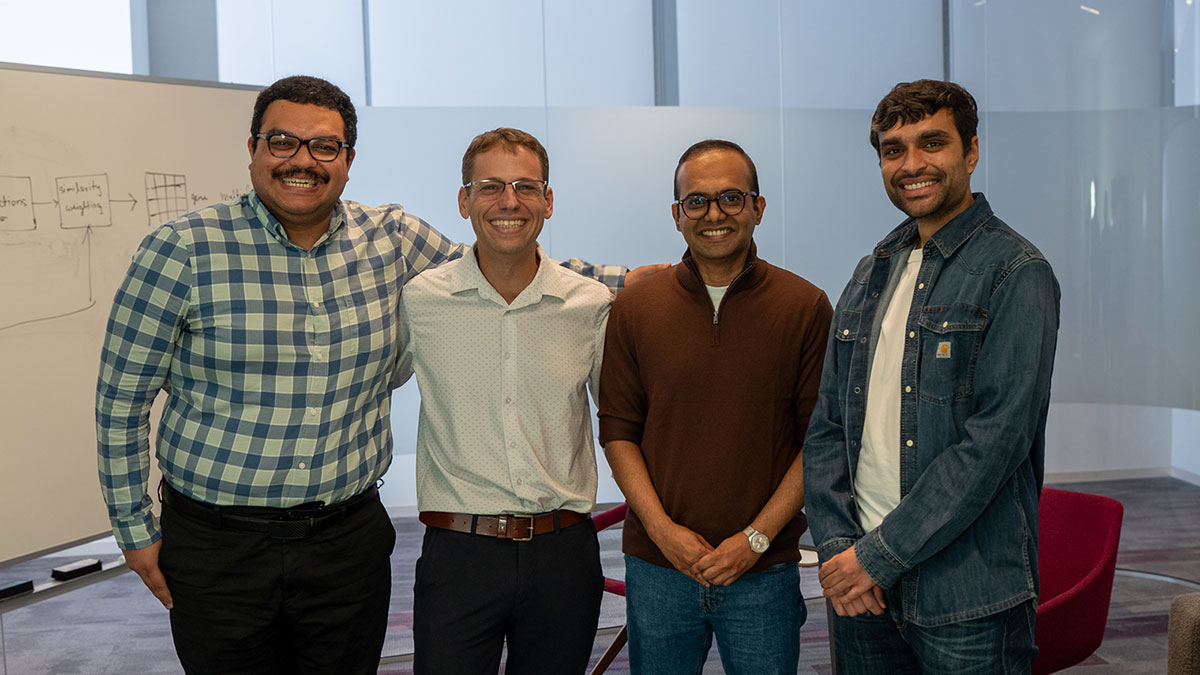
The BioInsight AI Lab is run by Kyle Farh, MD, PhD, Illumina's vice president of artificial intelligence. The winning team was Aniketh Janardhan Reddy, Atreyo Pal, Eyal Ben David and Kishore Jaganathan. Rami Mehio called the atlas "quickly becoming a foundational dataset that we believe can help advance the field toward a future of predictive biology." Illumina says more than 50 scientists in its BioInsight wet lab ran the perturbation experiments at scale.
What to watch next
Arc says the Virtual Cell Challenge returns next summer, which gives a clean test of whether Illumina's lead holds against public data and Xaira's models. Illumina's full manuscript is due in early 2027. Between now and then, watch four things: which pharmaceutical companies join or renew the atlas consortium, whether other labs reproduce CellularAI's gains with the open code, whether Xaira, Tahoe or Arc release new data that narrows the gap, and whether anyone reports a validated target traced to the atlas. Until one of those arrives, this is a strong benchmark result from a company with an unusual asset, and an honest picture of how far virtual cells still have to go.
Companies
- [Illumina](/startups/illumina) (official site: [illumina.com](https://www.illumina.com/))
- [NVIDIA](/startups/nvidia) (official site: [nvidia.com](https://www.nvidia.com/))
Sources
- [Illumina release (PR Newswire), November 19, 2026](https://www.prnewswire.com/news-releases/illumina-wins-virtual-cell-challenge-powered-by-billion-cell-atlas-302946270.html)
- [Illumina: Introducing the CellularAI algorithm](https://www.illumina.com/science/genomics-research/articles/introducing-the-cellularai-algorithm--predicting-single-cell-res.html)
- [CellularAI open-source code](https://github.com/Illumina/CellularAI)
- [Arc Institute: Virtual Cell Challenge 2026 winners and wrap-up](https://arcinstitute.org/news/virtual-cell-challenge-2026-wrap-up)
- [Ion Genomics: Illumina tops AI cell challenge, but models struggle to predict biology](https://www.iongenomics.bio/p/illumina-team-wins-2026-virtual-cell)
- [Xaira Therapeutics: X-Atlas/Orion release, June 17, 2025](https://www.xaira.com/news/x-atlas-orion-xaira-therapeutics-unveils-largest-publicly-available-genome-wide-perturb-seq-dataset-to-power-next-generation-ai-for-biology)
- [X-Atlas/Orion preprint (bioRxiv)](https://www.biorxiv.org/content/10.1101/2025.06.11.659105v1.full)
- [Arc Virtual Cell Atlas and Tahoe-100M](https://arcinstitute.org/tools/virtualcellatlas)
- [FDA: plan to phase out animal testing requirement for monoclonal antibodies and other drugs, April 10, 2025](https://www.fda.gov/news-events/press-announcements/fda-announces-plan-phase-out-animal-testing-requirement-monoclonal-antibodies-and-other-drugs)