
Listen instead
Transitioning from code to clinical vials
At the London offices of Isomorphic Labs, the transition from silicon to carbon is measured in angstroms and pipettes. For three years, the Alphabet subsidiary has operated primarily as a computational research house, using iterations of Google DeepMind's AlphaFold models to predict how proteins fold and interact with potential drug compounds. Now, the company is preparing to move these digital designs out of the computer and into physical clinical trials, attempting to prove that predictive algorithms can translate into safe and effective human medicines.
This shift requires a capital structure far more robust than that of a typical software startup. While traditional biotechnology firms must repeatedly tap public and private equity markets to fund expensive clinical trials, Isomorphic Labs operates under a different financial model. Backed by the balance sheet of its parent company, Alphabet, the firm has also secured substantial non-dilutive capital through strategic alliances. In January 2024, the company signed separate research collaborations with Eli Lilly and Novartis. Under these agreements, Isomorphic received 82.5 million dollars in upfront cash, with the potential to earn up to 3 billion dollars in performance-based milestone payments. This funding structure allows the firm to build out the biological and regulatory infrastructure required to transition from a software platform to a clinical-stage developer.
The mechanics of predictive design

The scientific thesis of Isomorphic Labs rests on the premise that machine learning can bypass the slow, trial-and-error methods that have defined drug discovery for a century. In traditional laboratories, identifying a potential drug candidate involves high-throughput screening, a process where robot arms test hundreds of thousands of physical chemical compounds against a target disease protein to see if any bind. It is a brute-force method that can take years and often yields weak starting points.
Isomorphic Labs replaces physical screening with computational simulation. Using models built on AlphaFold 3, which can predict the structures of proteins, DNA, RNA, and chemical ligands in tandem, researchers simulate these molecular interactions in a virtual environment. The platform evaluates billions of virtual compounds, predicting not only how tightly they will bind to a disease-associated protein but also how easily they can be synthesized in a physical lab. The company's initial internal pipeline focuses on oncology and immunology, two therapeutic areas where structural complexity has historically made drug design difficult. By focusing on targets that have been considered undruggable, the company aims to demonstrate that its computational models can find therapeutic pathways where traditional methods have failed.
The economics of clinical independence
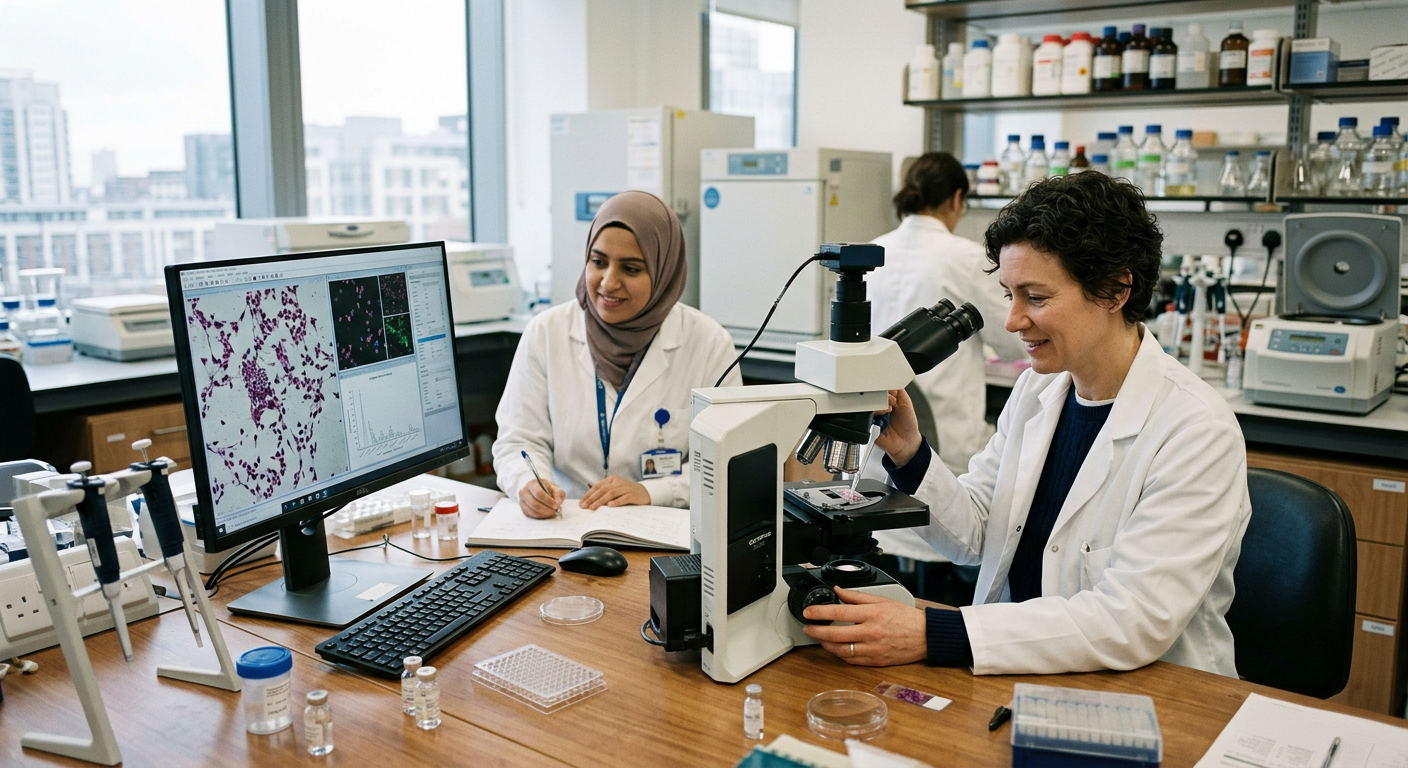
This transition to clinical development represents a pivot in how artificial intelligence companies capture value. Historically, platform-based drug discovery firms have suffered from a structural imbalance. Because Phase I and Phase II clinical trials are capital-intensive and carry high failure rates, early computational biology companies typically licensed their promising molecules to established pharmaceutical conglomerates at the preclinical stage.
While this licensing model reduced immediate financial risk and provided upfront cash, it forced the platform companies to surrender the vast majority of the downstream commercial value. If an AI-designed molecule eventually became a multi-billion dollar blockbuster drug, the technology provider typically received only single-digit percentage royalties.
By leveraging its financial backing, Isomorphic Labs is positioned to retain its assets longer. Acting as its own clinical trial sponsor allows the company to guide its proprietary candidates through early human safety testing. If these molecules demonstrate safety and initial efficacy in Phase I trials, Isomorphic can negotiate partnerships from a position of strength, retaining co-development rights or capturing much higher double-digit royalty structures. The strategic collaborations with Eli Lilly and Novartis run parallel to this effort, serving as validation of the platform's capabilities while the internal pipeline develops in private.
Shifting benchmarks for computational success
As Isomorphic Labs prepares to enter the clinic, the metrics used to evaluate its progress will change. For the past decade, the computational biology sector has measured success through digital performance: model accuracy, protein-folding speed, and binding affinity predictions. These metrics are valuable for software engineering, but they do not satisfy clinical regulators or insurance payers.
In the next phase of development, the company will be judged on traditional clinical milestones. These include the speed of patient enrollment, human safety profiles, metabolic stability, and therapeutic efficacy. Proving that an algorithm can design a molecule on a computer is a major computational milestone, but proving that the resulting physical compound can safely navigate the complex biology of the human body remains the ultimate hurdle. The coming years will determine whether Isomorphic's digital efficiency translates into actual clinical success.
Source: The HealthTech Signal

