
Listen instead
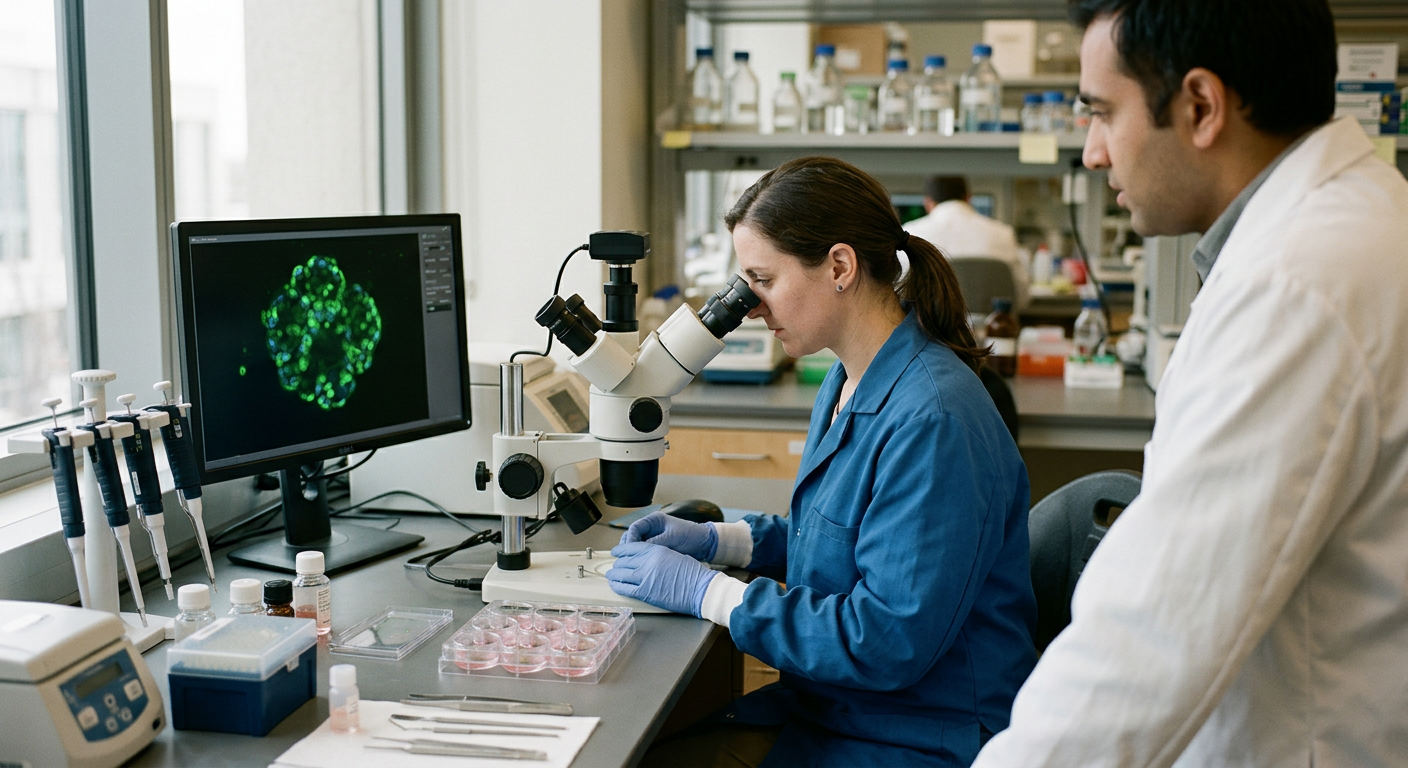
Inside laboratory incubators, three-dimensional clusters of patient cells grow within a nutrient-rich gel matrix. Unlike simple cell lines grown on flat plastic dishes, these patient-derived tumor organoids preserve the structural architecture and genomic diversity of actual human cancers. By exposing these models to experimental therapies, researchers can observe how a specific cancer responds to a drug before the candidate molecule ever enters human clinical trials.
This biological simulation is the foundation of Orakl Oncology, a biotechnology company based in Paris. The company recently raised 34 million dollars in a Series A funding round co-led by Norrsken VC and Singular, bringing its total funding to approximately 50 million dollars. The transaction represents an industry shift toward using biological models and machine learning to address the high failure rates of oncology candidates during clinical development.
For years, the biopharmaceutical sector has struggled with high attrition rates in oncology, where more than 90 percent of candidates that enter clinical trials fail to receive regulatory approval. This high rate of failure is often due to the limitations of traditional preclinical models. Standard cell lines grown in flat dishes do not replicate the complex microenvironment of a human tumor, while animal models frequently fail to predict human drug tolerance and efficacy. By creating a scalable platform of living human tumors, the company seeks to provide developers with a predictive tool before they commit capital to human trials.
Validating the Predictive Platform
To establish the utility of its technology, the company has compiled data comparing its platform's predictions against historic clinical results. In a preprint study named SCOPE, researchers evaluated the platform's performance using clinical trial data.
The researchers utilized 81 distinct organoid lines to predict progression-free survival across 32 separate clinical trial arms. The results showed a correlation with actual clinical outcomes, yielding an R-squared value of 0.85. The difference between the predicted progression-free survival and the real-world trial outcomes was 0.82 months on average. Additionally, the platform correctly identified and ranked the more effective treatment in seven out of eight clinical comparisons.
While these findings have not yet undergone peer review, the data suggests that physical biological models, when paired with machine learning, can replicate human treatment responses with precision. This capability targets a major bottleneck in drug development, which is the translation of laboratory efficacy into clinical success. If these results are replicated in prospective studies, the industry will have a functional tool to identify ineffective compounds earlier in the process.
Commercial Integration and Pipeline De-Risking
The prospect of reducing clinical trial failure rates has led to commercial discussions with the global pharmaceutical industry. Orakl Oncology reports that 18 of the top 20 pharmaceutical companies are in its business pipeline.
The company has entered into multiyear collaborations covering 10 active drug development programs. Under these agreements, Orakl Oncology is utilizing its platform to analyze candidates at various stages of preclinical development. This includes specific rights to evaluate four oncology assets belonging to Sanofi, a pharmaceutical firm based in France. These agreements suggest that large pharmaceutical companies are looking to de-risk their pipelines earlier in the development lifecycle.
For pharmaceutical operators, the utility of this platform lies in its potential to serve as an objective filter. Current drug discovery platforms, particularly those driven by artificial intelligence, are efficient at designing novel molecules. However, the industry still faces a bottleneck during Phase 2 trials, where molecules frequently fail because they do not perform as expected in human patients. By providing a biological screening method that mimics human biology, the platform allows developers to identify non-viable candidates before investing millions of dollars in human trials.
Inside pharmaceutical organizations, development committees must make decisions about which pipeline assets to advance into clinical trials. Historically, these decisions have relied on limited preclinical data and animal models. By generating precise, patient-derived data before a trial begins, the company's platform provides these committees with a new tool. If prospective results continue to align with clinical outcomes, this technology could become a standard requirement for funding approvals, transforming how pharmaceutical companies allocate their research and development budgets.
Scaling Data Production and Geographic Expansion
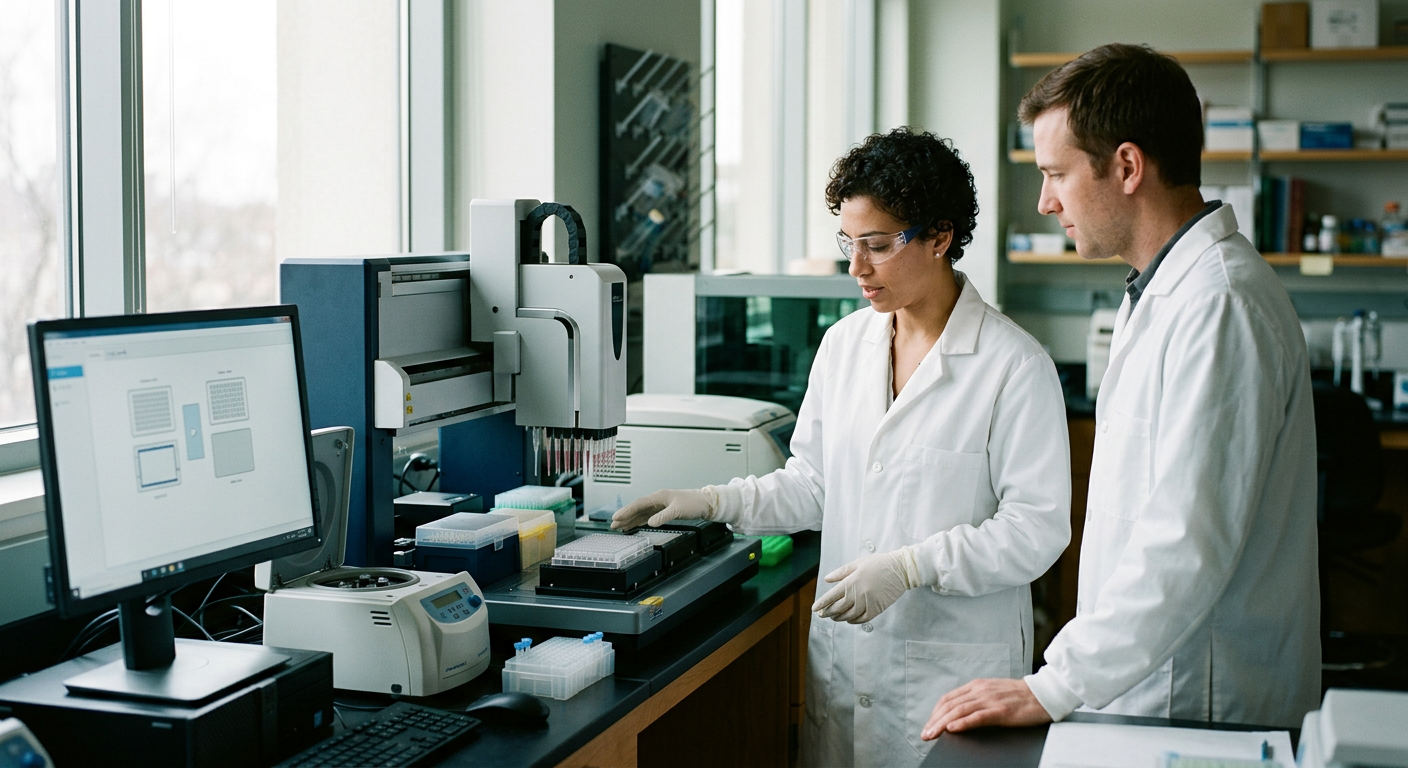
With the 34 million dollars in new capital, the company has outlined plans to scale its operations and expand its biological library. A primary objective is to increase laboratory data production fivefold, allowing for a higher throughput of drug testing and model characterization.
In addition to increasing capacity, the company plans to expand its library of tumor models into new therapeutic areas, specifically targeting lung and gastric cancers. These represent some of the most challenging forms of oncology, where treatment options remain limited and new therapies are needed. Expanding into these indications requires securing access to high-quality patient tissue samples through partnerships with clinical centers.
To support this expansion and manage its relationships with international partners, the company will establish teams in both the United States and the United Kingdom. These regional offices will help manage the growing pipeline of collaborations and facilitate integration with global research hubs. Finally, the company intends to apply its platform further upstream in the drug development pipeline, supporting earlier-stage drug discovery efforts to optimize compounds before they reach the preclinical stage.
Source: The HealthTech Signal




