Listen instead
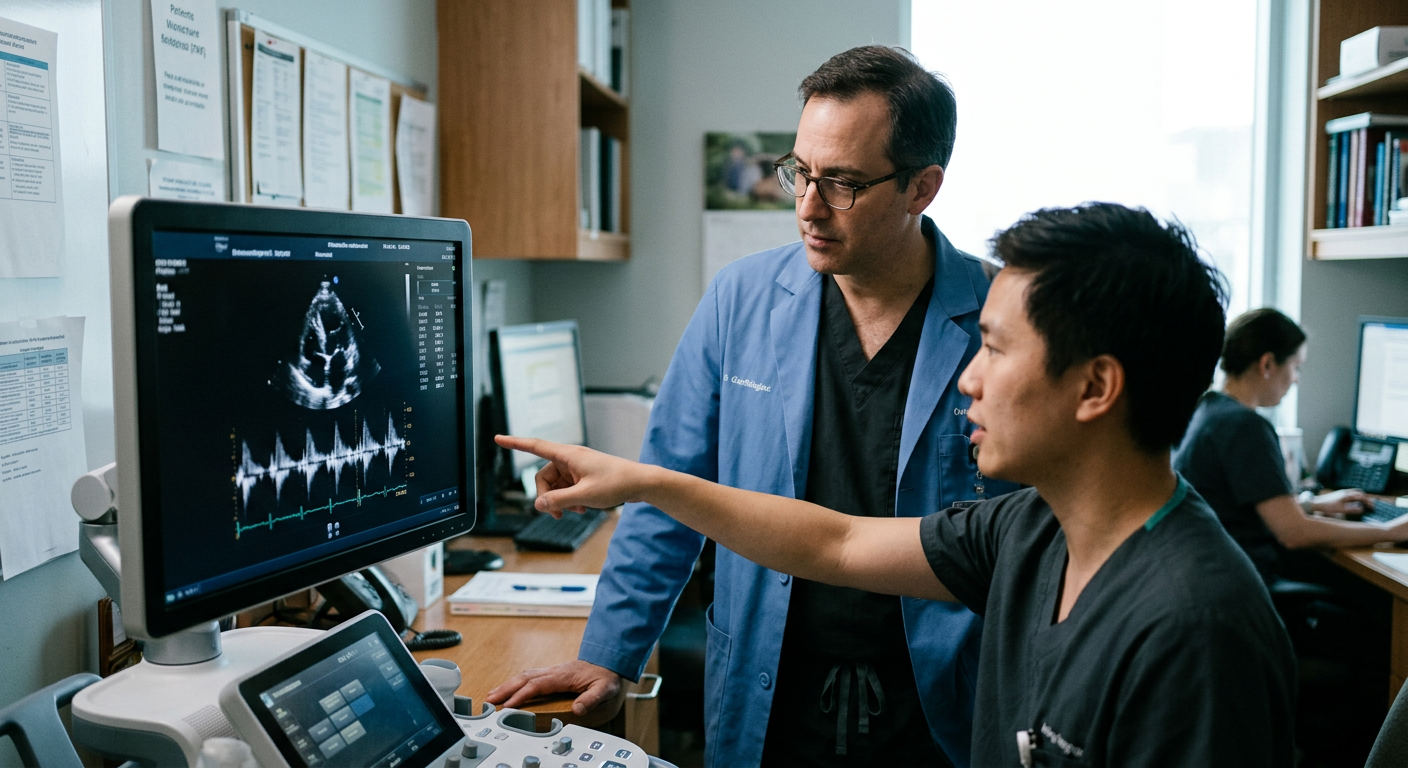
In a typical health system echocardiography laboratory, a sonographer spends up to half of each 45-minute exam window performing manual measurements. They trace the borders of the left ventricle, click on valve orifices, and manually type numerical values into structured templates. A cardiologist then opens this preliminary draft, compares it against the raw ultrasound loops, and edits the text before signing off. This manual data entry forms one of the most persistent operational bottlenecks in cardiovascular medicine, limiting patient throughput and contributing to clinician burnout.
On November 9, investigators from Kaiser Permanente Northern California presented data at the American Heart Association Scientific Sessions in Chicago that suggests this process can be automated without compromising clinical standards. The AI ECHO INSIGHT trial, a randomized, blinded clinical evaluation, showed that preliminary reports drafted by artificial intelligence are clinically comparable to those drafted by human clinicians. Furthermore, utilizing these automated drafts reduced the time a cardiologist spends finalizing a report by 46 percent, offering a potential path to relieve operational pressure on overloaded clinical staff.
Designing a randomized workflow comparison
Unlike retrospective studies that evaluate artificial intelligence models on historical datasets, this trial analyzed the prospective integration of machine learning into a live clinical workflow. The investigators evaluated 1,200 echocardiograms performed across 21 Kaiser Permanente medical centers. To establish a controlled baseline, the trial involved 9 sonographers and 20 participating cardiologists.
The study utilized a parallel-group design. For each of the 1,200 ultrasound exams, a preliminary draft was generated by one of three sources: an artificial intelligence model, a sonographer, or a cardiologist. These drafts were then randomly distributed to reviewing cardiologists who remained blinded to the origin of the report. The reviewing physicians edited and finalized the documents within the electronic health record system as part of their standard clinical duties. By comparing the rate of edits between the AI-generated drafts and the human-generated drafts, the researchers established a direct measure of clinical utility.
Strong evidence of clinical comparability

The trial primary endpoint focused on the frequency of major revisions made by the final reviewing cardiologists. Reviewers revised 50.6 percent of the AI-drafted reports, compared to 49.7 percent of the human-drafted reports. This close margin successfully met the pre-specified noninferiority threshold of the study, yielding a statistically significant P value of 0.0035. This indicates that the automated drafts required no more correction than those prepared by clinical staff.
The operational benefit of this comparability was reflected in the finalization times. Cardiologists required an average of 4.6 minutes to review and sign an AI-assisted report, compared to 8.5 minutes for reports finalized through the standard unassisted workflow. This represents a 46 percent reduction in interpretation time. While human-drafted reports provided similar time savings during the final review, delegating the initial drafting step to an artificial intelligence model allows sonographers to bypass the data entry phase entirely. Researchers estimated this change could save sonographers up to 10 minutes of administrative work per patient study.
Currently, the findings for the models utilized in the study, EchoPrime and EchoNet, remain preliminary and have not yet undergone full peer review. Additionally, the trial was designed to measure reporting accuracy and workflow efficiency, meaning it did not evaluate direct patient outcomes or long-term clinical endpoints.
Navigating the practical bottleneck
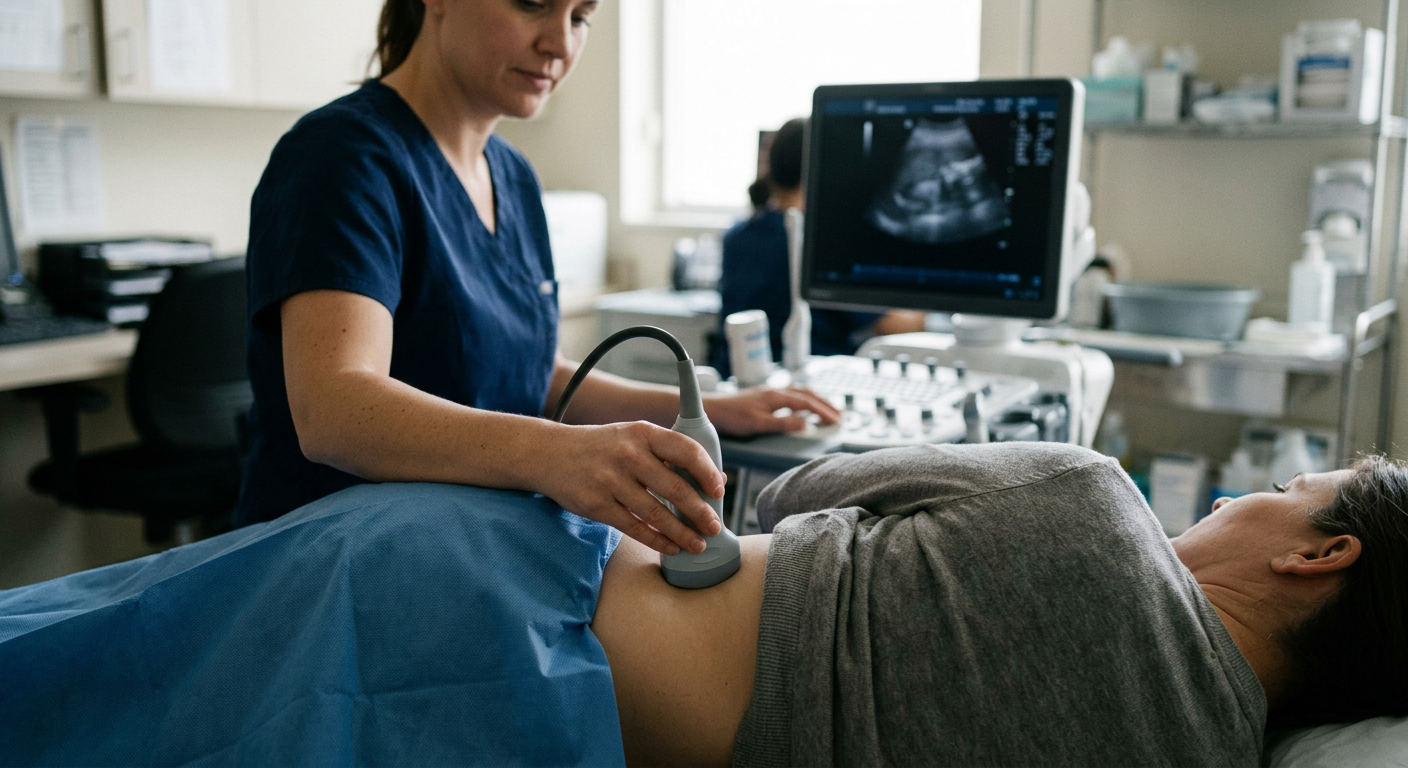
The primary significance of the AI ECHO INSIGHT trial lies in its methodology. By placing the machine learning model directly into the clinical slot typically occupied by a sonographer, the researchers demonstrated that artificial intelligence can perform structured documentation within a live electronic health record environment without a drop in quality. This shifts the focus of clinical artificial intelligence from technical feasibility to operational integration.
With clinical validation established, healthcare organizations must now address the operational and financial challenges of deployment. Health systems operate under strict regulatory and billing frameworks. Introducing automated drafting raises questions of clinical oversight and liability. Because the final interpreting cardiologist must sign the report, they remain legally responsible for any errors or missed diagnoses, regardless of whether the initial draft was generated by an artificial intelligence model.
Furthermore, the financial incentive structure for adopting these tools remains complex. In the United States healthcare system, there are currently no dedicated billing codes that reimburse providers for generating automated clinical drafts. Consequently, health systems must fund these software licenses out of operational budgets rather than fee-for-service revenue. To justify the capital expenditure, clinical administrators must prove that the time saved by cardiologists and sonographers translates into tangible benefits, such as increased patient volume, reduced registry backlogs, or lower staff turnover.
For clinical administrators, these operational questions are increasingly urgent. Cardiovascular departments nationwide are facing a projected shortage of both cardiologists and certified sonographers. Having clinical trial evidence that automated drafts can safely reduce report finalization times provides a solid foundation for redesigning the clinical reading queue, even as the regulatory and financial models catch up to the technology.
Source: The HealthTech Signal