Listen instead
During a standard primary care physical, the classic acoustic stethoscope often misses the faint, low-frequency murmurs that signal early structural heart disease. Clinicians must decide whether to refer patients for costly, specialized echocardiograms based on what their own ears can detect in a noisy exam room. Eko Health is attempting to bridge this diagnostic gap with the commercial release of its CORE 300 hybrid digital-analog stethoscope, which recently received FDA 510(k) clearance.
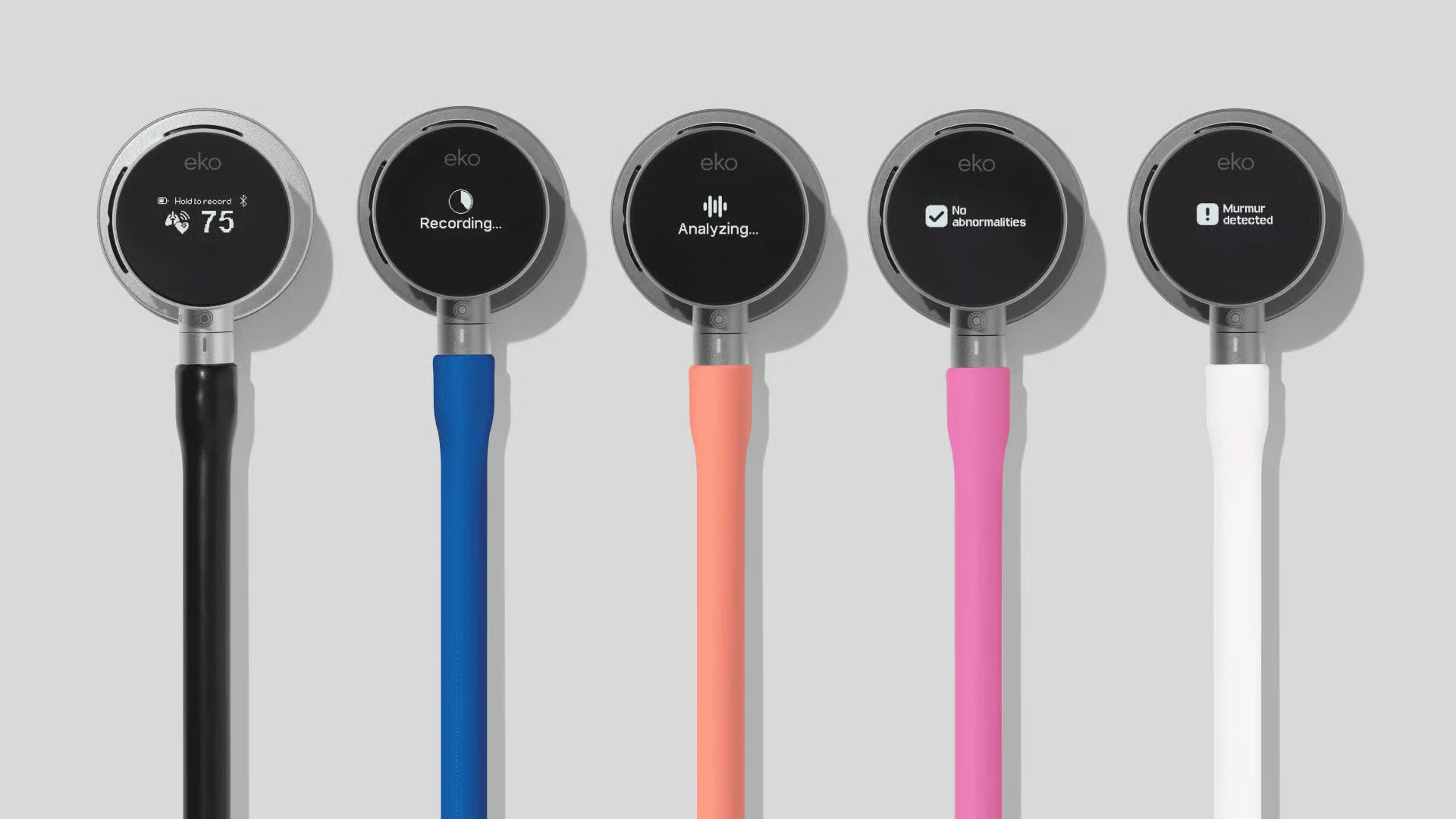
The device merges traditional acoustic auscultation with digital signal processing, embedding an organic light-emitting diode (OLED) screen directly onto the chestpiece. This design allows a physician to view real-time heart rate data and diagnostic indicators without looking away from the patient during an examination.
By maintaining the weight, balance, and form factor of a traditional stethoscope, the device avoids the common adoption hurdles that have historically slowed digital health tools. Rather than requiring clinicians to wheel in a specialized cart, log into separate diagnostic consoles, or alter their physical examination technique, the hybrid tool integrates into existing workflows. Clinicians use it exactly as they would a standard acoustic model, while the digital components work in the background.
Acoustic engineering and digital integration
To address the acoustic limitations of busy clinical environments, the device features sound amplification alongside active noise cancellation. This combination helps isolate subtle physiological sounds, such as the faint murmurs associated with aortic stenosis or mitral regurgitation, which can easily be masked by ambient clinic noise, talking, or air conditioning systems.
The physical instrument pairs with a mobile application that hosts the company's FDA-cleared structural murmur detection algorithm. During a standard examination, the system captures acoustic data, transmits it for algorithmic analysis, and flags anomalies. Because the algorithm operates passively during the physical exam, clinicians do not need to pause their workflow or run separate diagnostic protocols to obtain a screening result.
The psychology of clinical tools

Medical technology adoption is often hindered by the tactile preferences of practitioners. Many clinicians remain deeply attached to the immediate response and physical feedback of traditional acoustic stethoscopes. Fully digital alternatives that completely replace acoustic pathways can feel foreign and face resistance.
The hybrid design addresses this by preserving the physical acoustic path. If the battery dies or if a physician simply prefers the unamplified sound for a specific patient, the device functions as a standard acoustic instrument. Furthermore, the stethoscope remains a powerful symbol of the patient-provider relationship. Retaining the familiar form factor helps maintain patient trust, introducing screening capabilities without the intimidating presence of specialized machinery.
Frontline deployment and resource constraints

Historically, diagnostic algorithms have been restricted to specialized cardiology clinics or imaging centers due to high hardware costs and training requirements. Bringing automated screening to primary care clinics, emergency departments, and rural health clinics requires overcoming these capital barriers.
The company reports that its digital stethoscopes are already used by hundreds of thousands of clinicians globally. By offering the new model at a price point comparable to premium traditional acoustic stethoscopes, the company is aiming for direct replacement during routine equipment procurement cycles. This pricing strategy bypasses the lengthy capital expenditure approval processes that often delay the acquisition of new medical technologies in resource-constrained health systems.
In rural or under-resourced settings, access to formal echocardiography is often limited by geography, long wait times, and a shortage of trained sonographers. A point-of-care tool that can reliably flag structural murmurs during a routine annual physical allows primary care providers to act as more effective triaging agents. Patients with suspected structural heart disease can be identified and referred to cardiologists much earlier in the disease progression, potentially preventing emergency hospitalizations.
Point-of-care triage and the clinical bottom line
From a clinical operations perspective, the significance of this launch lies in the shift toward opportunistic screening. When diagnostic algorithms are embedded in the tools that clinicians carry in their pockets every day, every routine chest exam becomes a prospective screening event for structural heart disease. This changes the economics of early detection.
For healthcare operators, the decision to adopt this technology is simplified by its alignment with standard procurement. Rather than justifying a novel capital expense for a dedicated screening platform, health systems can phase in hybrid devices as older, analog stethoscopes wear out. The primary challenge will be ensuring that clinical workflows are prepared to handle the potential increase in cardiology referrals generated by widespread bedside screening. If the algorithm successfully identifies previously undiagnosed murmurs, health systems must have the outpatient capacity and echocardiography infrastructure ready to manage the subsequent diagnostic demand.
Source: Eko Health




