Listen instead
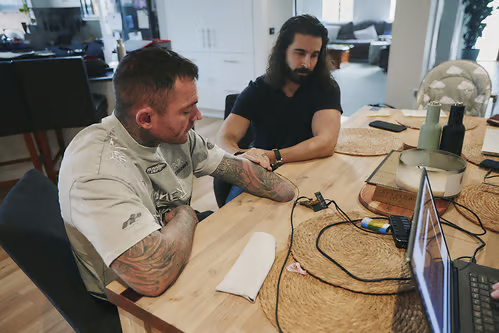
In an outpatient procedure room at Cabrini Health in Melbourne, Australia, Michael Easy sat upright to review a small, sub-dermal sensor before surgeons placed it beneath the skin of his residual limb. The entire procedure took roughly an hour under local anesthesia, allowing Easy to walk out of the hospital the same day. This procedure marks the first human implantation of Phantom Neuro’s Phantom X system, a sub-dermal neural interface designed to control advanced prosthetic limbs. The procedure, completed under the company’s CYBORG early feasibility study, was overseen by the surgical team and Dr. Connor Glass, a physician and chief executive officer of the Austin-based neurotechnology firm.
For patients seeking to regain lost motor function, the clinical barriers associated with traditional neural interfaces have historically been high. Traditional brain-computer interfaces require deep surgical intervention and extensive post-operative monitoring. By placing the interface directly over the residual muscle of a limb rather than inside the skull, Phantom Neuro aims to deliver control through standard outpatient surgical workflows. This approach shifts the technology out of academic research laboratories and into community healthcare facilities.
Shifting the surgical footprint
The implantation of the Phantom X sensor represents a structural departure from the surgical protocols associated with high-performance neural interfaces. Traditional systems often require a craniotomy: a surgical procedure to remove a portion of the skull to place electrode arrays directly into the brain tissue. These procedures carry risks of infection, bleeding, and tissue scarring, requiring general anesthesia and overnight stays in a surgical intensive care unit.
In contrast, the Phantom X is positioned beneath the skin directly over the target muscle group. Because the procedure does not penetrate the skull or the brain, it can be performed in an outpatient setting without general anesthesia. This clinical protocol simplifies the surgical workflow and reduces hospital resource utilization. For healthcare systems, the ability to perform neural implantations without occupying intensive care beds represents a reduction in perioperative costs. Patients recover in hours rather than days, lowering the threshold for clinical adoption among individuals with limb loss.
Muscle-level signal capture

The technology operates by leveraging the body's existing peripheral nervous system. When an individual loses a limb, the motor cortex in the brain continues to send motor signals intended for that limb. These signals travel down the spinal cord and terminate in the residual limb musculature, a phenomenon associated with phantom limb sensations. The Phantom X sensor is designed to detect these intact neuromuscular electrical signals directly at the muscle site.
Once the sensor captures these electrical signals, the system translates the neuromuscular intent into low-latency wireless commands. These commands are transmitted directly to compatible robotic prostheses or external computing interfaces, allowing the user to operate assistive devices using natural cognitive intent. Because the electrical signals are captured at the muscle level rather than through the skull, the system benefits from a high signal-to-noise ratio. This signal clarity is critical for the utility of prosthetic devices, where latency and signal degradation can prevent patients from performing precise physical tasks.
Commercial and regulatory pathways
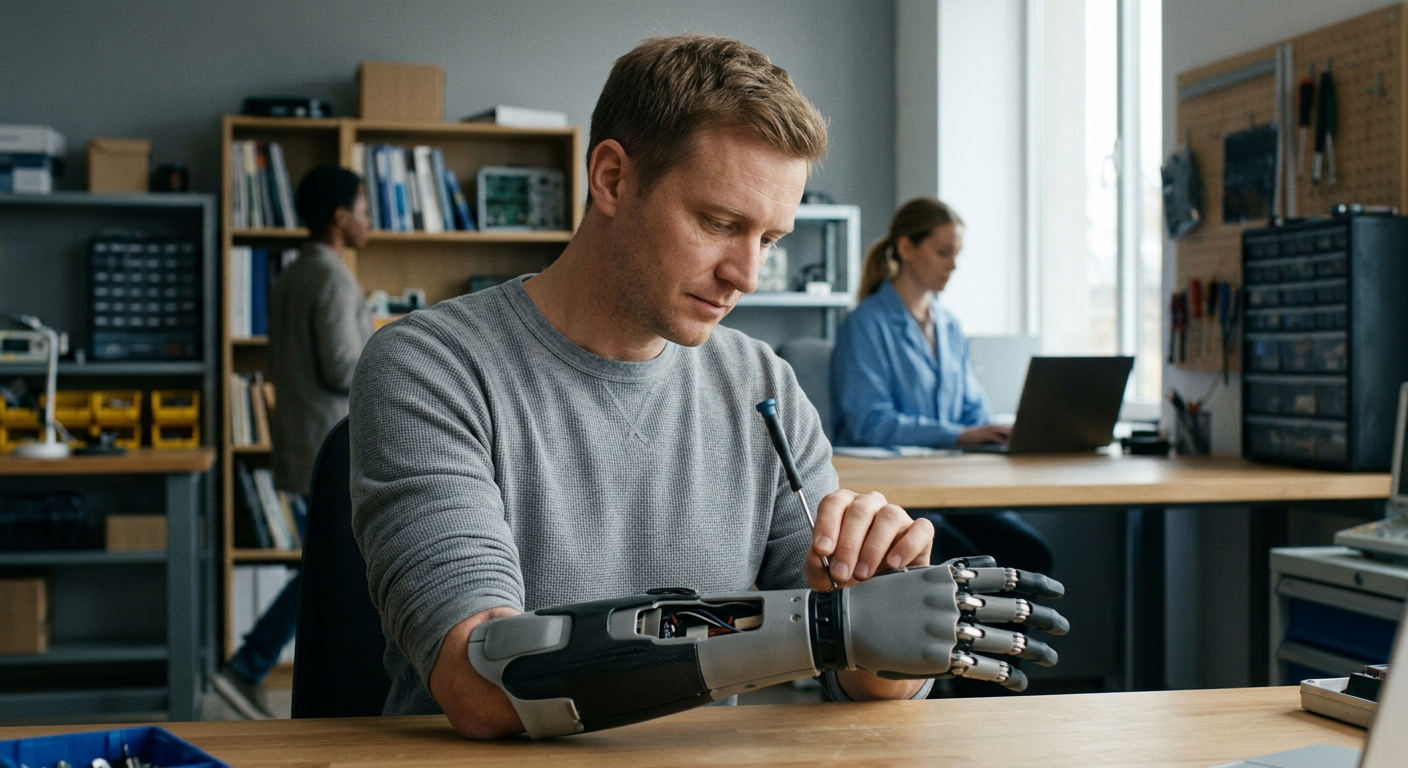
Phantom Neuro has structured its capital and regulatory strategy to address the commercial hurdles that frequently stall neurotechnology platforms. The company’s development is supported by Series A funding led by Ottobock, an international prosthetics manufacturer, with additional support from the Defense Advanced Research Projects Agency, known as DARPA. The involvement of an established manufacturing partner like Ottobock provides Phantom Neuro with access to existing distribution channels and clinical expertise in the prosthetic market.
On the regulatory front, the Phantom X system has received Breakthrough Device designation from the Food and Drug Administration. The company has also secured enrollment in the joint FDA and Centers for Medicare & Medicaid Services (CMS) RAPID reimbursement acceleration pathway. Securing early alignment with federal reimbursement frameworks addresses a critical commercial bottleneck in medical device commercialization. Without a clear reimbursement pathway, even clinically successful devices struggle to achieve market adoption due to the high out-of-pocket costs for patients and providers.
Expanding the addressable market
By focusing on peripheral neuromuscular sensing rather than brain-implanted arrays, the company sidesteps the medical and economic constraints that have limited the brain-computer interface market. Intracortical systems, due to their invasive nature, are generally reserved for patients with severe paralysis, where the clinical benefits outweigh the surgical risks. This medical reality limits the viable patient population for brain implants.
If the outpatient implantation model of the Phantom X can consistently deliver precise, low-latency control in clinical trials, the addressable market for neural interfaces could expand. The platform is designed for individuals with upper and lower limb loss who require functional prosthetic control but do not qualify for or desire brain surgery. This transition from highly specialized neurosurgery to standard outpatient orthopedic care could shift neural interface technology from a niche clinical intervention to a widely accessible rehabilitative tool.
Source: The HealthTech Signal