Listen instead
A typical breast cancer tumor board meets in a room dominated by high-resolution monitors, yet the most critical data point for planning therapy is usually absent. Clinicians can view the shape, size, and location of a lesion on a dynamic contrast-enhanced magnetic resonance imaging scan, but they must wait weeks for surgical resection and subsequent genomic analysis to understand the tumor's biological aggressiveness. This operational delay forces clinical teams to make initial staging and neoadjuvant treatment decisions with incomplete prognostic data.
This diagnostic gap is the target of a recent regulatory clearance. SimBioSys has received FDA 510(k) clearance for its TumorSight Risk software, an artificial intelligence tool designed to estimate five-year and ten-year recurrence-free survival. The clearance applies to patients diagnosed with hormone receptor positive, HER2-negative stage I to IIIA breast cancer, which represents the majority of newly diagnosed breast cancer cases. By generating a prognostic risk profile directly from standard diagnostic images, the technology aims to shift risk stratification from the pathology lab to the radiology suite.
Clinical validation and the imaging paradigm
The clearance of this software represents a conceptual pivot in oncology. Historically, assessing a tumor's recurrence risk has required physical tissue extraction to analyze gene expression profiles. The SimBioSys platform instead utilizes spatial and temporal data already captured during routine diagnostic imaging.
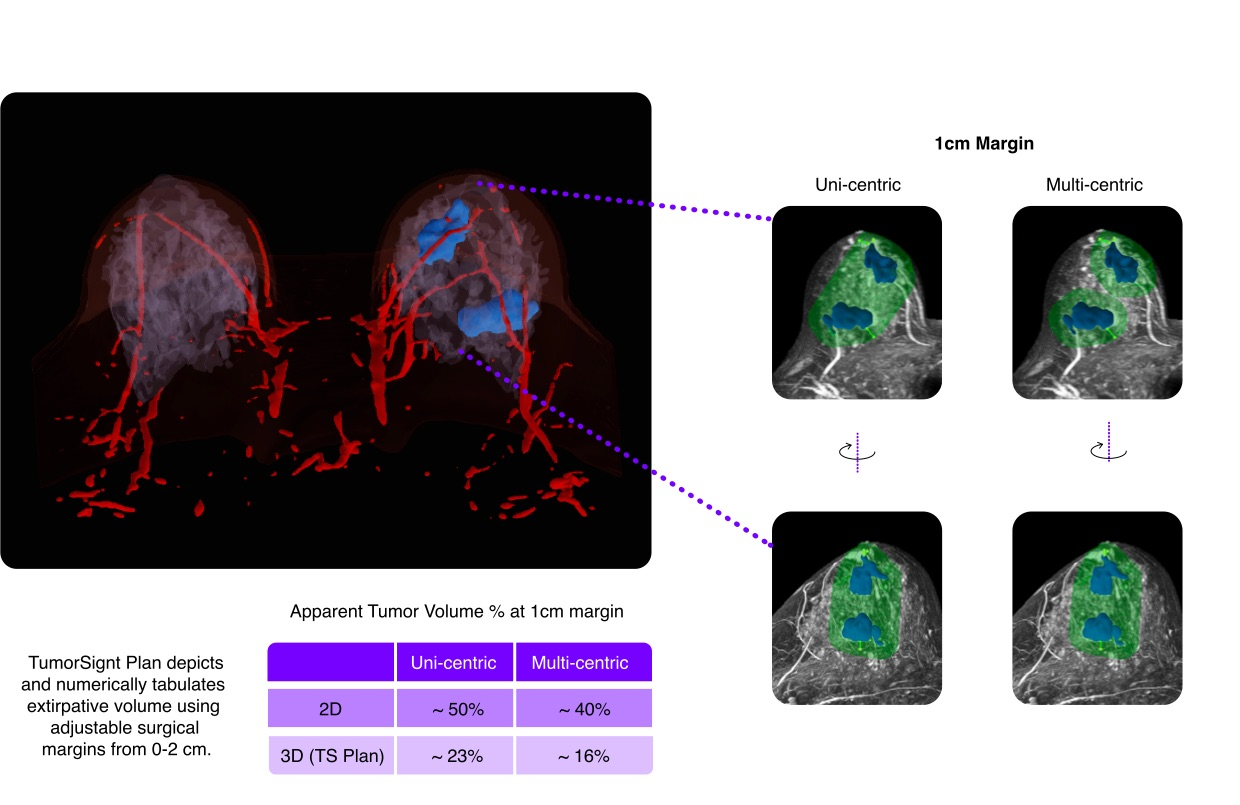
The software is built on the company's cleared visualization platform, analyzing standard dynamic contrast-enhanced magnetic resonance imaging scans. By processing these standard scans, the algorithm extracts spatial cellular density, peritumoral parenchymal architecture, and three-dimensional biophysical tumor phenotypes. Because the analysis is entirely computational, it requires no additional surgical procedures, no physical tissue destruction, and no modifications to standard imaging protocols.
According to clinical validation data submitted to regulators, the software successfully stratified patients into distinct risk categories. In multi-center validation cohorts of patients with early-stage, hormone-receptor-positive breast cancer, the algorithm demonstrated a statistically significant difference in recurrence-free survival between high-risk and low-risk groups over five-year and ten-year horizons. This statistical performance across multiple clinical centers suggests the algorithm remains stable across different imaging hardware and clinical settings, addressing a common failure point for clinical artificial intelligence models.
Disrupting the genomic testing workflow
To appreciate the commercial and operational stakes of this clearance, one must look at the current standard of care. Today, the breast cancer prognostic market is dominated by centralized genomic assays such as Oncotype DX and MammaPrint. These tests are highly accurate and widely reimbursed, but they possess inherent logistical and clinical limitations.
First, genomic testing is inherently post-operative or requires a substantial core needle biopsy. This means the prognostic data arrives weeks after the initial diagnosis, often after the primary surgical plan has already been executed. Second, these assays require physical tissue samples to be packaged, shipped, and processed at centralized laboratories, a workflow that typically takes ten to fourteen days and consumes finite tissue specimens that might otherwise be saved for secondary analyses.
The software-based approach changes this timeline. By delivering a prognostic risk score during the pre-surgical planning phase, the system allows multidisciplinary tumor boards to personalize neoadjuvant strategies, such as chemotherapy or endocrine therapy administered prior to surgery, with the benefit of prognostic insight. For health systems, bypassing the centralized lab portion of the diagnostic pathway reduces administrative overhead and eliminates the shipping delays that frequently stall clinical decisions.
The reimbursement and adoption hurdles

Despite the clear operational advantages, widespread clinical adoption of an image-based prognostic tool is not guaranteed. The established genomic assays are deeply entrenched in clinical practice guidelines, such as those from the National Comprehensive Cancer Network, and are backed by prospective clinical trial data, including the landmark TAILORx trial.
For SimBioSys to compete effectively, the company must convince oncologists that an image-derived risk score is as clinically actionable as a genomic score. It must also navigate the complex landscape of medical reimbursement. While genomic assays command high price points justified by the complexity of molecular sequencing, software-as-a-medical-device products often face intense scrutiny from payers who demand evidence of improved patient outcomes or direct cost savings.
If the company can establish clear clinical utility and secure favorable reimbursement pathways, the technology could serve as a model for other solid tumors. The ability to extract prognostic insights from routine, non-invasive imaging has broad implications for oncology, potentially reducing the overall cost of cancer care while accelerating the delivery of personalized treatment plans.
Source: The HealthTech Signal