Listen instead
An algorithmic lens on routine diagnostic tests
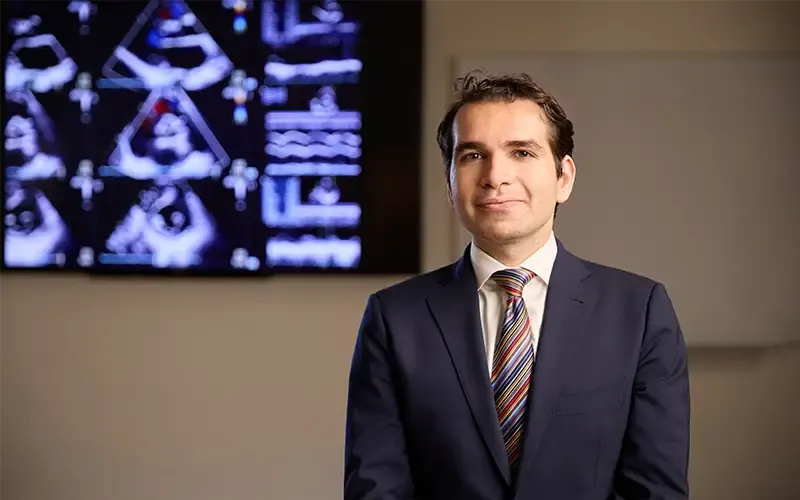
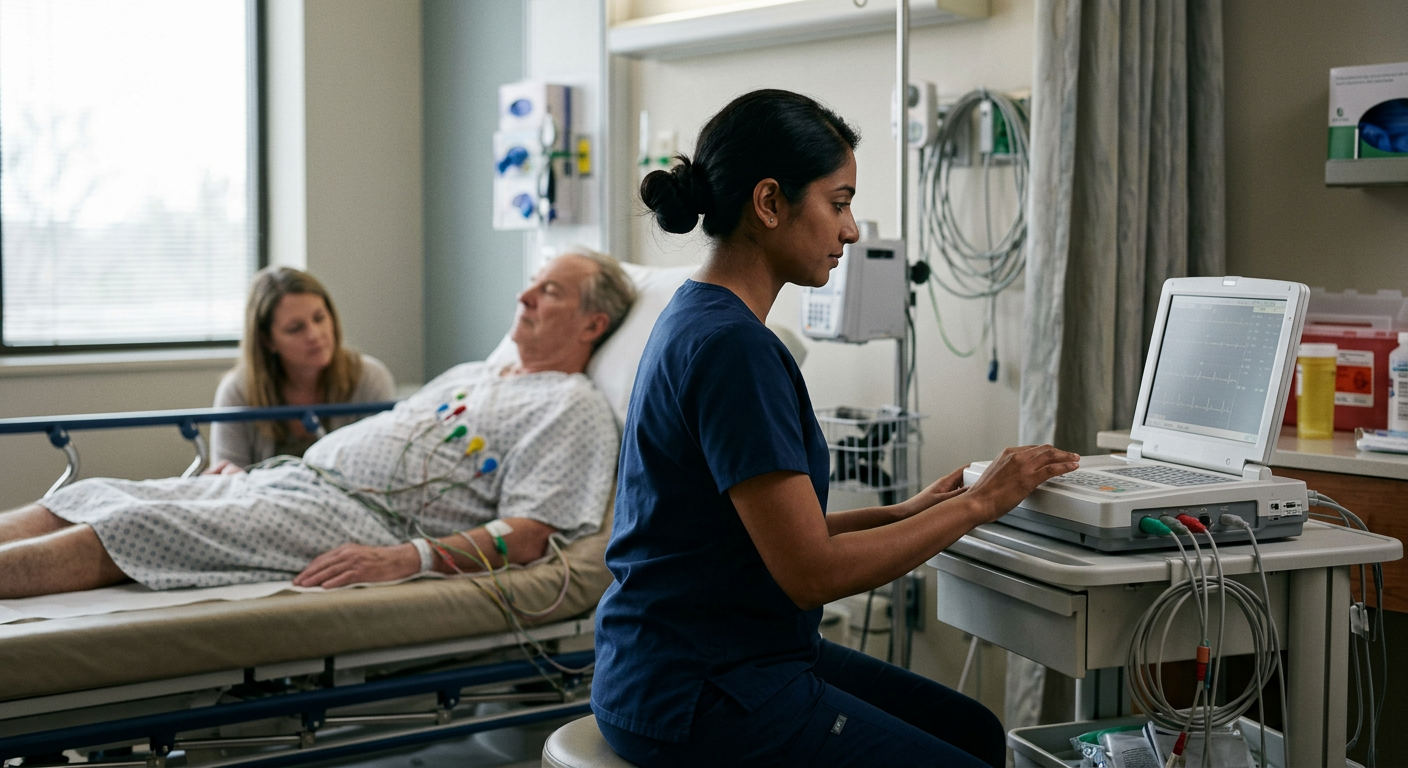
A standard 12-lead electrocardiogram takes less than ten minutes to perform and is available in almost every community clinic, emergency department, and primary care office. While the test is designed to identify immediate electrical abnormalities, such as acute myocardial infarctions or arrhythmias, it historically has not been used to detect structural heart disease. Subtle structural changes in the heart walls and chambers often remain undetected until a patient develops symptoms and undergoes an echocardiogram, which is a far more complex and costly imaging procedure. At NewYork-Presbyterian, Dr. Pierre Elias led a clinical research team to address this diagnostic gap, seeking to use machine learning to identify hidden patterns within routine clinical data.
The product of this research is EchoNext, an artificial intelligence software program developed by Pathway Labs. The platform analyzes routine 12-lead electrocardiograms to detect signs of structural heart disease that may warrant further diagnostic evaluation. By applying deep learning algorithms to a widely available diagnostic test, the technology attempts to establish an early screening system for complex cardiac conditions before patients show overt symptoms.
Regulatory milestones and corporate development
The clinical and commercial progression of EchoNext has advanced through several regulatory and corporate milestones. According to regulatory filings, the technology received clearance from the Food and Drug Administration on June 8. This clearance allowed Pathway Labs to transition the technology from an academic research project into a commercial medical product. Following this regulatory approval, Pathway Labs announced its public launch on June 23, which included a corporate partnership with OpenEvidence.
To fund the commercial deployment of the software, Pathway Labs secured 8.5 million dollars in seed funding, according to company statements. The clinical tool also received broader recognition when it was named to the TIME Best Inventions list published on October 15, 2026. This recognition highlights the growing industry interest in utilizing machine learning tools to run background screenings on standard clinical data.
Evaluating the clinical evidence

The clinical utility of EchoNext is based on multiple separate clinical evaluations. According to a 2025 study published in the journal Nature and reported by NewYork-Presbyterian, the artificial intelligence tool demonstrated a 77 percent detection rate for structural heart disease during a reader comparison study. In comparison, unassisted cardiologists reading the same electrocardiograms achieved a 64 percent detection rate.
Separately, the Food and Drug Administration decision summary document outlines external validation data for the tool. This validation data reports that the combined structural heart disease output of the algorithm has a sensitivity of 73.7 percent and a specificity of 75.2 percent. Because these metrics come from distinct clinical evaluations rather than a single unified trial, they must be interpreted as complementary pieces of evidence. Together, the data suggest that the algorithm can identify subtle electrical variations that human readers do not typically detect during a standard clinical assessment.
Operational integration and clinical limits
Integrating EchoNext into a clinical environment requires health systems to understand its operational limitations. The software is cleared to support clinical assessments in adult patients using compatible electrocardiogram systems. However, the technology is not suitable for all patients. It specifically excludes individuals with implanted pacemakers because these devices alter the electrical signals of the heart, which interferes with the algorithmic analysis.
Furthermore, clinical administrators must recognize that the software output does not constitute a definitive medical diagnosis. A positive notification from EchoNext indicates only that a patient shows signs associated with structural heart disease, meaning they require a formal diagnostic echocardiogram. Conversely, a negative result does not rule out structural disease, and providers must continue to follow standard clinical protocols if a patient remains symptomatic.
From an operational standpoint, the true value of the technology depends entirely on the clinical infrastructure supporting it. For the software to improve patient outcomes, health systems must establish standardized clinical pathways to manage the alerts. When the system flags a potential structural issue, a clinical provider must review the notification, contact the patient, and coordinate secondary testing. Without these defined operational processes, the clinical utility of the algorithm cannot be realized.
Source: The HealthTech Signal




