Listen instead
A pathologist sits before a high-resolution display, reviewing digital tissue slides that have been scanned and organized by software. The physical reality of the traditional pathology lab, dominated by fragile glass slides, manual courier delivery, and microscope lenses, is steadily giving way to digital displays. This shift from physical to digital is not merely a convenience: it is an operational necessity for laboratories facing rising diagnostic volumes and a shrinking pool of certified pathologists. It is within this changing landscape that Agilent Technologies has agreed to acquire digital pathology developer Proscia.
Agilent Integrates Software into Pathology Portfolio
Agilent Technologies announced on October 13 that it has entered into a definitive agreement to acquire Proscia. Under the terms of the agreement, Agilent will pay 240 million USD in cash at closing, with the potential for an additional 30 million USD in payments tied to future performance milestones, bringing the total transaction value up to 270 million USD. The transaction, which is subject to customary closing conditions, is expected to close early in Agilent's fiscal 2027. This acquisition marks a transition for Agilent, moving its relationship with Proscia from a commercial collaboration to full corporate ownership. The two companies previously established a distribution partnership in 2022, which laid the clinical and technical groundwork for this deeper integration. By bringing Proscia's software under its direct control, Agilent aims to combine its existing clinical instruments and chemical reagents with an enterprise-grade software platform.
Technical Interoperability and Regulatory Paths
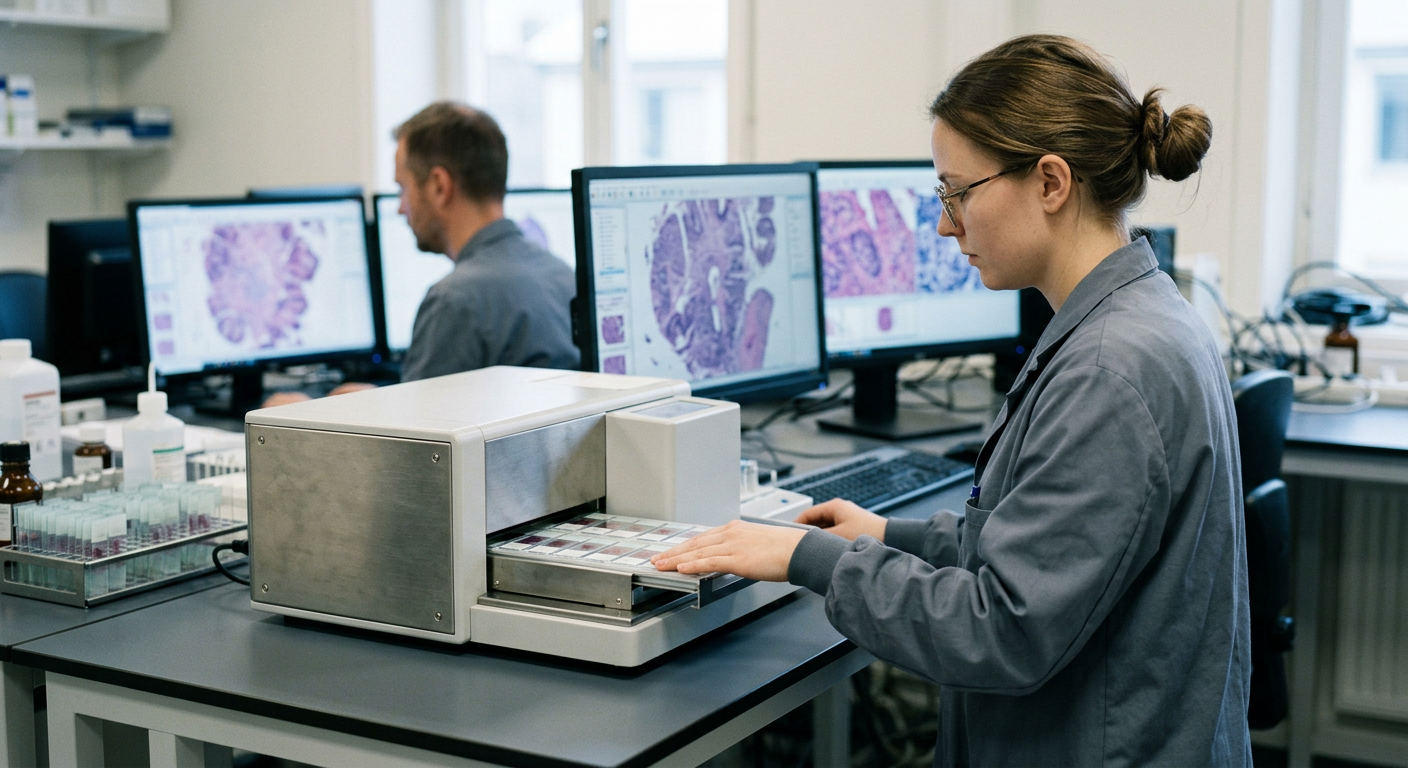
The acquisition centers on Proscia's Concentriq platform, an enterprise software hub designed to manage slide images and organize laboratory workflows. Within this ecosystem, the Concentriq AP-Dx software has secured FDA 510(k) clearance for primary diagnosis when used alongside specified compatible laboratory equipment. In August, Proscia secured an expanded clearance that added compatibility for the Leica Aperio GT 450 DX scanner. This update also introduced cloud deployment capabilities and a Predetermined Change Control Plan, which outlines how the software can be modified and updated in the future without requiring entirely new regulatory submissions. This regulatory framework remains complex for laboratory operators. While a general platform clearance simplifies software updates, it does not automatically cover every connected artificial intelligence algorithm. Each specific AI tool integrated into the platform must navigate its own regulatory path to ensure clinical safety and efficacy.
The Platform as the Laboratory Control Point
For diagnostic technology providers, the acquisition illustrates a fundamental shift in how software is valued relative to physical hardware. Historically, the clinical diagnostic market prioritized hardware, such as faster scanners, precise reagents, and automated slide preparation machines. However, as laboratories face severe labor shortages, the bottleneck has shifted from physical slide processing to digital interpretation. The software platform that organizes this workflow acts as the central control point for the entire laboratory. By acquiring Concentriq, Agilent is investing in the underlying operating system that connects various diagnostic tools. This strategic positioning suggests that while individual clinical algorithms are valuable, the platform that organizes them and connects them to laboratory hardware is critical to daily operations. Agilent Chief Executive Officer Padraig McDonnell and Proscia co-founder and Chief Executive Officer David West have emphasized their shared commitment to open digital pathology, acknowledging that clinical laboratories often operate hardware and software from several different equipment manufacturers.
Clinical Utility and the Risks of Vendor Lock-In
For laboratory directors, the long-term success of this acquisition will be measured by daily clinical utility. While Agilent leadership has committed to open digital pathology, future interoperability across different vendors must be demonstrated in practice. Laboratories will be watching closely to see if Agilent's integration of Proscia's software improves daily laboratory tasks without limiting their ability to choose hardware from alternative equipment manufacturers. Because clinical laboratories rarely purchase all their equipment from a single manufacturer, maintaining compatibility with competing scanners and software is essential. If Agilent restricts the platform's compatibility, laboratories may look for more neutral software options to avoid vendor lock-in, which would undermine the strategic value of the transaction.
Source: The HealthTech Signal




