Listen instead
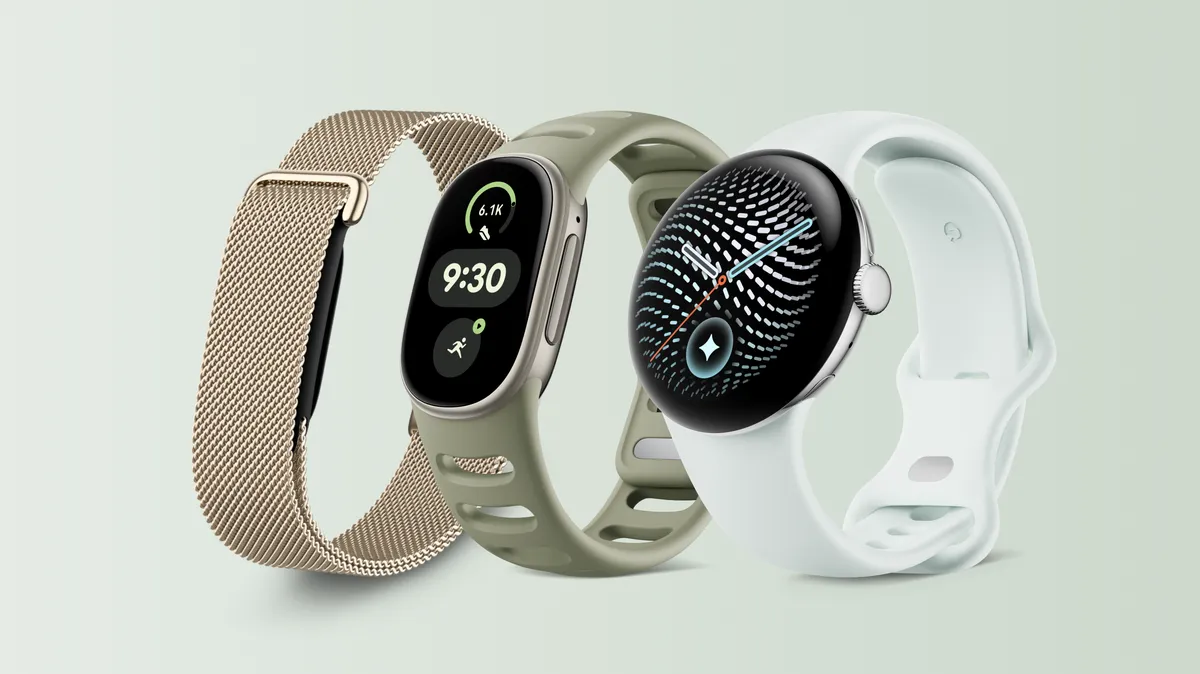
On October 27, Google will ship the Fitbit Edge, an 11.5-millimeter-thick wearable designed to address the primary failure point of remote patient monitoring: user abandonment. The device, which became available for pre-order on October 12 at 179.99 dollars, represents a deliberate effort to capture the middle tier of the health tracking market. By placing a functional screen on a lightweight chassis, the design attempts to bridge the gap between basic, screenless trackers and complex, power-hungry smartwatches. The structural decisions behind the hardware highlight the engineering trade-offs required to keep clinical-grade monitoring active on a user's wrist.
Engineering for continuous wear
The physical architecture of the device centers on a modular design featuring a replaceable battery. This is a notable departure from traditional consumer electronics, which typically require complete replacement once battery health degrades. By manufacturing a case that Google reports is significantly lighter than standard smartwatches, the hardware aims to reduce wrist fatigue, which remains a primary reason users remove trackers.
The inclusion of a Hybrid OLED display, an altimeter, and built-in GPS allows the device to operate independently of a mobile phone during active use. This untethered capability is critical for clinical trials where participants may not consistently carry a paired smartphone. By offering immediate visual feedback without the weight and bulk of a full-featured smartwatch, the design attempts to maintain user engagement while collecting uninterrupted physiological metrics.
The battery life trade-off

Battery longevity has historically served as a critical barrier to long-term biometric monitoring. The device addresses this constraint by offering up to seven days of battery life, a duration established through pre-production testing using a median usage profile and default battery-saver settings. This technical specification is highly dependent on individual deployment parameters, as specific features, active GPS tracking, and screen brightness can shorten the overall runtime.
The seven-day threshold is particularly relevant for sleep and recovery tracking, which require uninterrupted overnight wear to compile reliable baseline datasets. By reducing the frequency of charging cycles, the hardware increases the probability of capturing continuous physiological trends rather than fragmented snapshots. The integration of a replaceable battery within the modular architecture also suggests a focus on hardware longevity, potentially extending the operational life of the device for health systems managing multi-year tracking cohorts.
Regulatory boundaries and clinical utility

The software ecosystem of the device connects directly to Google Health, aggregating measurements across heart rate, sleep metrics, and recovery indicators. Google includes three months of its premium service with the purchase, granting users access to deeper analytics. However, the company maintains clear distinctions between general health tracking and formal clinical interventions. The trend analysis features are explicitly designated for wellness purposes and are not intended to provide medical advice or inform diagnostic decisions.
Similarly, clinical utility tools like the integrated electrocardiogram application operate under specific regulatory boundaries, carrying separate country and age restrictions. This clear separation highlights the current regulatory landscape for consumer wearables, where trend analysis is positioned as a personal insight tool rather than a diagnostic resource. For healthcare providers, these distinctions dictate how data from the device can be integrated into patient care models, emphasizing long-term observational trends over direct clinical metrics.
Strategic positioning in the hardware ecosystem
Within Google's hardware lineup, the device occupies the space between the screenless Fitbit Air and the more complex Pixel Watch smartwatch. This positioning targets a specific user demographic: individuals who require a visual interface and location tracking but do not want the daily charging demands or cognitive distractions of a fully featured smartwatch.
By offering a screen alongside extended battery life, the device establishes a clear consumer product proposition. It attempts to resolve the tension between device capability and user adherence. While the hardware specifications suggest a practical compromise for daily wear, demonstrating improved patient compliance or concrete clinical value will require additional real-world evidence and structured clinical studies.
For enterprise buyers, including insurers and corporate wellness programs, the middle-tier positioning presents a financial trade-off. At 179.99 dollars, the device is more expensive than basic trackers but significantly cheaper than premium smartwatches, making large-scale deployment more feasible for population health initiatives. The success of this hardware strategy will ultimately depend on whether the intermediate feature set leads to higher long-term retention rates compared to existing alternatives.
Source: The HealthTech Signal




