Listen instead
In a standard intensive care unit, monitors continuously track a patient's heart rate, blood pressure, and oxygen saturation, yet the brain itself often remains clinically silent. When a patient is recovering from a severe brain injury or a ruptured aneurysm, changes in neurological status can go unnoticed until physical symptoms emerge, at which point permanent damage may have already occurred. Traditional continuous electroencephalography, or EEG, requires a specialized technician to apply electrodes to the patient's scalp and a neurologist to interpret hours of raw, scrolling waveforms. This logistical bottleneck frequently delays critical clinical interventions, particularly during nights and weekends when specialized staff are unavailable.
To address this clinical gap, Ceribell received clearance from the Food and Drug Administration for new quantitative analysis software designed for its point-of-care EEG system. This regulatory decision, recorded in September, allows the company to integrate real-time trend analysis directly into its bedside monitoring platform. By translating complex, continuous electrical signals into simplified visual trends, the software is designed to help bedside clinicians identify early signs of brain distress and manage sedation levels without waiting for a specialist to review raw EEG data.
Detecting Ischemia and Neurological Distress
The primary utility of the newly cleared software lies in its ability to track subtle shifts in brain physiology over time. It introduces trend indicators for the alpha-delta ratio and relative alpha levels. These specific metrics are highly sensitive indicators of cerebral blood flow. When brain tissue experiences a reduction in blood flow, high-frequency alpha waves typically decrease while low-frequency delta waves increase.
By tracking the ratio between these two frequencies, the software provides a continuous visual representation of cerebral perfusion. For patients recovering from a subarachnoid hemorrhage, who are at high risk of delayed cerebral ischemia due to arterial vasospasm, this real-time visibility is critical. Instead of relying on intermittent physical exams, clinicians can observe downward trends in the alpha-delta ratio as an early warning of impending tissue starvation.
The software is cleared as a monitoring aid rather than an autonomous diagnostic tool. Significant shifts in these visual trends do not provide a definitive diagnosis of ischemia. Instead, they serve as objective, data-driven prompts that alert the care team to perform a targeted clinical evaluation, order emergency imaging, or consult a neurointensivist. This maintains the human clinician as the primary decision-maker while providing a continuous safety net for vulnerable patients.
Titrating Sedation and Managing Status Epilepticus
Beyond monitoring blood flow, the software expansion introduces tools for managing patients in medically induced comas. When treating refractory status epilepticus, a state of continuous seizure activity, or severe cerebral edema, physicians often administer high doses of anesthetic infusions to quiet the brain. The clinical objective is to achieve a state known as burst suppression, where periods of flatline brain activity are interrupted by brief bursts of electrical signals.
Maintaining the proper depth of therapeutic suppression requires precise titration. Under-sedation risks breakthrough seizures and further brain damage, while over-sedation can cause cardiovascular instability and prolong the duration of mechanical ventilation. The cleared software provides continuous monitoring of the burst suppression ratio at the bedside. This allows ICU nurses and attending physicians to see the physiological impact of sedative adjustments in real time, reducing the reliance on episodic specialist consultations.
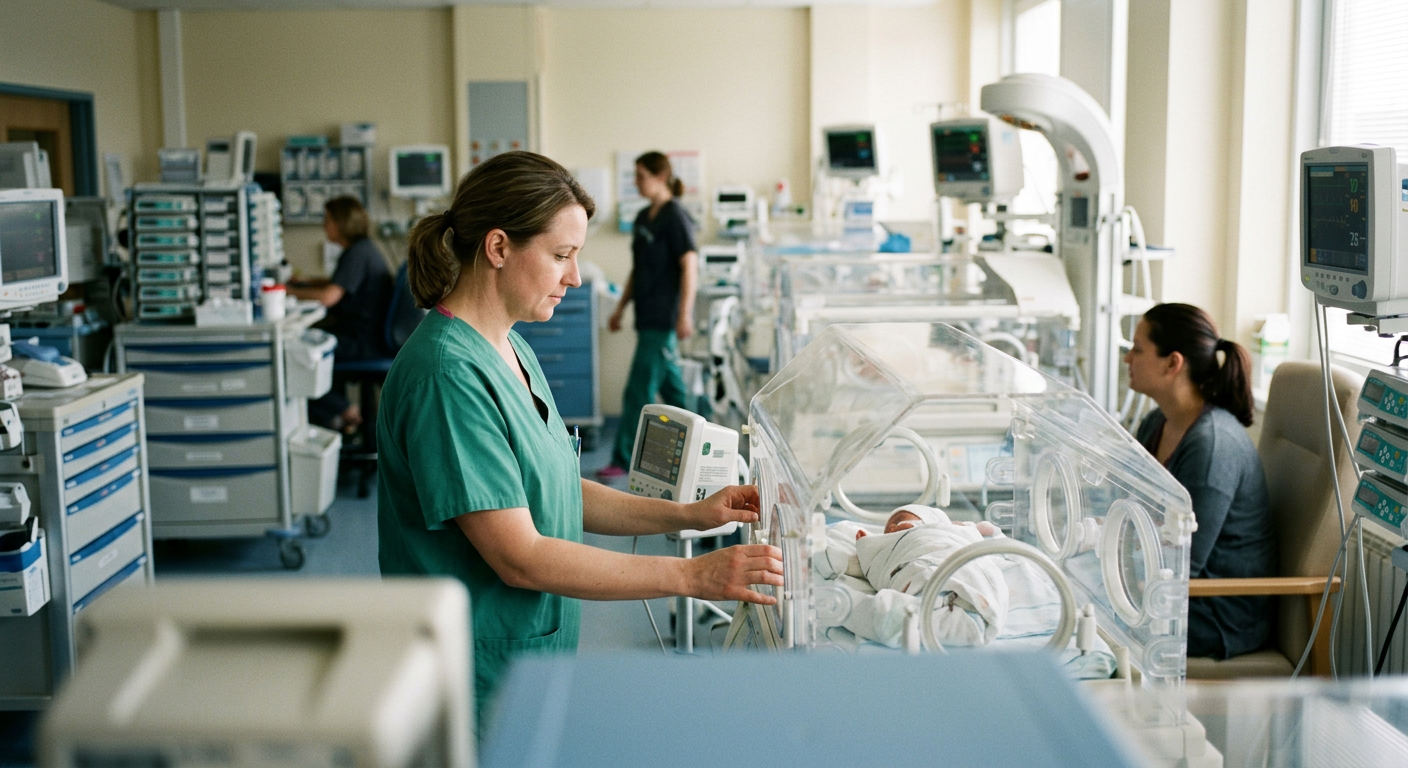
The utility of the platform is further extended by the inclusion of amplitude-integrated EEG. This simplified method of displaying long-term brain activity is especially valuable in neonatal intensive care units, where early detection of abnormal brain waves can alter developmental outcomes for infants suffering from hypoxic-ischemic encephalopathy. Because the FDA clearance carries no age restrictions, healthcare systems can deploy the same monitoring platform across pediatric, neonatal, and adult intensive care units, simplifying clinical training and equipment management.
Integration into ICU Workflows

For hospital administrators, the implementation of new clinical software often presents significant IT and operational hurdles. Ceribell plans to distribute these quantitative features via a scheduled software update to existing active devices, avoiding the need for hardware replacement or manual on-site installations. This delivery mechanism is intended to simplify deployment across early-adopting healthcare institutions.
However, the ultimate utility of the technology will depend on clinical protocol integration. The software simplifies the visualization of lengthy EEG recordings, but a visual trend line is only as useful as the response it triggers. Hospitals must establish clear clinical pathways that dictate how bedside staff should respond when a trend line shifts. This requires close coordination between bedside nurses, intensivists, and consulting specialists to ensure that software-driven alerts translate into timely, standardized clinical actions.
Source: The HealthTech Signal