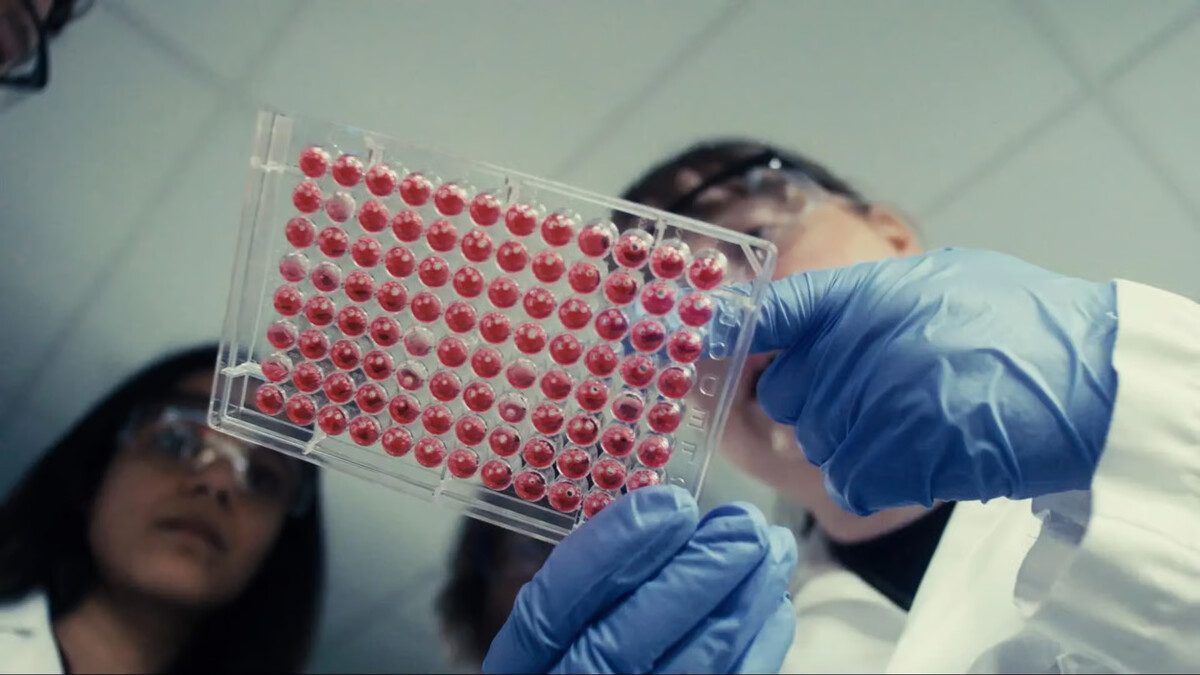

Good morning, HealthTech insiders. Anthropic has quietly moved part of its life-sciences ambition off the screen and into a real laboratory. The frontier AI company confirmed that it is operating a wet lab in the San Francisco Bay Area, where Claude-assisted research can meet the slower, messier test of physical biology. The move follows Anthropic’s April acquisition of Coefficient Bio (a deal widely reported at roughly $400 million in stock, although Anthropic did not disclose the price) and pushes the company closer to the experimental workflows used by biotech teams.
And that is only one of three very different infrastructure shifts in today’s Signal. Microstructure Imaging has received FDA clearance for software that enhances neurological PET images and automatically calculates standardized amyloid and tau measures. Ultragenyx, meanwhile, has won full FDA approval for Fayuvi, the first approved treatment for Sanfilippo syndrome type A. Different technologies, different patients, but the same pressure underneath them: healthcare is demanding systems that can turn complex biological signals into evidence clinicians, regulators and care teams can act on.
In today's Signal:
Anthropic Confirms a Bay Area Wet Lab: The AI company is adding physical biology work to its expanding life-sciences operation, months after acquiring Coefficient Bio. The strategic question is whether Claude can help accelerate experiments without turning an early laboratory effort into an overhyped drug-discovery story.
FDA Clears MICSI-PET: Microstructure Imaging’s software uses structural MRI to guide PET denoising and super-resolution while generating automated Centiloid and CenTauR measurements for amyloid and tau imaging.
FDA Approves Fayuvi: Ultragenyx’s one-time intravenous AAV9 gene therapy becomes the first FDA-approved treatment for the neurologic manifestations of Sanfilippo syndrome type A in pediatric patients with preserved neurodevelopmental function.
What We’re Watching Next: Anthropic’s first measurable laboratory outputs, MICSI’s planned multicenter validation, and the pace at which Ultragenyx activates qualified treatment centers and secures patient access.
Stop Dabbling With AI and Start Earning With It
Ready to stop using AI as a search engine and start using it as an income engine?
The Hustle's "200+ AI-Powered Income Ideas" is your free playbook for turning the most overhyped technology of our time into actual cash.
Inside you'll find:
200+ real, vetted ways to generate income with AI, spanning freelance services, digital products, content creation, and emerging markets
Actionable strategies built for non-engineers, so your technical background (or lack of one) won't hold you back
Ideas aligned with where the market is actually heading, not where it was two years ago
Subscribe free today and unlock the full guide. The people already cashing in aren't smarter than you, they just started earlier.
LATEST DEVELOPMENTS
FRONTIER AI & COMPUTATIONAL BIOLOGY
1. Anthropic Confirms Bay Area Wet Lab as Its Life-Sciences Push Moves Into Physical Biology

Genentech scientists analyze experimental plates during a proof-of-concept using Anthropic’s Model Hardware Standard for laboratory automation. Image: Anthropic.
Anthropic has confirmed that it operates a wet lab in the San Francisco Bay Area, extending its life-sciences work beyond software and computer simulation. The development follows its April acquisition of Coefficient Bio, which Anthropic confirmed but whose roughly $400 million stock price came from media reports rather than an official disclosure.
The details:
Physical experimentation: Anthropic says some biology work is now conducted in its own facilities and some through external partners. The company has not disclosed the lab’s size, exact research programs or operating capacity.
Early laboratory automation: Anthropic is exploring how Claude can direct laboratory equipment with limited human intervention. Its Model Hardware Standard remains a research preview, and the company stresses that human oversight is essential.
A broader life-sciences stack: The lab sits alongside Claude Science, Anthropic’s scientific workbench; its Life Sciences Verification Program; and the Coefficient Bio team. Anthropic says it is focused on preclinical work and is not currently running clinical trials.
The Signal: Anthropic is testing whether a general-purpose AI company can become useful inside the experimental loop, not merely before it. But this is still an early operational buildout: not proof of a closed-loop drug engine, a proprietary therapeutic pipeline or a future royalty business. The evidence to watch is experimental throughput, reproducibility and disclosed partnerships.
AMBIENT CARE & POST-ACUTE AI
2. FDA Clears MICSI-PET for MR-Guided PET Enhancement and Automated Amyloid and Tau Quantification

Microstructure Imaging received FDA 510(k) clearance for MICSI-PET, its MR-guided neurological PET enhancement and quantification platform. Image: Microstructure Imaging via Business Wire.
Microstructure Imaging has received FDA 510(k) clearance for MICSI-PET, a neurological imaging platform that uses structural MRI to improve PET image quality while preserving quantitative PET information. The software also automates standardized measures used to evaluate amyloid and tau pathology.
The details:
MR-guided enhancement: MICSI-PET uses anatomical information from structural MRI to guide PET denoising and super-resolution. It supports amyloid, tau and FDG PET across systems from major scanner vendors.
Standardized outputs: The platform provides automated Centiloid quantification for amyloid PET, CenTauR quantification for tau PET, regional SUVr measurements and z-scores compared with normative controls.
Validation comes next: MICSI said it anticipates a $2.275 million Phase II SBIR award to support future multicenter validation of an upcoming neuroimaging platform with NYU Langone Health and Memorial Sloan Kettering Cancer Center. That collaboration should not be described as a completed validation study of MICSI-PET.
The Signal: Automated, standardized measurements could make borderline scans easier to evaluate and improve consistency across imaging sites. The clearance does not by itself make MICSI-PET a companion diagnostic or guarantee payer authorization; adoption will depend on workflow integration, prospective evidence and whether clinicians find the quantitative outputs useful in treatment decisions.
RARE DISEASE & GENE THERAPY
3. FDA Approves Fayuvi as the First Treatment for Sanfilippo Syndrome Type A

Ultragenyx laboratory operations. The FDA has approved Fayuvi as the first treatment for Sanfilippo syndrome type A. Image: Ultragenyx Pharmaceutical.
The FDA has granted standard full approval to Ultragenyx’s Fayuvi (rebisufligene etisparvovec-hopf), the first approved treatment for Sanfilippo syndrome type A. Its precise indication is the treatment of neurologic manifestations of MPS IIIA in pediatric patients with preserved neurodevelopmental function.
The details:
One-time gene delivery: Fayuvi is a single intravenous AAV9 gene therapy designed to deliver a functional copy of the SGSH gene, enabling production of the sulfamidase enzyme deficient in MPS IIIA.
Evidence against natural history: In the modified intention-to-treat analysis, 17 treated patients had a 23.5-point higher Bayley-III cognitive score than 27 patients in an external, comparable natural-history cohort during the study period (p<0.0001).
Controlled rollout and safety monitoring: Ultragenyx expects commercial product to reach qualified treatment centers within 30-60 days of approval. The label includes warnings for hepatotoxicity, thrombocytopenia, infusion reactions, potential thrombotic microangiopathy and a potential long-term malignancy risk associated with vector integration.
The Signal: Fayuvi shows that a carefully matched external natural-history cohort can contribute to full approval in a devastating ultra-rare pediatric disease where randomized controls may be difficult. It is an important regulatory example, not an automatic template for every CNS gene therapy; the strength of the comparator, endpoint and safety package will still be judged product by product.

QUICK HITS
👀 WHAT WE'RE WATCHING NEXT
1. Anthropic’s laboratory proof points: The wet lab is strategically interesting, but its real value will be determined by disclosed experiments, reproducibility and evidence that AI-directed workflows outperform conventional laboratory processes. Watch for peer-reviewed results, named research programs and clearer boundaries between internal research and work performed with partners.
2. MICSI’s post-clearance evidence: Commercial adoption will require more than cleaner images. The next test is whether the company completes multicenter validation, demonstrates reliability across tracers and scanners, and shows that its quantitative outputs change reporting consistency, clinical workflow or treatment management.
3. Fayuvi access after approval: The first operational milestones are qualified treatment-center activation, payer coverage and the number of eligible children who can complete screening and receive treatment. Long-term follow-up will also matter because the therapy’s durability and rare safety risks extend well beyond launch.
💰 FOLLOW THE MONEY
The deals:
Anthropic / Coefficient Bio: Anthropic acquired Coefficient Bio in April. The company confirmed the acquisition, while the approximately $400 million all-stock valuation was reported by media and was not officially disclosed.
Angle Health: The company announced a $600 million equity transaction at a $2.7 billion valuation, consisting of a $200 million Series C and a $400 million tender offer. The transaction was expected to close later in September, so only $200 million represents new primary financing.
ImpriMed: The precision-oncology company raised a $10 million Series A2 bridge round led by LB Investment. NAVER D2SF, Samsung Securities and Alois Ventures joined as new investors, with BonAngels and Han River Partners participating again.
The pattern: Investors are backing platforms that connect software to an operational control point: Anthropic is moving closer to physical experimentation, Angle Health embeds technology in underwriting and plan administration, and ImpriMed combines live-cell assays with multimodal data. The attractive narrative is vertical integration; the harder test is whether that integration produces measurable clinical or economic gains.
📆 UPCOMING HEALTHTECH EVENTS
Frontiers Health 2026: Oct 20-21, 2026 | Berlin, Germany
A two-day digital-health gathering focused on healthcare transformation, digital therapies, investment and scale-up strategy.Global Health Exhibition 2026: Oct 26-29, 2026 | Riyadh Exhibition and Convention Center, Malham, Saudi Arabia
A large healthcare investment and procurement forum bringing together providers, policymakers, investors and medical-technology companies.HLTH USA 2026: Nov 15-18, 2026 | The Venetian Expo, Las Vegas, NV
A major healthcare innovation conference spanning care delivery, AI, policy, investment, payer strategy and enterprise partnerships.
🛠️ Trending HealthTech AI Tools
🧬 Claude Science: Anthropic’s beta scientific workbench integrates commonly used research tools and computing resources, supports workflows such as single-cell RNA sequencing and CRISPR screen design, and produces auditable artifacts. It is distinct from Anthropic’s experimental Model Hardware Standard for operating physical equipment.
🧠 MICSI-PET: FDA-cleared neurological PET software combining structural MR-guided enhancement with automated Centiloid amyloid and CenTauR tau quantification, plus regional SUVr measurements and normative z-scores.
📊 Angle Health Benefit Builder: A broker-facing platform that can generate firm, level-funded quotes from member census data, customize plan options and provide health scorecards intended to make underwriting inputs and cost drivers more visible.
🛠️ Trending HealthTech AI Startups
🔬 Microstructure Imaging: A Brooklyn-based NYU Langone spinout developing software that enhances and quantifies MRI and PET images. Its immediate commercial test is converting MICSI-PET’s clearance into clinical adoption and broader validation.
🧫 ImpriMed: A precision-medicine company combining live patient-derived cancer-cell testing with genomic, immunophenotypic and clinical data. Its newly funded human-health expansion is targeting FDA clearance and CLIA certification for initial products in early 2027.
🏥 Angle Health: An AI-enabled health-benefits company offering customizable plans in 47 states and serving more than 5,000 employers. Its announced financing mixes primary growth capital with a much larger secondary tender offer, an important distinction when assessing balance-sheet impact.
DECISION INTELLIGENCE
Highlights: Deep Dives & Industry Reports
Inside Anthropic’s Wet-Lab Push, and Its Reported $400M Coefficient Bio Deal
What Anthropic’s move into physical biology could unlock, where the evidence still falls short, and which laboratory milestones would make the strategy commercially meaningful.Standardizing the Amyloid Frontier: Inside FDA Clearance of MICSI-PET
How MR-guided PET enhancement and automated biomarker quantification could improve neurological imaging consistency, and why clearance should not be confused with completed multicenter validation or payer endorsement.The AAV9 CNS Blueprint: Inside Ultragenyx’s Fayuvi Approval
What the Transpher A evidence shows about systemic AAV9 delivery, external natural-history controls and the access challenges that begin after approval.
Which milestone will matter most for proving this week’s infrastructure bets? |
That's it for today!
Healthcare technology is moving closer to the point where evidence is created. Anthropic is bringing AI into physical experimental workflows. MICSI is turning neurological PET scans into more standardized quantitative outputs. Ultragenyx is moving a one-time gene therapy from clinical development into a tightly controlled treatment network.
Different markets, same direction: the value is shifting from models that merely generate an answer toward infrastructure that can produce, measure and defend the evidence behind it.
The opportunity is substantial. So is the burden of proof.
Will these systems make experimentation, diagnosis and treatment more reliable, or simply add another expensive layer between a promising technology and the patients it is meant to serve?
How did we do today? |
See you tomorrow,
Dr. Dereck Mush, MD, MBA
The HealthTech Signal is independently funded. Sponsorships help us invest in better reporting, research, and a stronger newsletter for our readers. Want to reach HealthTech founders & executives while supporting the Signal? Get in touch.
Was this email forwarded to you? Sign up here.
Until tomorrow,
The HealthTech Signal
Related reading


The biotech IPO window is reopening, cautiously, and the terms have changed
The HealthTech Signal
Chai Discovery triples its valuation as pharma buys into AI-designed molecules


The $1 Billion Bet on Pre-Symptomatic Medicine: Who Will Own the Longitudinal Baseline?
Keep exploring

