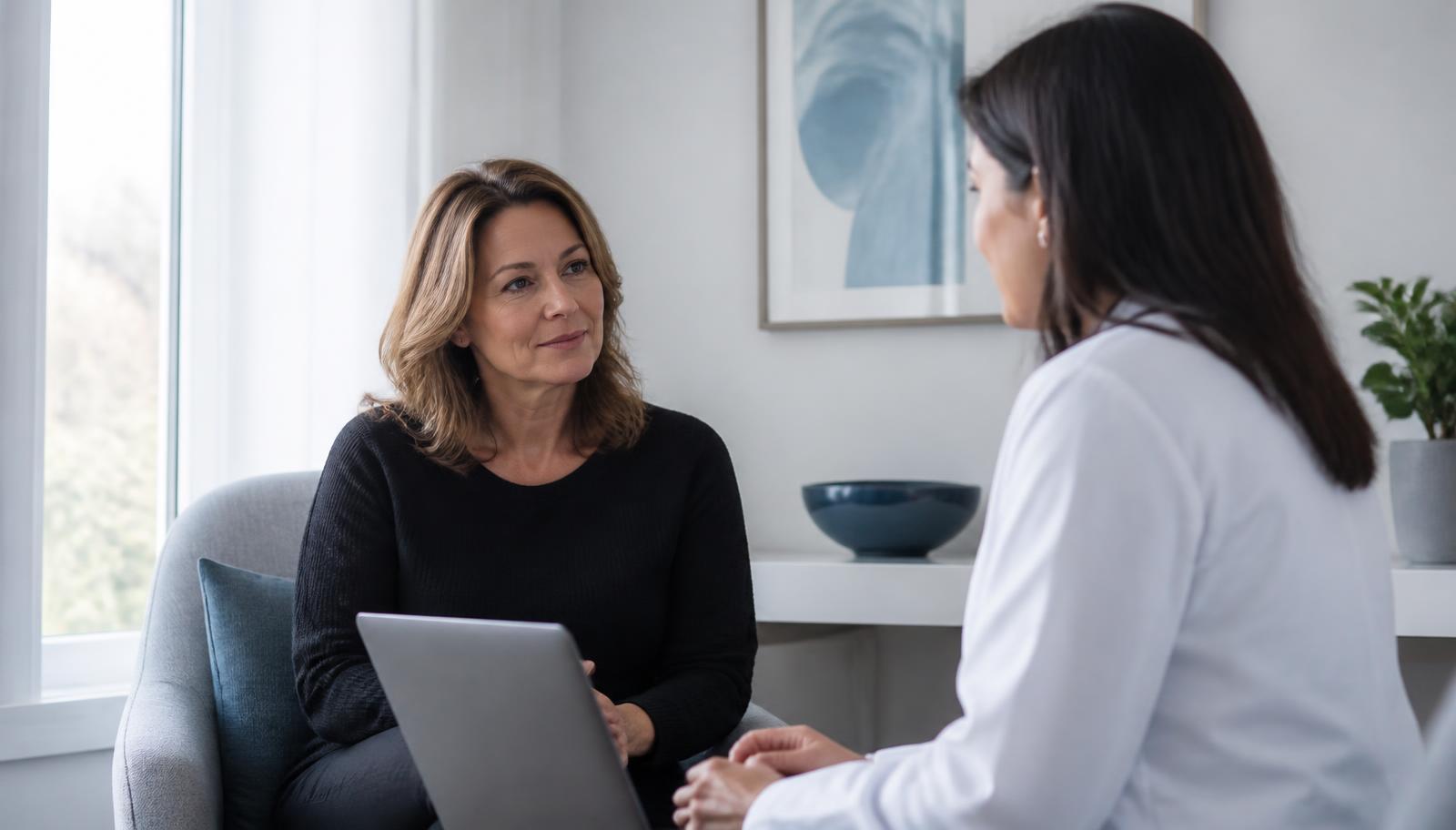
Sarah Jenkins, a family nurse practitioner, logs into her clinical dashboard at 8:00 AM. Her first patient of the day is a 47 year old woman in Ohio experiencing severe vasomotor symptoms, brain fog, and sleep disruption. The patient has waited four months for this virtual appointment. The clinical intake data, gathered through an asynchronous online questionnaire, includes a blood pressure reading from a connected cuff and a detailed medical history. In a traditional primary care clinic, this patient would likely receive a hurried, ten minute visit where complex midlife symptoms are frequently dismissed. In this specialized virtual model, Jenkins has a scheduled thirty minute video consultation, backed by clinical decision support software designed specifically for hormonal transitions.
This workflow is becoming the standard of care for a growing cohort of digital health companies. By placing advanced practice registered nurses at the center of the clinical model, these platforms are successfully scaling a service that has long been neglected by the traditional healthcare infrastructure. The transition from a physician-centric model to a nurse-led model is not merely a cost saving measure: it is the only viable operational strategy to meet the massive demand for midlife women's healthcare.
The Menopause Supply-Demand Mismatch
Approximately 75 million women in the United States are currently experiencing perimenopause or post-menopause. Each day, thousands of women enter this transition, yet the medical establishment remains poorly equipped to serve them. Research shows that only about 30 percent of obstetrics and gynecology residency programs offer a formal, structured curriculum in menopause care. Consequently, many newly graduated physicians feel unprepared to manage symptoms like vasomotor instability, osteopenia, and genitourinary syndrome of menopause.
The shortage of certified specialists is acute. The Menopause Society, formerly known as the North American Menopause Society, credentials clinicians as certified menopause practitioners. There are fewer than 2,000 such certified clinicians in the United States, meaning there is roughly one specialist for every 37,500 midlife women. For patients seeking evidence-based therapies, including hormone replacement therapy, this gap results in long wait times and inadequate treatment options.
This clinical deficit has created a substantial market opportunity. Women are increasingly willing to pay out of pocket or seek virtual care platforms that promise fast access to specialists who understand their symptoms. To scale to meet this demand, digital health platforms cannot rely solely on board certified obstetricians, whose time is both expensive and split between surgical duties, labor and delivery, and general gynecology.
The Clinical Case for Advanced Practice Nurses
To build a scalable clinical model, operators are leveraging the skills of advanced practice registered nurses, defined as clinicians who have completed graduate level education and training to diagnose, treat, and manage patient care. This category includes both nurse practitioners and certified nurse-midwives.
Advanced practice nurses are uniquely suited for menopause care due to their holistic, patient-centered training. Menopause is rarely a single-organ issue: it impacts the cardiovascular system, bone density, cognitive health, metabolic function, and mental well-being. While a specialist physician might focus narrowly on hormonal biochemistry, a nurse practitioner is trained to assess how these systemic changes impact a patient's daily functioning, diet, sleep hygiene, and mental health.
Furthermore, nurse practitioners are highly experienced in managing chronic conditions and lifestyle interventions. Because menopause care often requires iterative adjustments to hormone therapy dosages, frequent symptom tracking, and ongoing counseling, the continuous care model practiced by nurses aligns perfectly with the clinical needs of the patient.
Standardizing Care Through Clinical Protocols
To scale a clinical operation across tens of thousands of patients, consistency is essential. Platforms cannot allow individual clinicians to prescribe therapies based purely on personal preference. Instead, clinical directors are developing evidence-based guidelines that standardize treatment pathways for common symptoms.
Many platforms utilize the Menopause Rating Scale, which we define as a validated eleven-item instrument used to measure the severity of aging-related symptoms and their impact on quality of life. By requiring patients to complete this scale during intake, clinical algorithms can categorize patients into specific risk and symptom profiles.
Once a patient profile is established, clinical decision support software guides the nurse practitioner through the appropriate prescribing pathways. For example, if a patient presents with moderate vasomotor symptoms and has no contraindications for estrogen, the software suggests the standard first-line transdermal estradiol patch dosage. If the patient has an intact uterus, the system automatically prompts the addition of oral progesterone to protect the endometrium. This protocol-driven approach ensures safety, reduces clinical variation, and allows nurse practitioners to operate efficiently while practicing at the top of their licenses.
Navigating the State Regulatory Patchwork
While the clinical benefits of nurse-led care are clear, scaling these models nationally requires navigating a complex regulatory environment. The primary obstacle is the variation in scope of practice laws across different states.
In some states, clinicians operate under full practice authority, which is a regulatory framework that allows nurse practitioners to evaluate patients, diagnose conditions, order diagnostic tests, and prescribe medications without physician oversight. In these states, scaling a virtual clinic is straightforward. A platform can hire local nurse practitioners or have out-of-state nurses obtain licenses to serve patients directly.
In other states, however, regulations require collaborative practice agreements, defined as legal contracts that mandate a formal supervisory or collaborative relationship between a nurse practitioner and a licensed physician. These agreements often come with administrative fees, chart review requirements, and strict limits on the number of nurse practitioners a single physician can supervise.
Healthtech operators must design their clinical infrastructure to accommodate both regulatory environments. In collaborative states, platforms must build robust networks of supervising physicians, automate the chart routing process for required reviews, and ensure that the cost of physician oversight does not erode the unit economics of the nurse-led model.
The Economics of Scale
From a financial perspective, the nurse-led model offers significant advantages for healthtech companies aiming for profitability. The average annual salary of a nurse practitioner is approximately half that of an obstetrician-gynecologist. This lower clinical overhead allows platforms to offer longer appointment times, enhancing the patient experience without raising the price of care beyond what the market can bear.
This salary differential is critical for platforms looking to transition from cash-pay models to insurance reimbursement. In the United States, commercial insurers typically reimburse nurse practitioners at approximately 85 percent of the rate paid to physicians for the same evaluation and management billing codes. Because the cost of employing a nurse practitioner is substantially lower than that of a physician, the margin on a nurse-led visit remains highly favorable, even with the 15 percent reimbursement reduction.
By leveraging nurse practitioners for routine care and reserving a small team of physicians for complex, high-risk consultations, platforms can achieve a sustainable clinical cost structure that supports rapid expansion.
Key Signals
The severe shortage of physician specialists, combined with the rising demand for evidence-based menopause care, makes the transition to nurse-led clinical models an operational necessity for scaling women's health platforms.
By developing protocol-driven care pathways and integrating validated symptom rating scales, healthtech operators can maintain high clinical standards and ensure safety across a large, distributed workforce of advanced practice nurses.
Success in scaling these clinics requires a sophisticated understanding of state-level scope of practice laws, particularly the administrative and financial requirements associated with collaborative practice agreements in restricted states.
The economics of employing nurse practitioners allow platforms to build sustainable, insurance-reimbursed care models that offer longer, more comprehensive patient consultations than the traditional primary care system can support.